







Question: Problem Set 2 Inventory Value (10 pts) The following inventory records for the Tacky Tea Shoppe reveal the following information about one item in
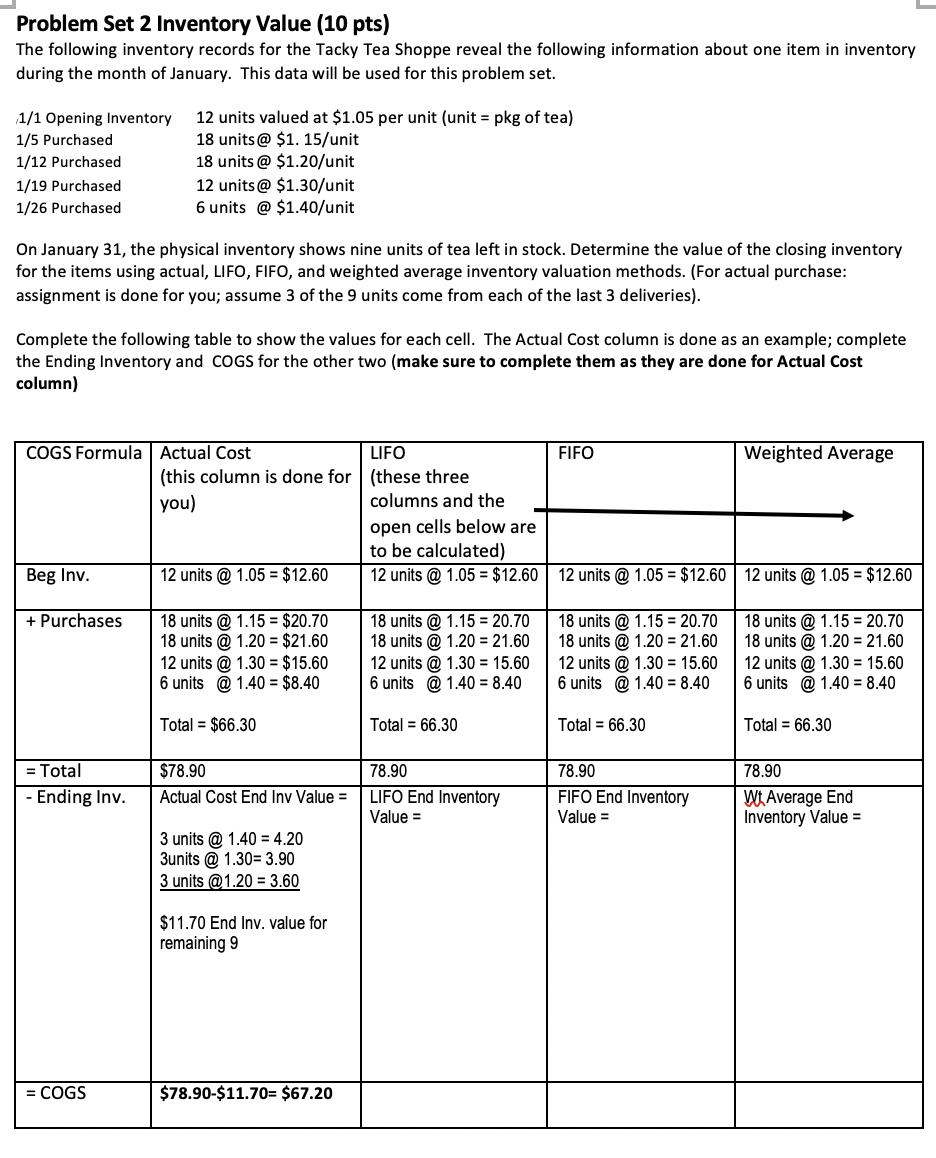
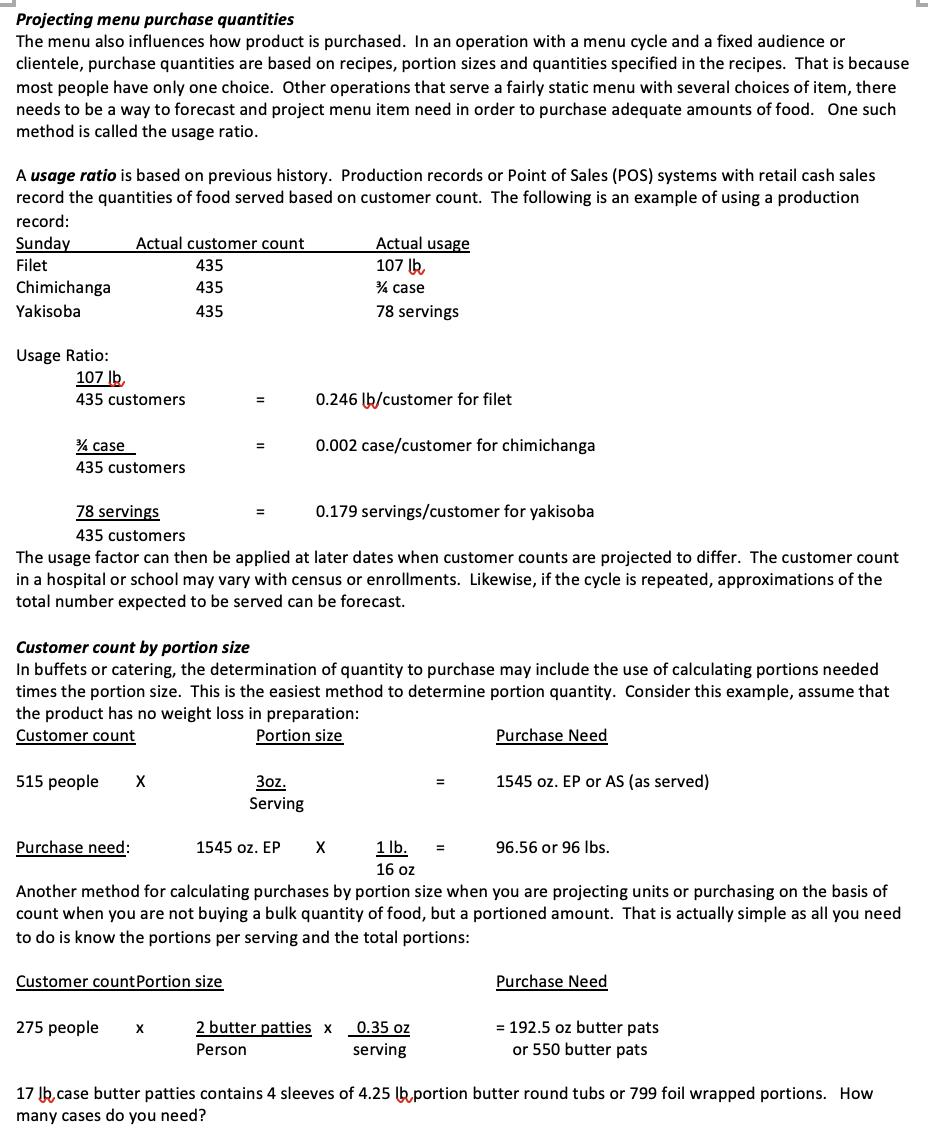
Problem Set 2 Inventory Value (10 pts) The following inventory records for the Tacky Tea Shoppe reveal the following information about one item in inventory during the month of January. This data will be used for this problem set. 1/1 Opening Inventory 12 units valued at $1.05 per unit (unit = pkg of tea) 1/5 Purchased 18 units@ $1. 15/unit 18 units @ $1.20/unit 1/12 Purchased 1/19 Purchased 1/26 Purchased 12 units@ $1.30/unit 6 units @ $1.40/unit On January 31, the physical inventory shows nine units of tea left in stock. Determine the value of the closing inventory for the items using actual, LIFO, FIFO, and weighted average inventory valuation methods. (For actual purchase: assignment is done for you; assume 3 of the 9 units come from each of the last 3 deliveries). Complete the following table to show the values for each cell. The Actual Cost column is done as an example; complete the Ending Inventory and COGS for the other two (make sure to complete them as they are done for Actual Cost column) COGS Formula | Actual Cost Beg Inv. + Purchases = Total - Ending Inv. = COGS LIFO (this column is done for (these three you) 12 units @ 1.05 = $12.60 18 units @ 1.15 $20.70 18 units @ 1.20 $21.60 12 units @ 1.30 = $15.60 6 units @ 1.40= $8.40 Total = $66.30 $78.90 Actual Cost End Inv Value = 3 units @ 1.40 = 4.20 3units @ 1.30 3.90 3 units @1.20 3.60 $11.70 End Inv. value for remaining 9. $78.90-$11.70= $67.20 columns and the open cells below are to be calculated) 12 units @ 1.05 = $12.60 18 units @ 1.15 = 20.70 18 units @ 1.20 = 21.60 12 units @ 1.30 = 15.60 6 units @ 1.40 = 8.40 Total = 66.30 78.90 LIFO End Inventory Value = FIFO 12 units @ 1.05 = $12.60 18 units @ 1.15 = 20.70 18 units @ 1.20 = 21.60 12 units @ 1.30 = 15.60 6 units @ 1.40 = 8.40 Total = 66.30 78.90 FIFO End Inventory Value = Weighted Average 12 units @ 1.05 = $12.60 18 units @ 1.15 = 20.70 18 units @ 1.20 = 21.60 12 units @ 1.30 = 15.60 6 units @ 1.40 = 8.40 Total = 66.30 78.90 Wt Average End Inventory Value = Projecting menu purchase quantities The menu also influences how product is purchased. In an operation with a menu cycle and a fixed audience or clientele, purchase quantities are based on recipes, portion sizes and quantities specified in the recipes. That is because most people have only one choice. Other operations that serve a fairly static menu with several choices of item, there needs to be a way to forecast and project menu item need order to purchase adequate amounts of food. One such method is called the usage ratio. A usage ratio is based on previous history. Production records or Point of Sales (POS) systems with retail cash sales record the quantities of food served based on customer count. The following is an example of using a production record: Sunday Filet Chimichanga Yakisoba Usage Ratio: 107 lb 435 customers Actual customer count 435 435 435 case 435 customers 515 people Purchase need: 78 servings 0.179 servings/customer for yakisoba 435 customers The usage factor can then be applied at later dates when customer counts are projected to differ. The customer count in a hospital or school may vary with census or enrollments. Likewise, if the cycle is repeated, approximations of the total number expected to be served can be forecast. X Customer count by portion size In buffets or catering, the determination of quantity to purchase may include the use of calculating portions needed times the portion size. This is the easiest method to determine portion quantity. Consider this example, assume that the product has no weight loss in preparation: Customer count Portion size = Customer count Portion size 275 people X 3oz. Serving 0.246 lb/customer for filet 1545 oz. EP Actual usage 107 lb case 78 servings 0.002 case/customer for chimichanga 1 lb. 16 oz Another method for calculating purchases by portion size when you are projecting units or purchasing on the basis of count when you are not buying a bulk quantity of food, but a portioned amount. That is actually simple as all you need to do is know the portions per serving and the total portions: X 2 butter patties x Person 0.35 oz serving Purchase Need = 1545 oz. EP or AS (as served) 96.56 or 96 lbs. Purchase Need = 192.5 oz butter pats or 550 butter pats 17 lb case butter patties contains 4 sleeves of 4.25 lb portion butter round tubs or 799 foil wrapped portions. How many cases do you need?
Step by Step Solution
3.45 Rating (155 Votes )
There are 3 Steps involved in it
Answers 1 2 3 4 COGS Formula 1 Beginnning Inventory Add Purchases Total Less Ending I... View full answer

Get step-by-step solutions from verified subject matter experts
 Study Help