







Question: Problem Set 7 1. Consider the Solow growth model with the following specifications. Output is produced by combining capital K and labor N as Y
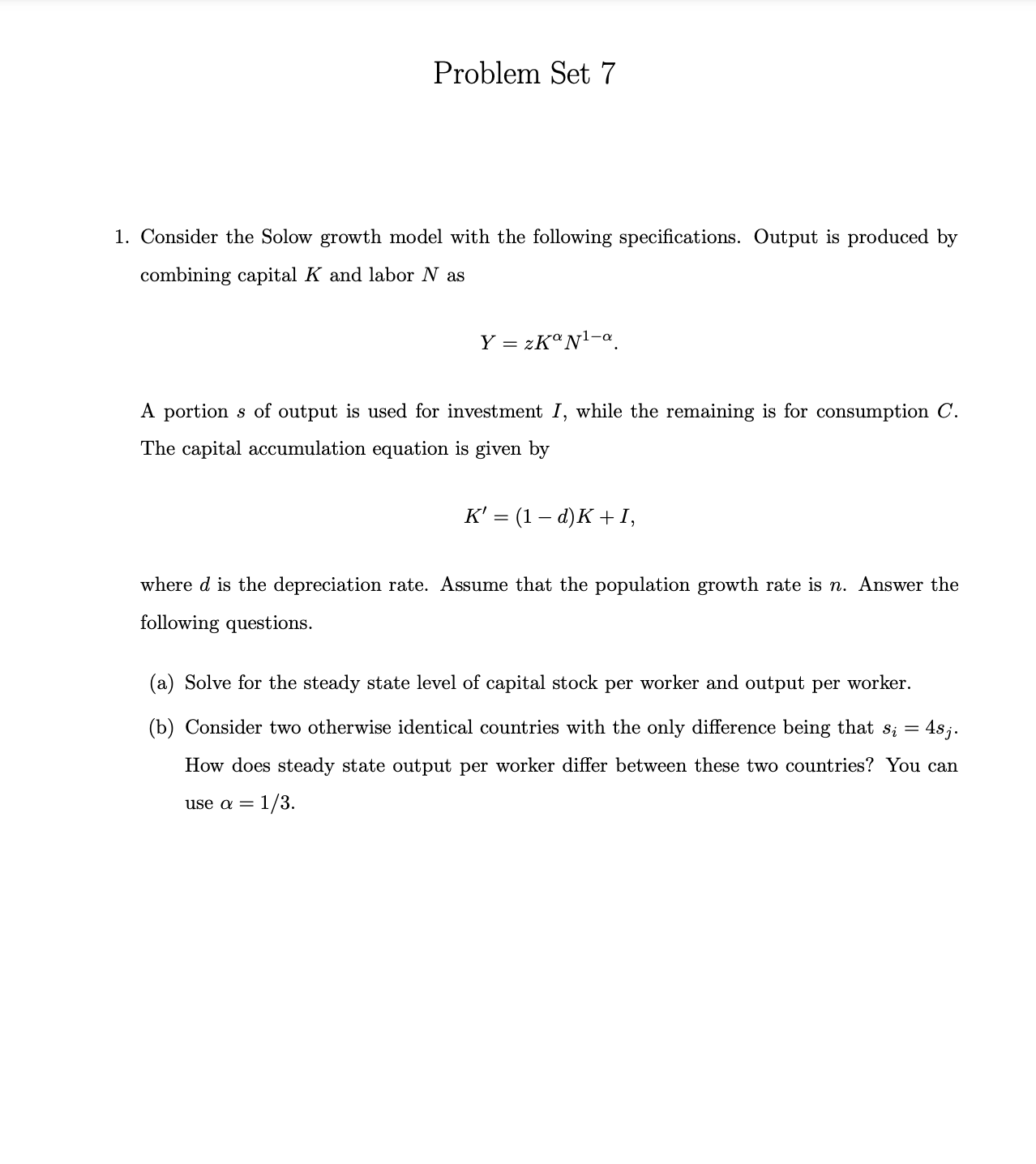
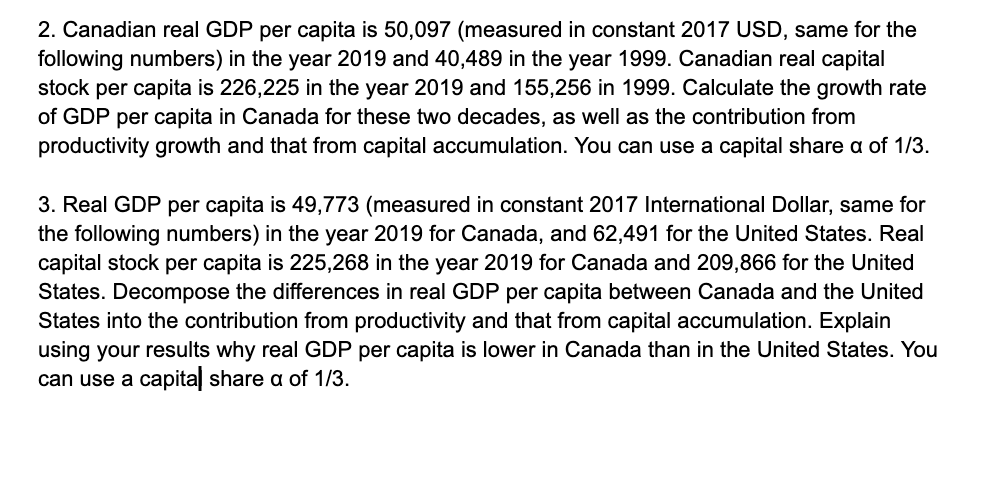
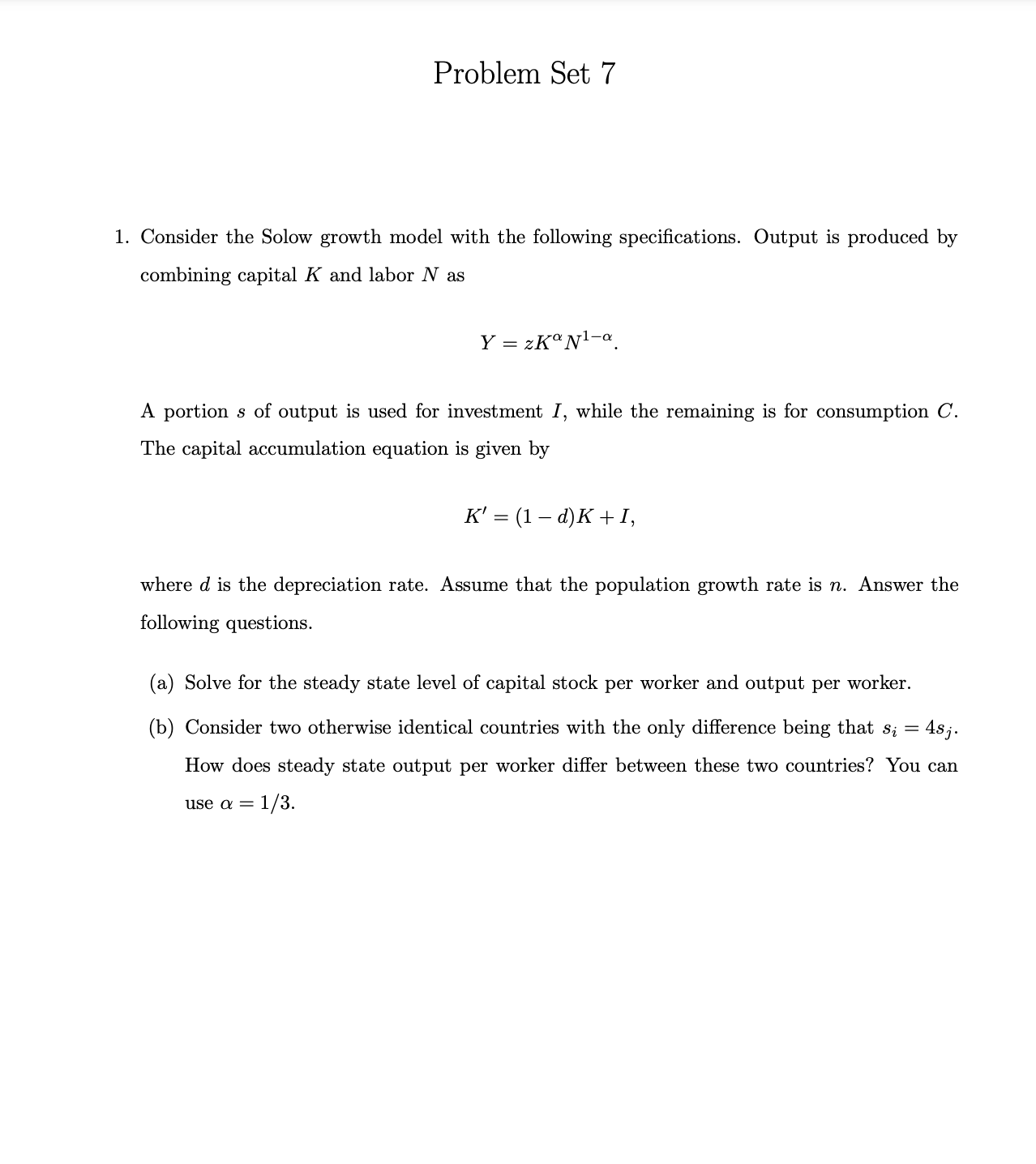
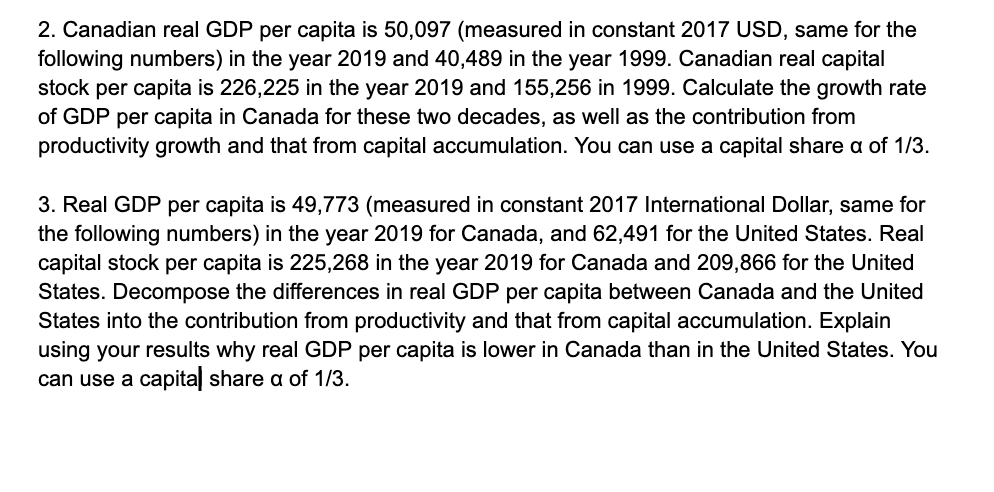
Problem Set 7 1. Consider the Solow growth model with the following specifications. Output is produced by combining capital K and labor N as Y =zK*N""2. A portion s of output is used for investment I, while the remaining is for consumption C. The capital accumulation equation is given by K'=(1-dK+1, where d is the depreciation rate. Assume that the population growth rate is n. Answer the following questions. (a) Solve for the steady state level of capital stock per worker and output per worker. (b) Consider two otherwise identical countries with the only difference being that s; = 4s;. How does steady state output per worker differ between these two countries? You can use o = 1/3. 2. Canadian real GDP per capita is 50,097 (measured in constant 2017 USD, same for the following numbers) in the year 2019 and 40,489 in the year 1999. Canadian real capital stock per capita is 226,225 in the year 2019 and 155,256 in 1999. Calculate the growth rate of GDP per capita in Canada for these two decades, as well as the contribution from productivity growth and that from capital accumulation. You can use a capital share a of 1/3. 3. Real GDP per capita is 49,773 (measured in constant 2017 International Dollar, same for the following numbers) in the year 2019 for Canada, and 62,491 for the United States. Real capital stock per capita is 225,268 in the year 2019 for Canada and 209,866 for the United States. Decompose the differences in real GDP per capita between Canada and the United States into the contribution from productivity and that from capital accumulation. Explain using your results why real GDP per capita is lower in Canada than in the United States. You can use a capital share a of 1/3
Step by Step Solution
There are 3 Steps involved in it

Get step-by-step solutions from verified subject matter experts
 Study Help