







Question: Problem set II (Reference Dependence) Instructions: i) When in doubt, round numeric responses to two decimal places ii) It is okay . Problems: For problems
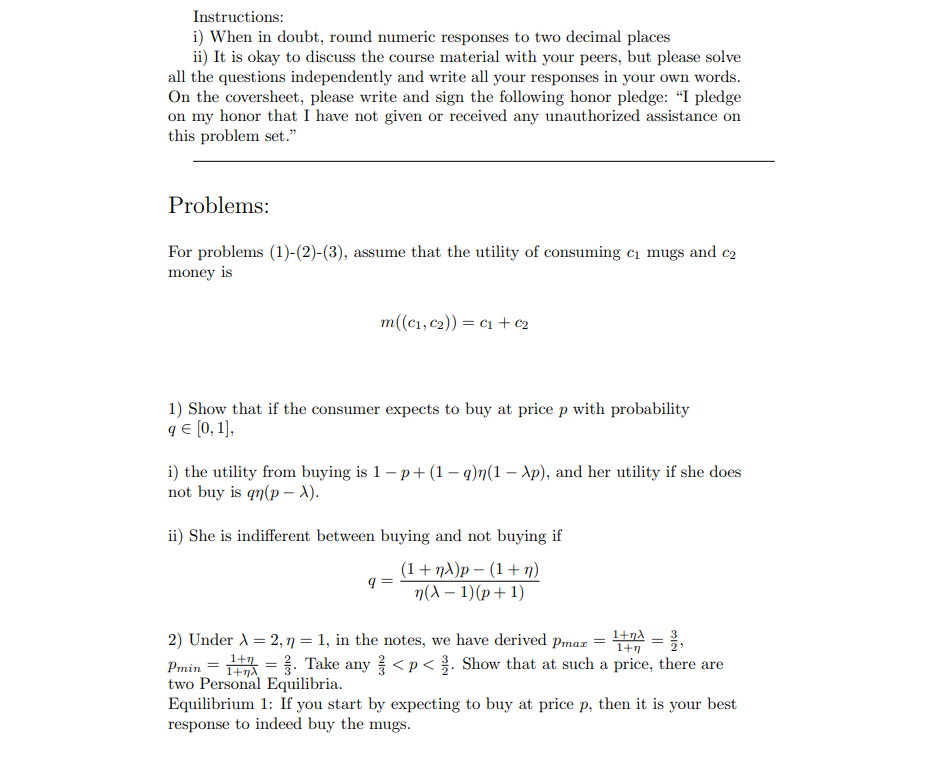
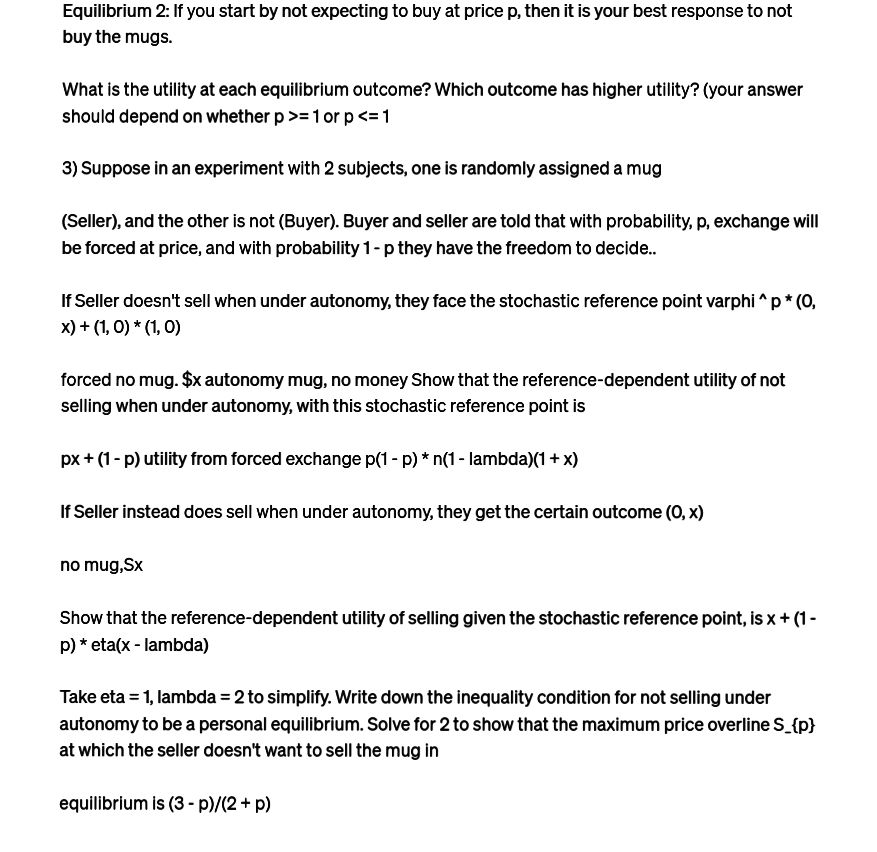
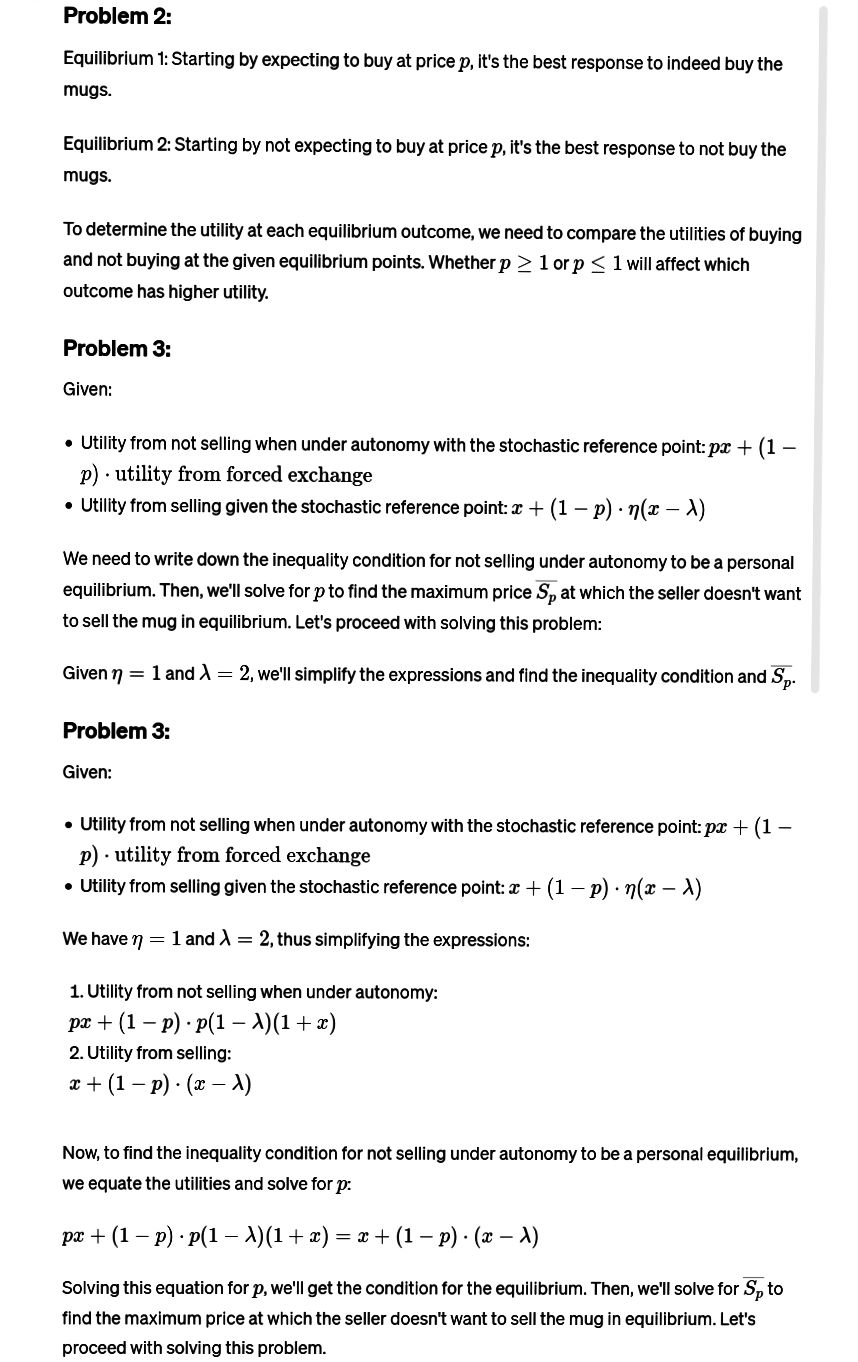
Problem set II (Reference Dependence) Instructions: i) When in doubt, round numeric responses to two decimal places ii) It is okay . Problems: For problems (1)-(2)-(3), assume that the utility of consuming c1 mugs and c2 money is m((c1, c2)) = c1 c2 1) Show that if the consumer expects to buy at price p with probability q ? [0, 1], i) the utility from buying is 1 ? p (1 ? q)?(1 ? ?p), and her utility if she does not buy is q?(p ? ?). ii) She is indifferent between buying and not buying if q = (1 ??)p ? (1 ?) ?(? ? 1)(p 1) 2) Under ? = 2, ? = 1, in the notes, we have derived pmax = 1 ?? 1 ? = 3 2 , pmin = 1 ? 1 ?? = 2 3 . Take any 2 3 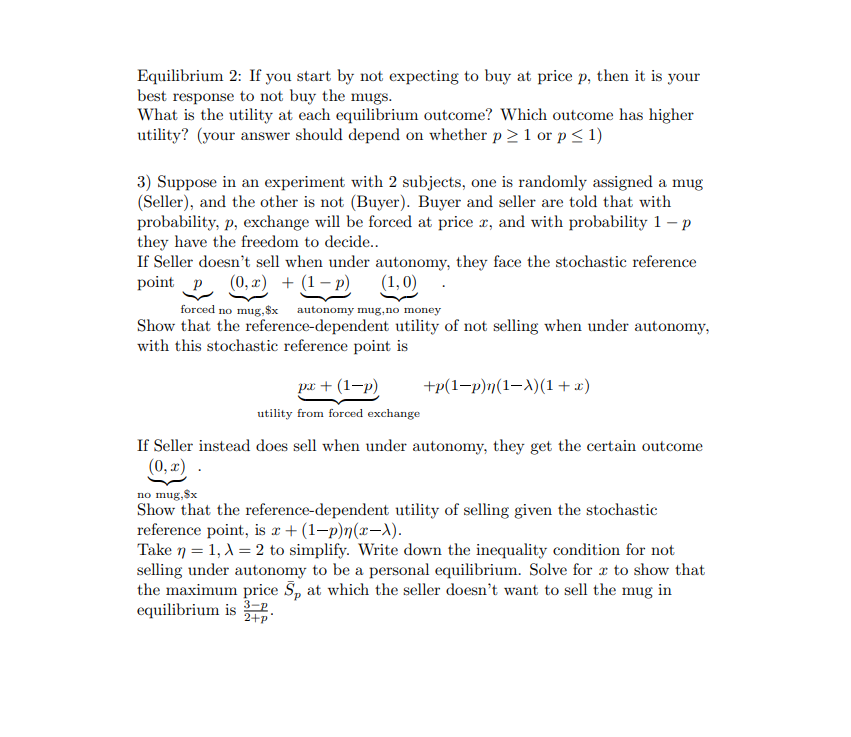
Step by Step Solution
There are 3 Steps involved in it

Get step-by-step solutions from verified subject matter experts
 Study Help