







Question: Problem Statement In the C language, it is trivial to add together two variables that contain integer values, as long as the data type is
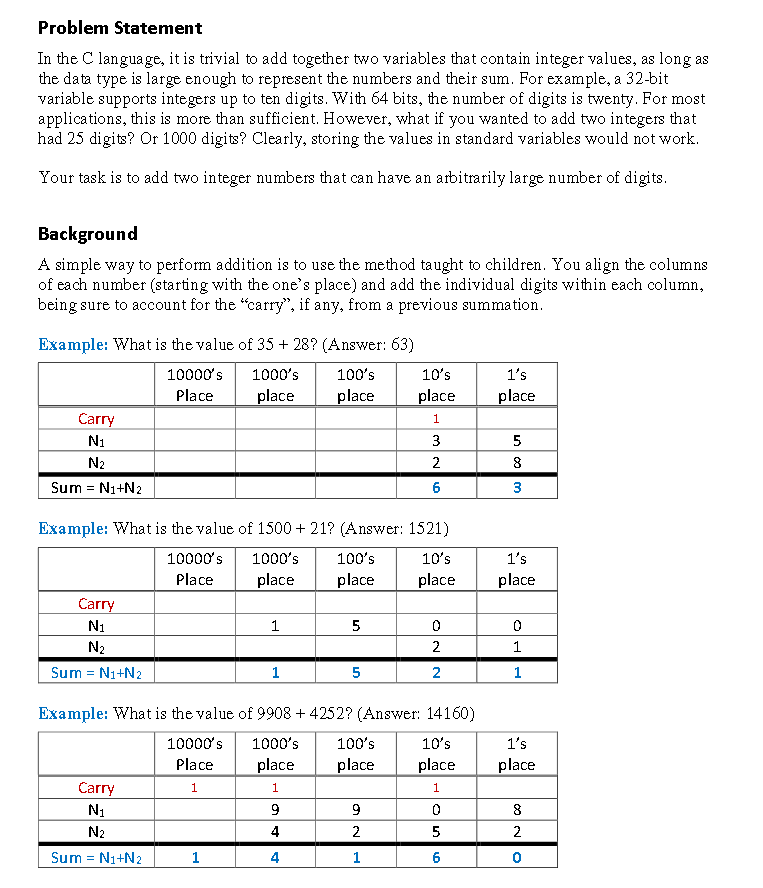
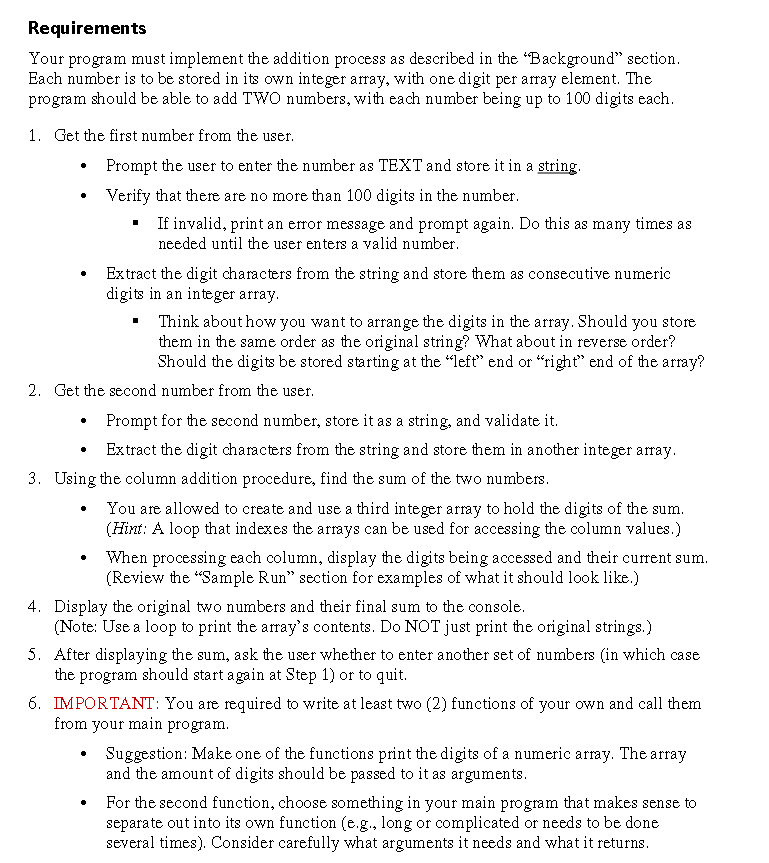
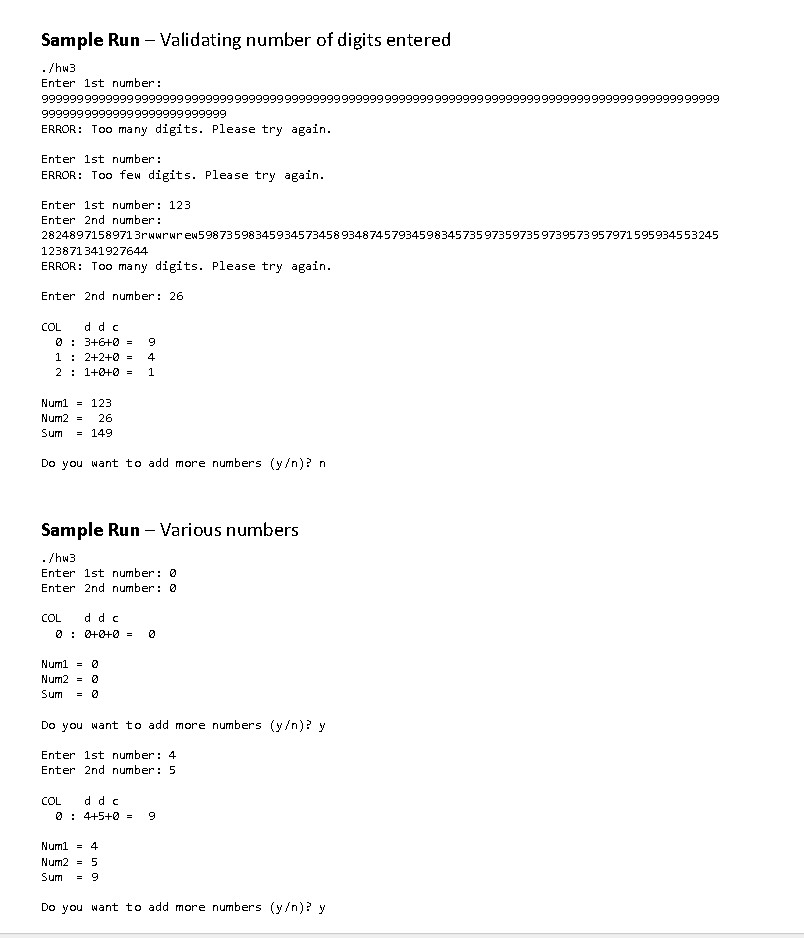
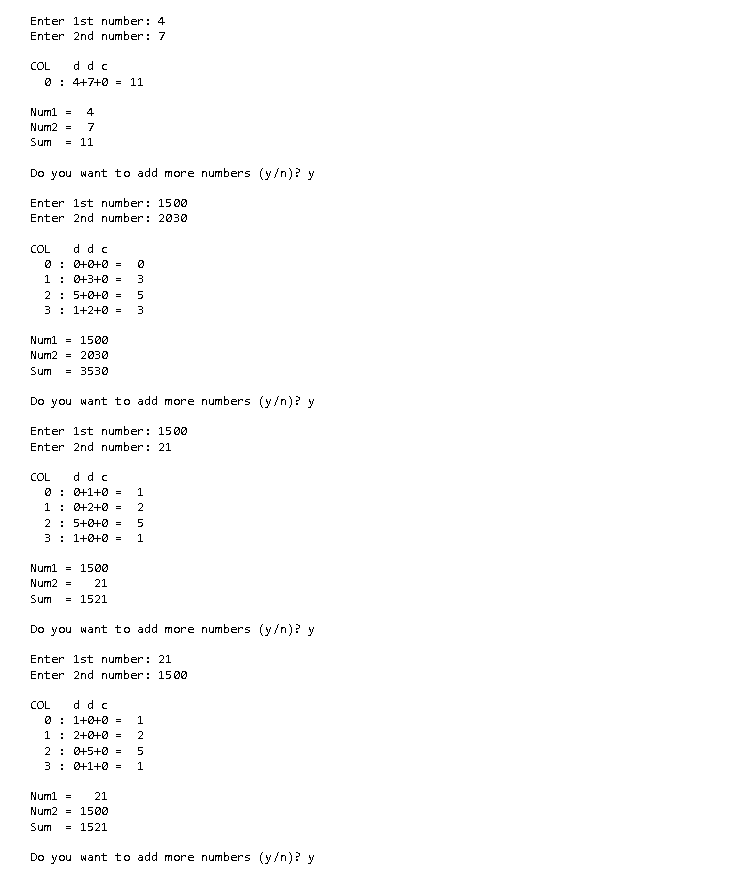
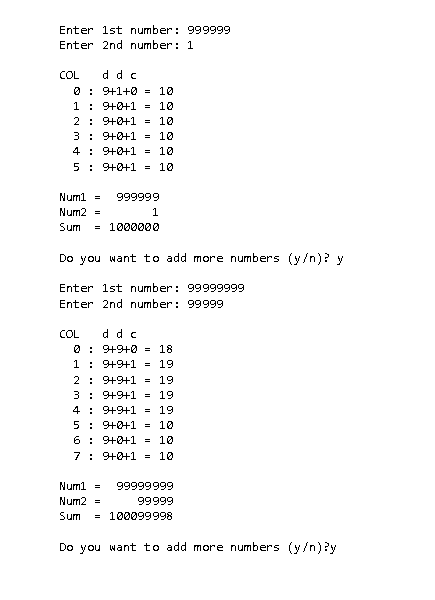
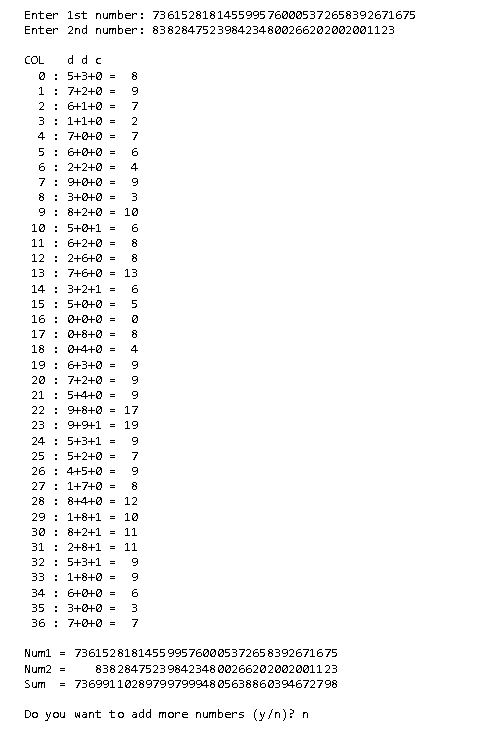
Problem Statement In the C language, it is trivial to add together two variables that contain integer values, as long as the data type is large enough to represent the numbers and their sum. For example, a 32-bit variable supports integers up to ten digits. With 64 bits, the number of digits is twenty. For most applications, this is more than sufficient. However, what if you wanted to add two integers that had 25 digits? Or 1000 digits? Clearly, storing the values in standard variables would not work Your task is to add two integer numbers that can have an arbitrarily large number of digits Background A simple way to perform addition is to use the method taught to children. You align the columns of each number (starting with theone's place) and add the individual digits within each column, being sure to account for the "carry", if any, from a previous summation. Example: What is the value of 35 28? (Answer: 63) 10000 s 1000's 100's 10's Place place place place place Carry Sum N1+N2 Example: What is the value of 1500 21? (Answer: 1521) 10000 s 1000's 100's 10's Place place place place place Larry Sum N1+N2 Example: What is the value of 9908 4252? (Answer: 14160) 10000 s 1000's 100's 10's Place place place place place Carry Sum N1+N2
Step by Step Solution
There are 3 Steps involved in it

Get step-by-step solutions from verified subject matter experts
 Study Help