



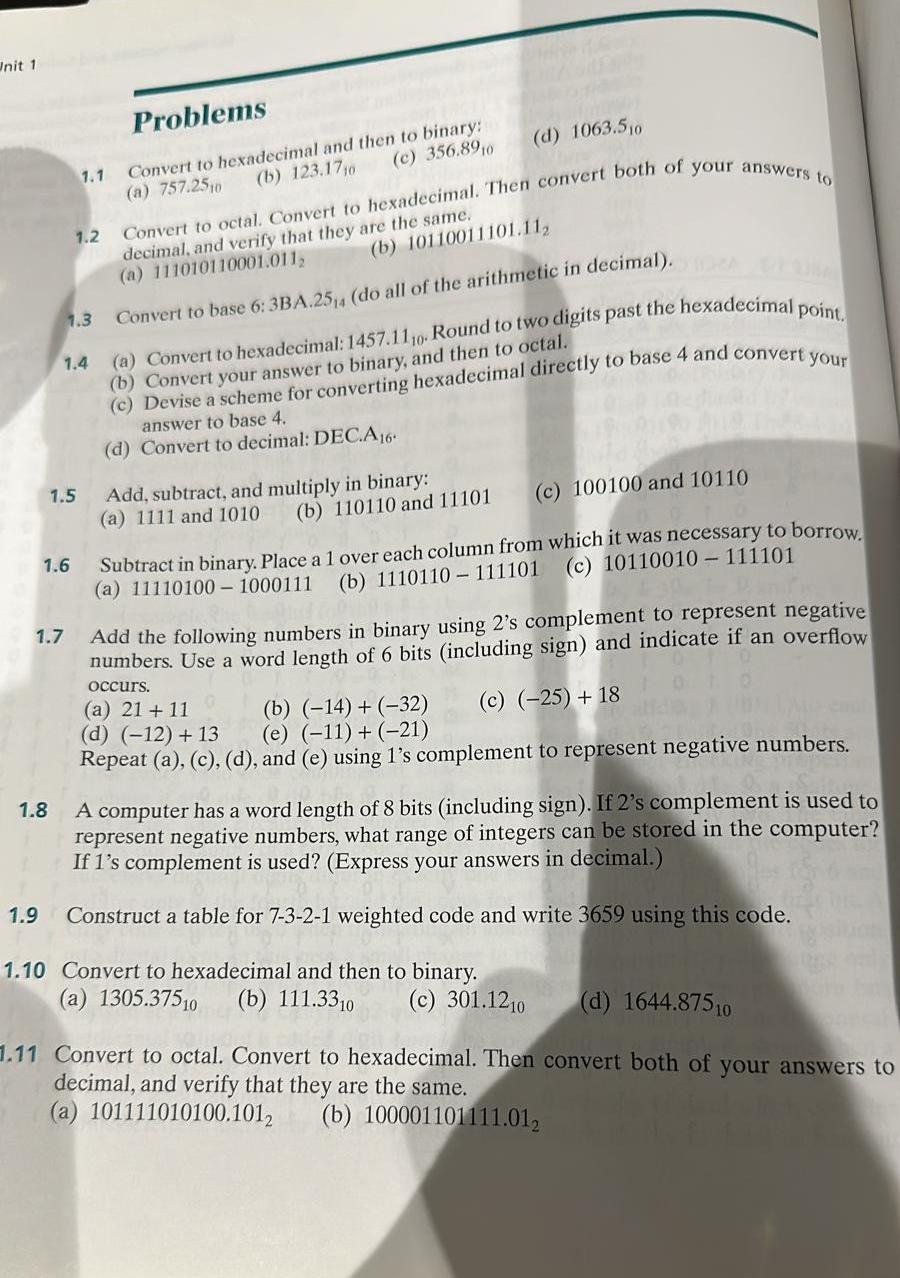
Question: Problems 1 . 1 Convert to hexadecimal and then to binary: ( a ) 7 5 7 . 2 5 1 0 ( b )
Problems
Convert to hexadecimal and then to binary:
a
b
c
d
Convert to octal. Convert to hexadecimal. Then convert both of your answers to decimal, and verify that they are the same.
a
b
Convert to base :do all of the arithmetic in decimal
a Convert to hexadecimal: Round to two digits past the hexadecimal point.
b Convert your answer to binary, and then to octal.
c Devise a scheme for converting hexadecimal directly to base and convert your answer to base
d Convert to decimal: DEC.A
Add, subtract, and multiply in binary:
a and
b and
c and
Subtract in binary. Place a over each column from which it was necessary to borrow.
a
b
c
Add the following numbers in binary using s complement to represent negative numbers. Use a word length of bits including sign and indicate if an overflow occurs.
a
b
c
d
e
Repeat acd and e using s complement to represent negative numbers.
A computer has a word length of bits including sign If s complement is used to represent negative numbers, what range of integers can be stored in the computer? If s complement is used? Express your answers in decimal.
Construct a table for weighted code and write using this code.
Convert to hexadecimal and then to binary.
a
b
c
d
Convert to octal. Convert to hexadecimal. Then convert both of your answers to decimal, and verify that they are the same.
a
b
Step by Step Solution
There are 3 Steps involved in it
1 Expert Approved Answer
Step: 1 Unlock

Question Has Been Solved by an Expert!
Get step-by-step solutions from verified subject matter experts
Step: 2 Unlock
Step: 3 Unlock