







Question: Problems and Applications Exercise 1 This exercise provides practice in calculating the marginal factor cost of labor (marginal wage) and the marginal revenue product of
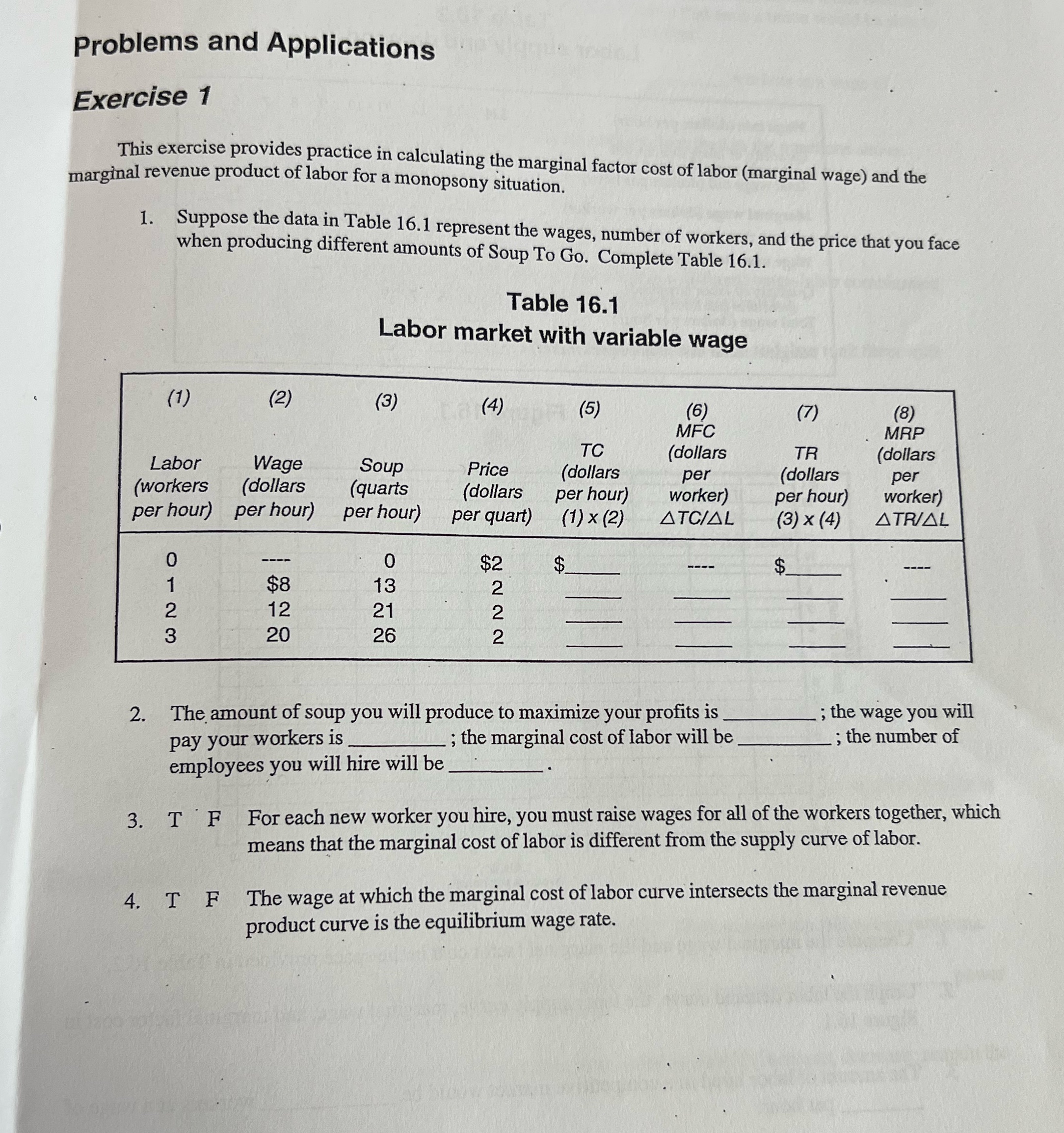
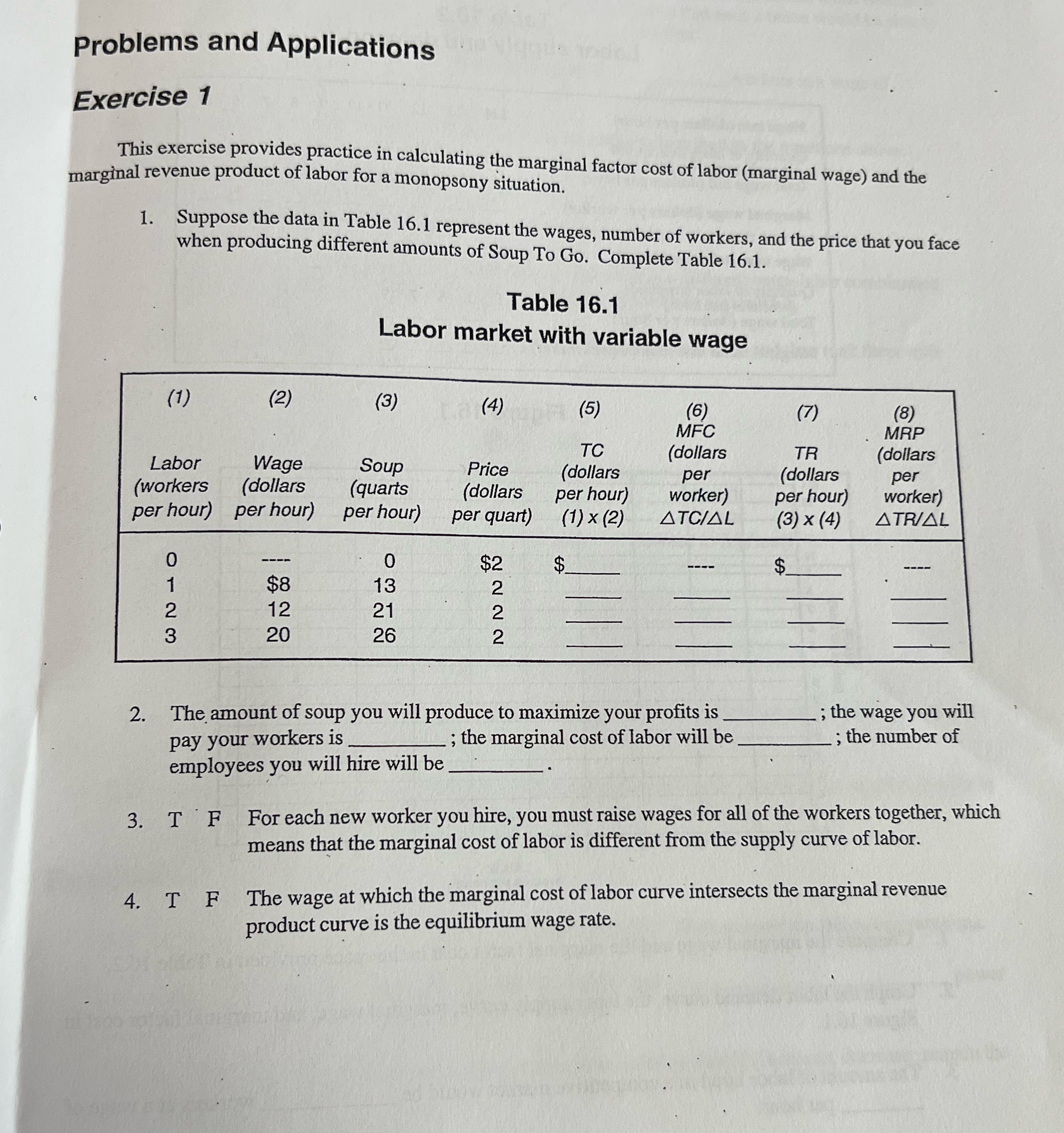
Problems and Applications Exercise 1 This exercise provides practice in calculating the marginal factor cost of labor (marginal wage) and the marginal revenue product of labor for a monopsony situation. 1. Suppose the data in Table 16.1 represent the wages, number of workers, and the price that you face when producing different amounts of Soup To Go. Complete Table 16.1. Table 16.1 Labor market with variable wage (1) (2) (3) ( 4 ) (5) (6) (7) (8) MFC MRP TC dollars TR (dollars Labor Wage Soup Price (dollars per ( dollars per (workers (dollars (quarts (dollars per hour) worker) per hour) worker) per hour) per hour) per hour) per quart) (1) x (2) ATCIAL (3) x (4) ATRIAL O $2 $ $8 13 W N - O 12 21 NNNI 20 26 2. The amount of soup you will produce to maximize your profits is ; the wage you will pay your workers is ; the marginal cost of labor will be ; the number of employees you will hire will be 3. T F For each new worker you hire, you must raise wages for all of the workers together, which means that the marginal cost of labor is different from the supply curve of labor. 4. T F The wage at which the marginal cost of labor curve intersects the marginal revenue product curve is the equilibrium wage rate
Step by Step Solution
There are 3 Steps involved in it

Get step-by-step solutions from verified subject matter experts
 Study Help