







Question: Problems: Chapters 1 7 , 1 9 , and 2 0 In the late 1 9 9 0 s , car leasing was very popular
Problems: Chapters and
In the late s car leasing was very popular in the United States. A customer would lease a car from the manufacturer for a set term, usually two years, and then have the option of keeping the car. If the customer decided to keep the car, the customer would pay a price to the manufacturer, the "residual value," computed as of the new car price. The manufacturer would then sell the returned cars at auction. In manufacturers lost an average of $ on each returned car the auction price was, on average, $ less than the residual value
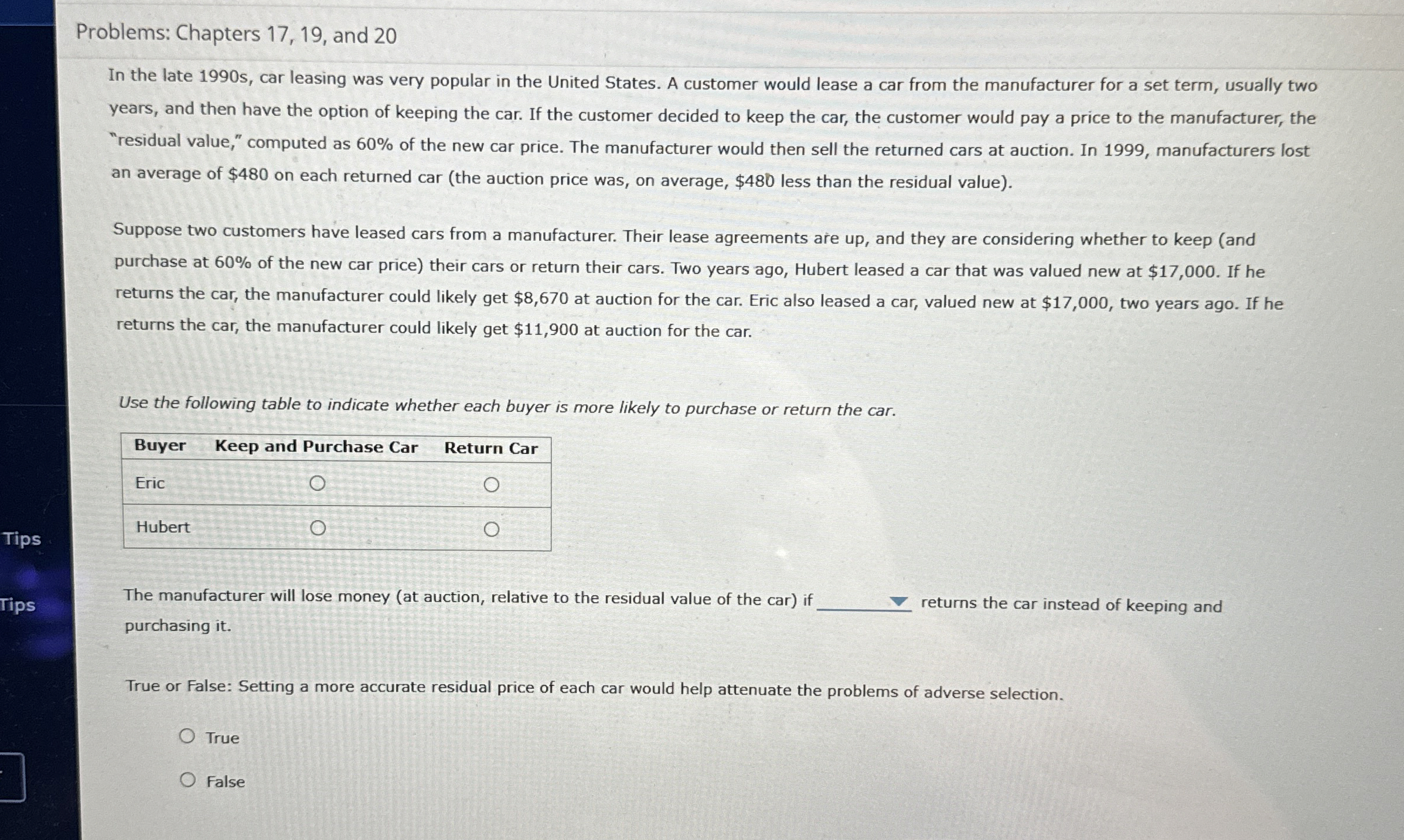
Suppose two customers have leased cars from a manufacturer. Their lease agreements are up and they are considering whether to keep and purchase at of the new car price their cars or return their cars. Two years ago, Hubert leased a car that was valued new at $ If he returns the car, the manufacturer could likely get $ at auction for the car. Eric also leased a car, valued new at $ two years ago. If he returns the car, the manufacturer could likely get $ at auction for the car.
Use the following table to indicate whether each buyer is more likely to purchase or return the car.
tableBuyerKeep and Purchase Car,Return CarEricHubert
The manufacturer will lose money at auction, relative to the residual value of the car if returns the car instead of keeping and purchasing it
True or False: Setting a more accurate residual price of each car would help attenuate the problems of adverse selection.
True
False
Step by Step Solution
There are 3 Steps involved in it
1 Expert Approved Answer
Step: 1 Unlock

Question Has Been Solved by an Expert!
Get step-by-step solutions from verified subject matter experts
Step: 2 Unlock
Step: 3 Unlock
 Study Help