





Question: Problems: The eXtended Markup Language (XML) is a widely used format for describing structured data. An XML document is a collection of matching start-tags and
 Problems: The eXtended Markup Language (XML) is a widely used format
for describing structured data. An XML document is a collection of matching

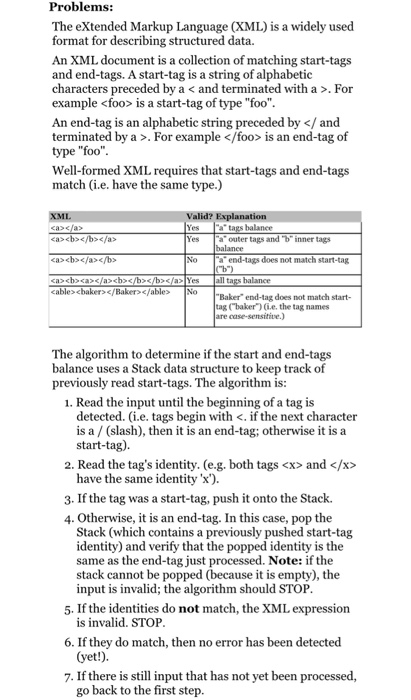
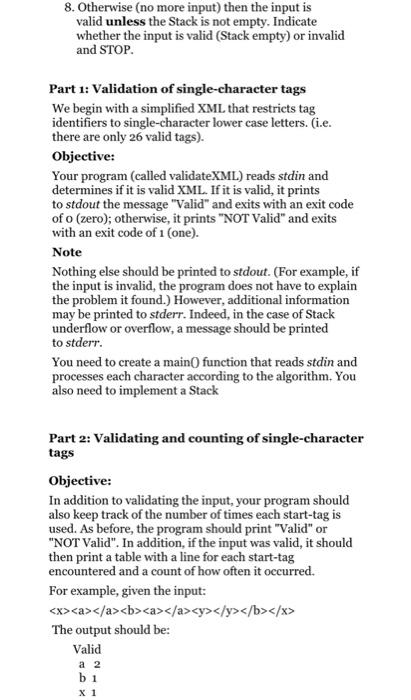
Problems: The eXtended Markup Language (XML) is a widely used format for describing structured data. An XML document is a collection of matching start-tags and end-tags. A start-tag is a string of alphabetic characters preceded by a . For example is a start-tag of type "foo An end-tag is an alphabetic string preceded by and terminated by a >. For example is an end-tag of type "foo Well-formed XML requires that start-tags and end-tags match (i.e. have the same type.) a" outer tags and "binner t No a" end-tags does not match start-tag cachocac/axchoc cablex cbaker> Yes al tags balance No end-tag does not match start- C"baker) Le, the tag names The algorithm to determine if the start and end-tags balance uses a Stack data structure to keep track of previously read start-tags. The algorithm is 1. Read the input until the beginning of a tag is detected. (i.e. tags begin with <. if the next character is a then it an end-tag otherwise start-tag read tag identity. both tags> and have the same identity 'x'). 3. If the tag was a start-tag, push it onto the Stack 4. Otherwise, it is an end-tag. In this case, pop the Stack (which contains a previously pushed start-tag identity) and verify that the popped identity is the same as the end-tag just processed. Note: if the stack cannot be popped (because it is empty), the input is invalid; the algorithm should STOP 5. If the identities do not match, the XML expression 6. If they do match, then no error has been detected 7. If there is still input that has not yet been processed, is invalid. STOP (yet!). go back to the first step

Step by Step Solution

There are 3 Steps involved in it

1 Expert Approved Answer
Step: 1 Unlock blur-text-image
Question Has Been Solved by an Expert!

Get step-by-step solutions from verified subject matter experts

Step: 2 Unlock
Step: 3 Unlock

Students Have Also Explored These Related Databases Questions!