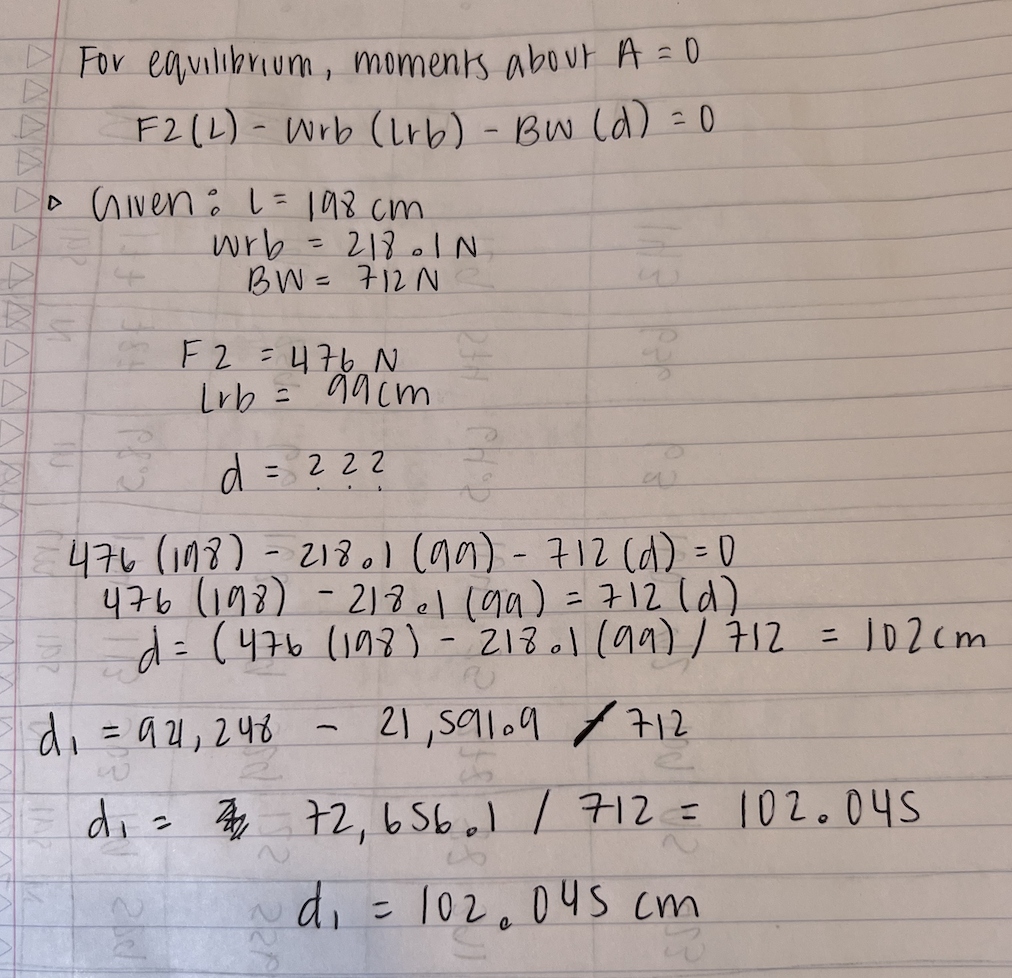
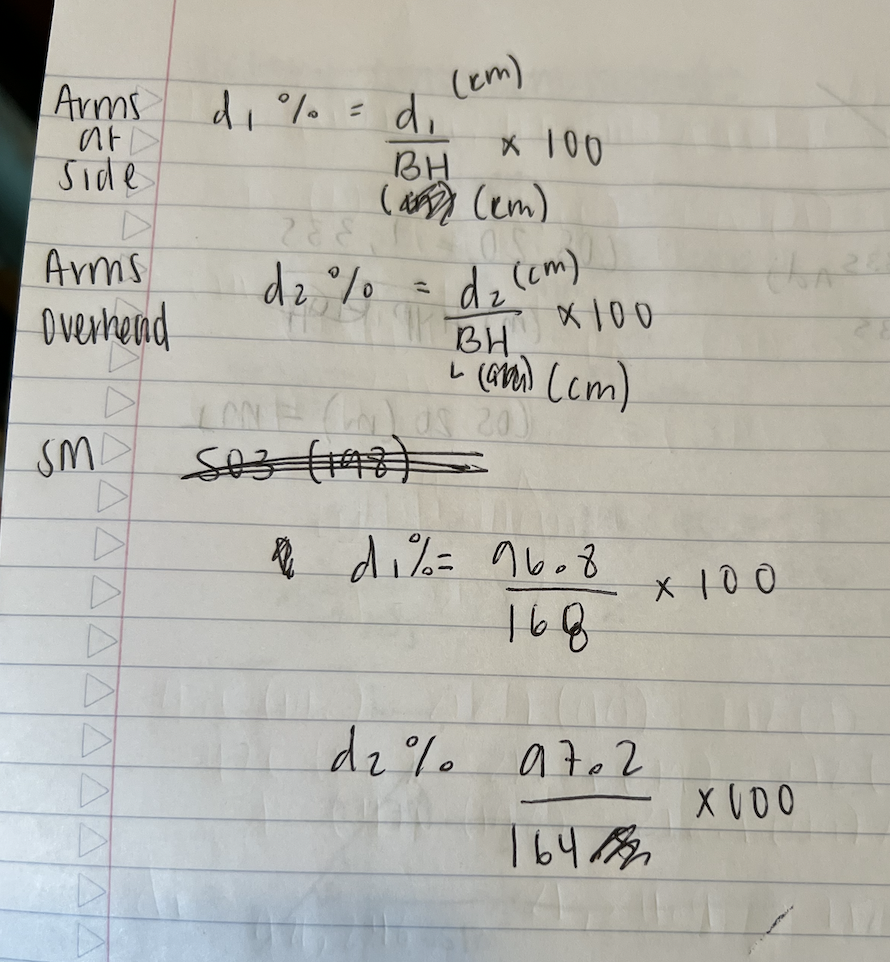
Question: Procedures To calculate the CG using this method, a person would lie on the reaction board under two separate conditions: one with their arms at
Procedures To calculate the CG using this method,Procedures To calculate the CG using this method,Procedures To calculate the CG using this method,Procedures To calculate the CG using this method,Procedures To calculate the CG using this method,
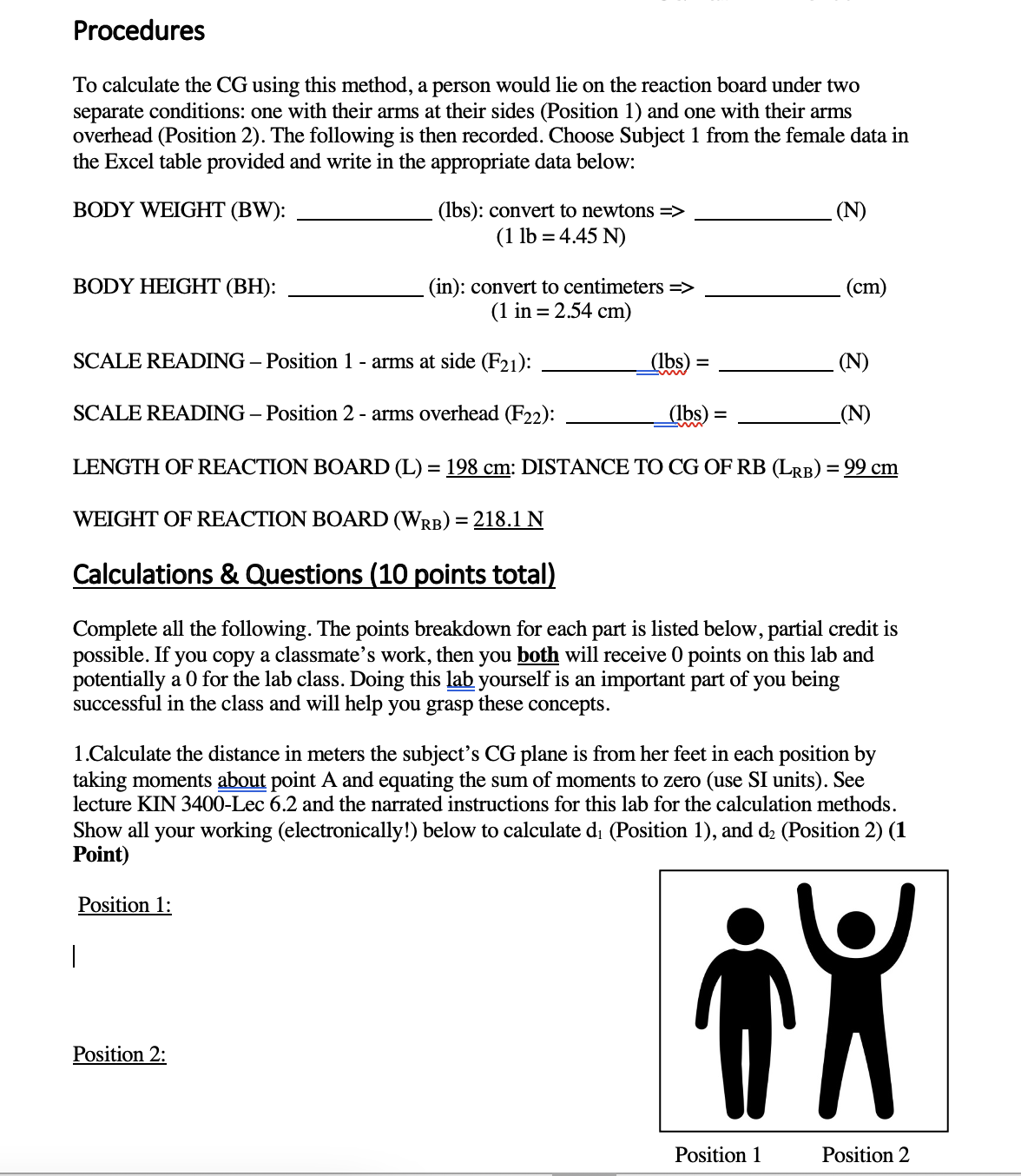
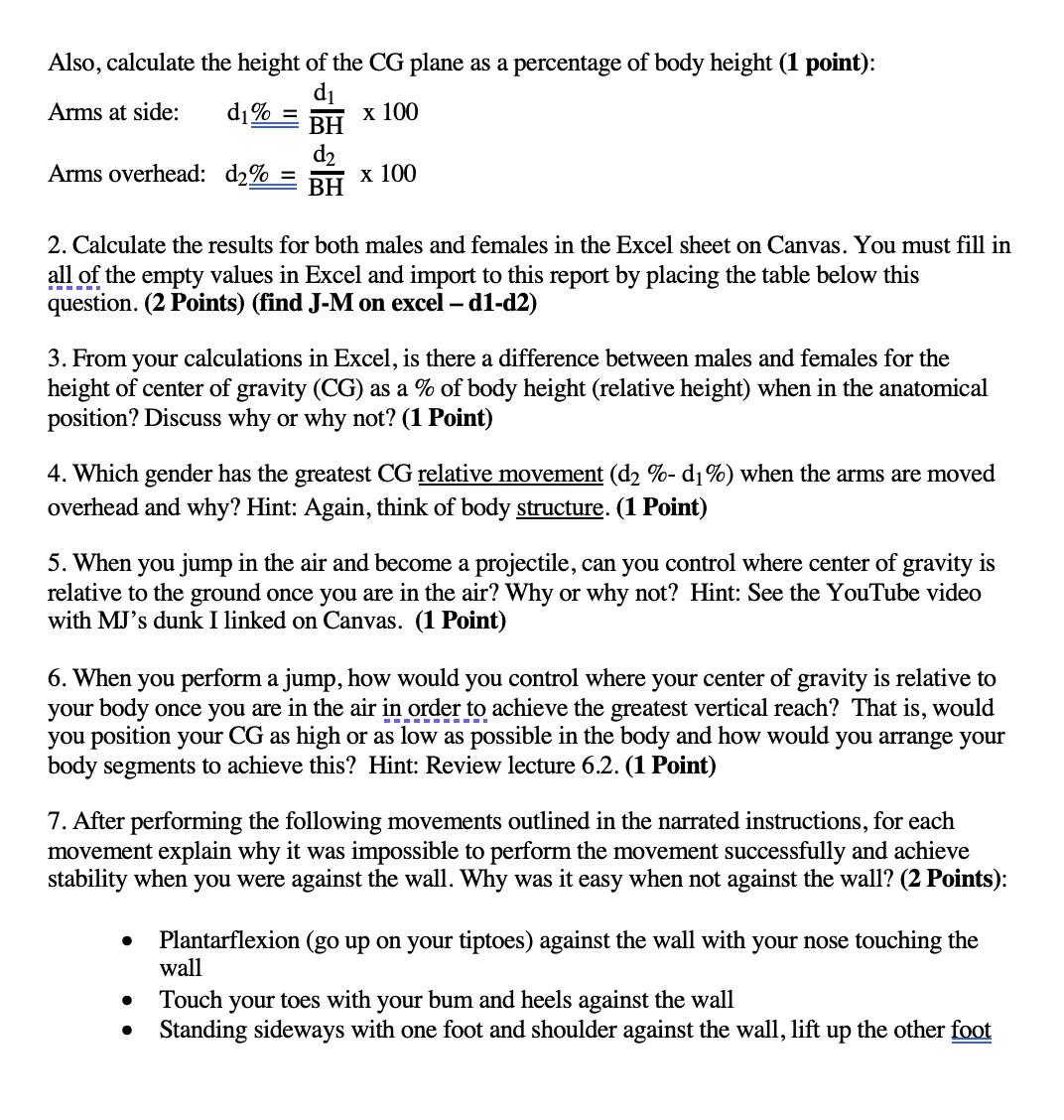
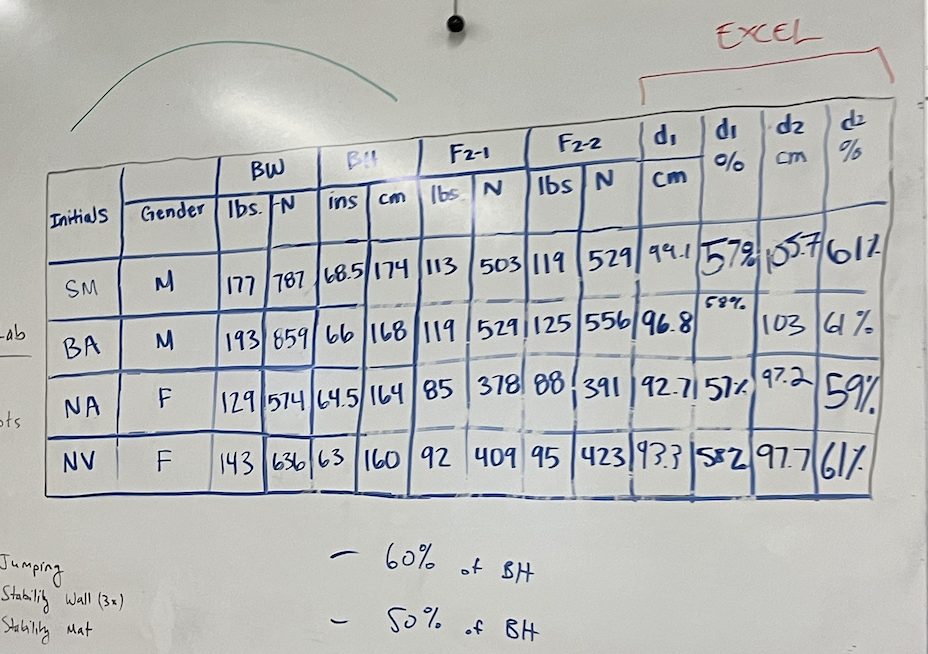
Procedures To calculate the CG using this method, a person would lie on the reaction board under two separate conditions: one with their arms at their sides (Position 1) and one with their arms overhead (Position 2). The following is then recorded. Choose Subject 1 from the female data in the Excel table provided and write in the appropriate data below: BODY WEIGHT (BW): (lbs): convert to newtons => (N) (1 lb = 4.45 N) BODY HEIGHT (BH): (in): convert to centimeters => (cm) (1 in = 2.54 cm) SCALE READING Position 1 - arms at side (F21): _ lbs} = (N) SCALE READING Position 2 - arms overhead (F22): _[ lbs = (N) LENGTH OF REACTION BOARD (L) = 198 cm: DISTANCE TO CG OF RB (LRB) = 99 cm WEIGHT OF REACTION BOARD (WRB) = 218.1 N Calculations & Questions (10 points total) Complete all the following. The points breakdown for each part is listed below, partial credit is possible. If you copy a classmate's work, then you both will receive 0 points on this lab and potentially a 0 for the lab class. Doing this libyourself is an important part of you being successful in the class and will help you grasp these concepts. 1.Calculate the distance in meters the subject's CG plane is from her feet in each position by taking moments abom; point A and equating the sum of moments to zero (use SI units). See lecture KIN 3400-Lec 6.2 and the narrated instructions for this lab for the calculation methods. Show all your working (electronically!) below to calculate d1 (Position 1), and d2 (Position 2) (1 Point) Position 1: Position 2: Position 1 Position 2 Also, calculate the height of the CG plane as a percentage of body height (1 point): . d1 Armsats1de: (11'? = 1m x100 d2 Armsoverhead: d2% = m x 100 2. Calculate the results for both males and females in the Excel sheet on Canvas. You must ll in all _o_f_ the empty values in Excel and import to this report by placing the table below this question. (2 Points) (find J -M on excel dl-d2) 3. From your calculations in Excel, is there a difference between males and females for the height of center of gravity (CG) as a % of body height (relative height) when in the anatomical position? Discuss why or why not? (1 Point) 4. Which gender has the greatest CG relative movement (d2 % d1%) when the arms are moved overhead and why? Hint: Again, think of body structure. (1 Point) 5. When you jump in the air and become a projectile, can you control where center of gravity is relative to the ground once you are in the air? Why or why not? Hint: See the YouTube video with MJ's dunk I linked on Canvas. (1 Point) 6. When you perform a jump, how would you control where your center of gravity is relative to your body once you are in the air i_n_qr_der _t9_ achieve the greatest vertical reach? That is, would you position your CG as high or as low as possible in the body and how would you arrange your body segments to achieve this? Hint: Review lecture 6.2. (1 Point) 7. After performing the following movements outlined in the narrated instructions, for each movement explain why it was impossible to perform the movement successfully and achieve stability when you were against the wall. Why was it easy when not against the wall? (2 Points): I Plantarexion (go up on your tiptoes) against the wall with your nose touching the wall I Touch your toes with your bum and heels against the wall 0 Standing sideways with one foot and shoulder against the wall, lift up the other m \f\f\f
Step by Step Solution

There are 3 Steps involved in it

1 Expert Approved Answer
Step: 1 Unlock blur-text-image
Question Has Been Solved by an Expert!

Get step-by-step solutions from verified subject matter experts

Step: 2 Unlock
Step: 3 Unlock

Students Have Also Explored These Related Mathematics Questions!