



Question: PROCESS COSTING AND DECISION ANALYSIS IN THE WINE INDUSTRY (OVERVIEW) BACKGROUND h-lylta lireven was recently hired as manager of A Your: Sant. a small independent
PROCESS COSTING AND DECISION ANALYSIS IN THE WINE INDUSTRY (OVERVIEW)
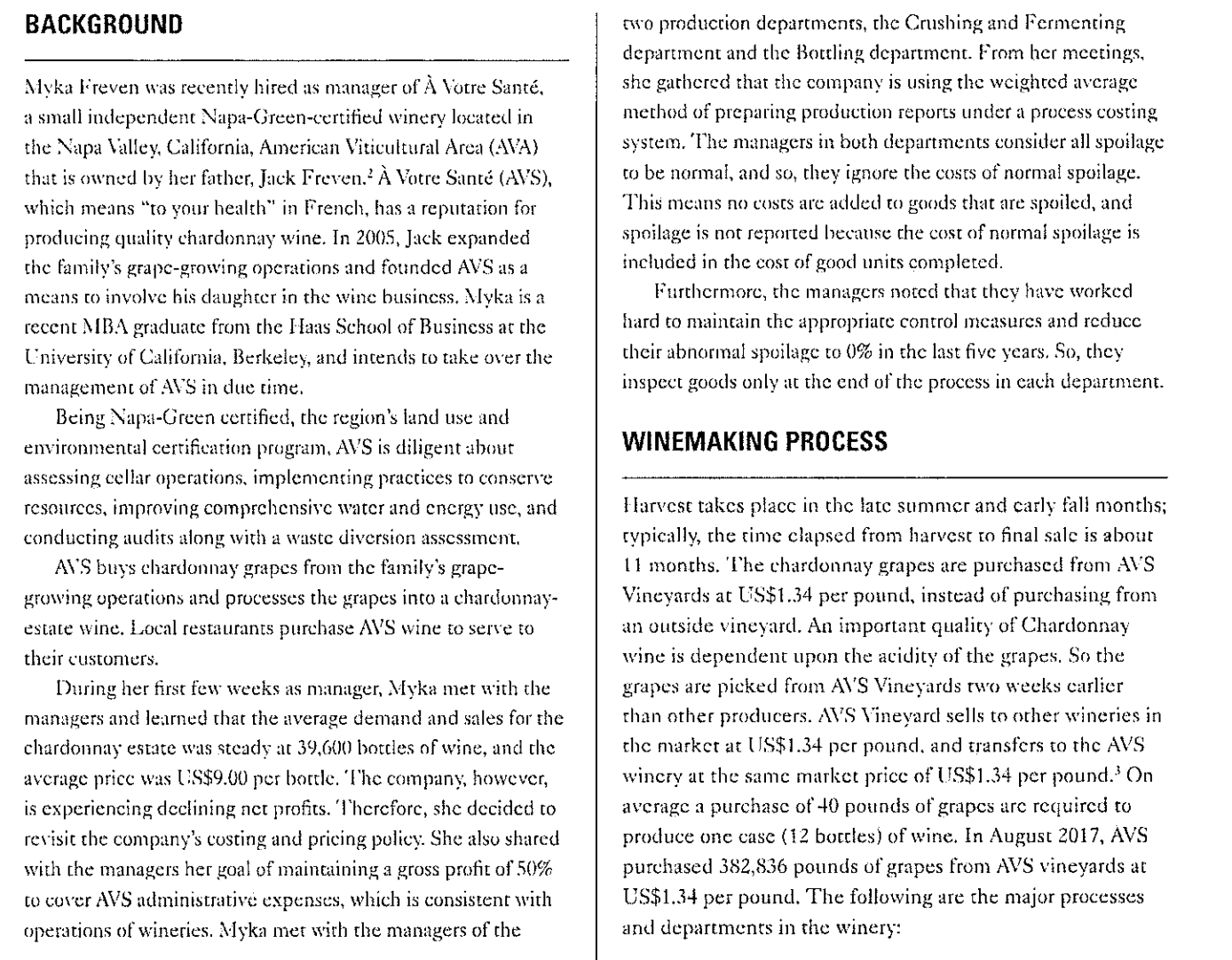
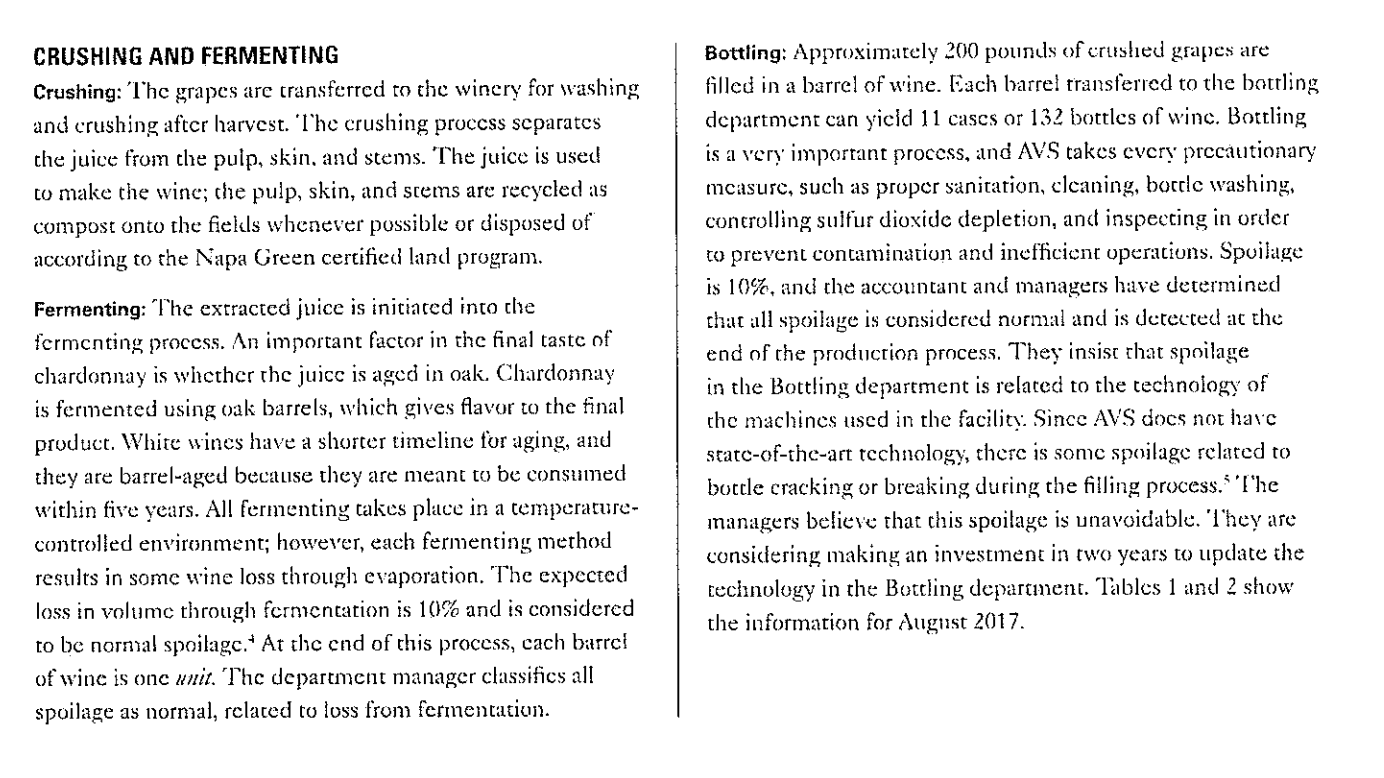
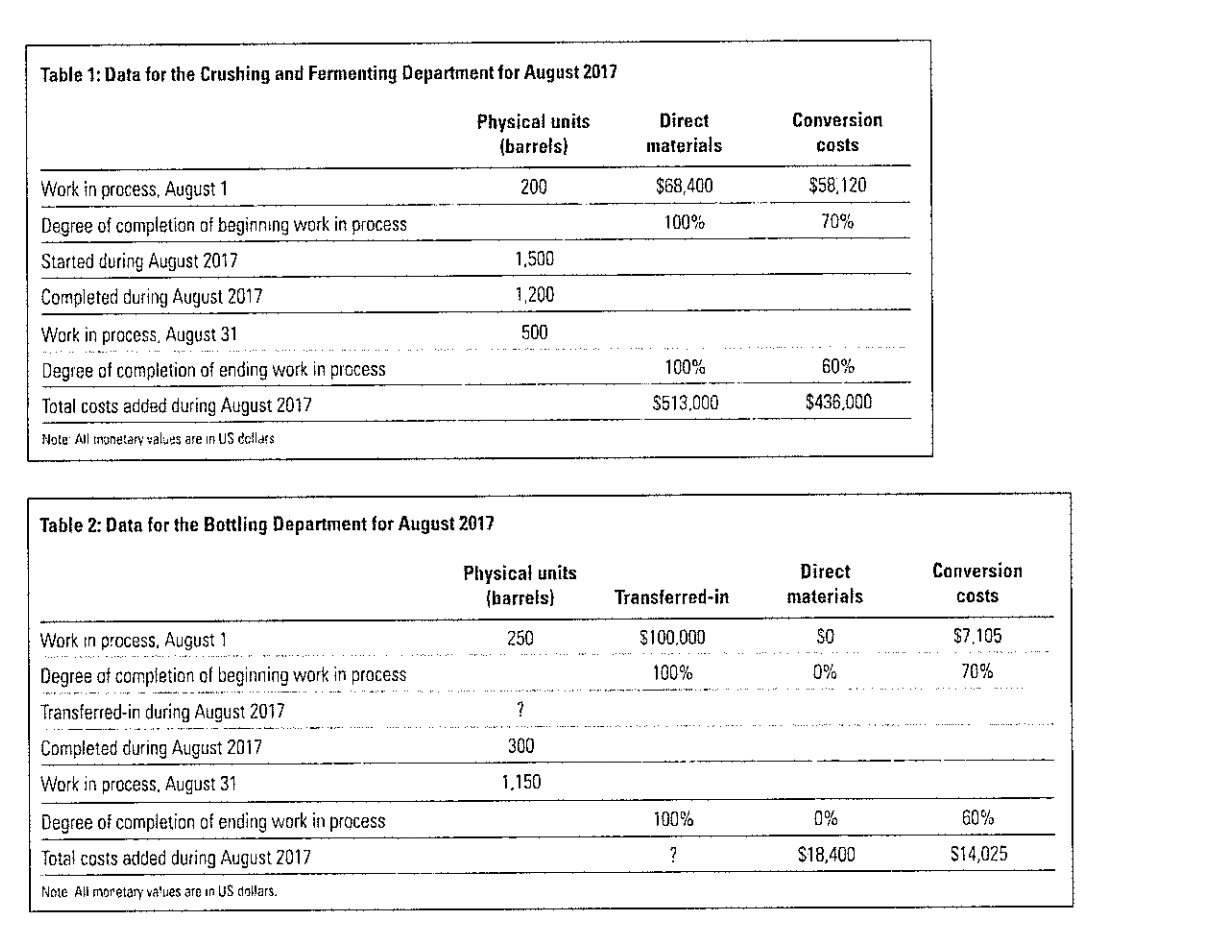
BACKGROUND h-lylta lireven was recently hired as manager of A Your: Sant. a small independent NapaGreon-ccrtied winery located in the Napa Valley. California. American Viticultural Area (AVA) that is owned by her father, Jack Frcvcn.2 A Votre Saute (AVS), which means \"to your health" in French, has a reputation for producing quality chardonnay wine. in 2005. Jack expanded the family's grape-gnawing operations and Founded AVS' as a means to involve his daughter in the wine business. Myka is a recent MBA graduate from the I-{aas School of Business at the University of California. Berkeiey, and intends to take over the management ofAVS in due time. Being Raps-Green certied. the region's land use and environmental certication program. MS is diligent about assessing cellar operations. implementing practices to conserve resources. improving comprehensive water and energy use, and conducting audits along with a \\ 'aste diversion assessment. AVS buys chardonnay grapes from the family's grape growing operations and processes the grapes into a chardonnay estate wine. Local restaurants purchase AVS wine to serve to their customers. During her rst few weeks as manager. Myka met with the managers and learned that the average demand and sales for the chardonnay estate was steady at 39.600 hottles ofwine. and the average price was US$9.00 per battle. The company. however, is experiencing declining net prots. 'l'hereforc, she decided to revisit the company's costing and pricing policy. She also shared with the inalmgers her goal of maintaining a gross prot ol'50% to cover AVS administrative expenses. which is consistent with operations of wineries. :'rlyka met with the managers of the two producrion departments. the Cmshing and Fermenting department and the Bottling department. From her meetings, she gathered that the company is using the weighted average method of preparing production reports under a process costing system. The managers in both departments consider all spoilage to be normal. and so. they ignore the costs ot'normai spoilage. This means no costs are added to goods that are spoiled. and spoilage is not reported liecallsc the cost of normal spoilage is included in the cost of good units completed. Furthermore, the managers notctl that they have worked hard to maintain the appropriate control measures and reduce their abnormal spoilage to 0% in the last ve years. So, they inspect goods only at the end of the process in each department. WINEMAKING PROCESS l-larvcst takes ptace in the late Slimmer and early fall months: typically, the time elapsed from harvest to nal sale is about 11 months. The chardonnay grapes are purchased from AVS Vineyards at US$1.34 per pound. instead of purchasing from an outside vineyard. An important quality of Chardonnay wine is dependent upon the acidity of the grapes. So the grapes are picked from A\\'S Vineyards two weeks earlier than other producers. AVS' Vineyard sells to other wineries in the market at US$1.34 per pound. and transfers to the AVS winery at the same market price of US$1.34 per pound} On average a purchase of-lD pounds of grapes are required to produce one case (12 bottles) of wine. In August 2017. AVS purchased 382,836 pounds ot'grapes from AV S vineyards at US$1.34 per pound. The following are the major processes and departments in the winery: CRUSHING AND FERMENTING Bottling: Approximately 200 pounds of crushed grapes are Crushing: The grapes are transferred to the winery for washing filled in a barrel of wine. Each barrel transferred to the bottling and crushing after harvest. 'The crushing process separates department can yield 11 cases or 132 bottles of wine. Bottling the juice from the pulp, skin. and stems. The juice is used is a very important process, and AVS takes every precautionary to make the wine; the pulp, skin, and stems are recycled as measure, such as proper sanitation, cleaning, borde washing, compost onto the fields whenever possible or disposed of controlling sulfur dioxide depletion, and inspecting in order according to the Napa Green certified land program. to prevent contamination and inefficient operations. Spoilage Fermenting: "The extracted juice is initiated into the is 10%, and the accountant and managers have determined fermenting process. An important factor in the final taste of that all spoilage is considered normal and is detected at the chardonnay is whether the juice is aged in oak. Chardonnay end of the production process. They insist that spoilage is fermented using oak barrels, which gives flavor to the final in the Bottling department is related to the technology of product. White wines have a shorter timeline for aging, and the machines used in the facility. Since AVS does not have they are barrel-aged because they are meant to be consumed state-of-the-art technology, there is some spoilage related to within five years. All fermenting takes place in a temperature- bottle cracking or breaking during the filling process.' 'The controlled environment; however, each fermenting method managers believe that this spoilage is unavoidable. They are results in some wine loss through evaporation. The expected considering making an investment in two years to update the loss in volume through fermentation is 10% and is considered technology in the Bottling department. Tables 1 and 2 show to be normal spoilage.* At the end of this process, cach burrci the information for August 2017. of wine is one unit. The department manager classifies all spoilage as normal, related to loss from fermentation.Table 1: Data for the Crushing and Fermenting Department for August 2017 Physical units Direct Conversion (barrels) materials costs Work in process, August 1 200 $68,400 $58, 120 Degree of completion of beginning work in process 100% 70% Started during August 2017 1,500 Completed during August 2017 1,200 Work in process, August 31 500 Degree of completion of ending work in process 1009 60% Total costs added during August 2017 $513,000 $436,000 Note All monetary values are in US dollars Table 2: Data for the Bottling Department for August 2017 Physical units Direct Conversion (barrels) Transferred-in materials costs Work In process. August 1 250 $100,000 SO $7.105 -.. .. . - - .. ." - Degree of completion of beginning work in process 100% 0% 70% Transferred-in during August 2017 ? Completed during August 2017 300 Work in process. August 31 1.150 Degree of completion of ending work in process 100% 0% 50% Total costs added during August 2017 ? $18,400 $14,025 Note All moretary values are in US dollars
Step by Step Solution
There are 3 Steps involved in it

Get step-by-step solutions from verified subject matter experts