







Question: Processing times and due dates for five jobs are shown in the table below. Assume the jobs are processed using the earliest-due-date rule. 12. What
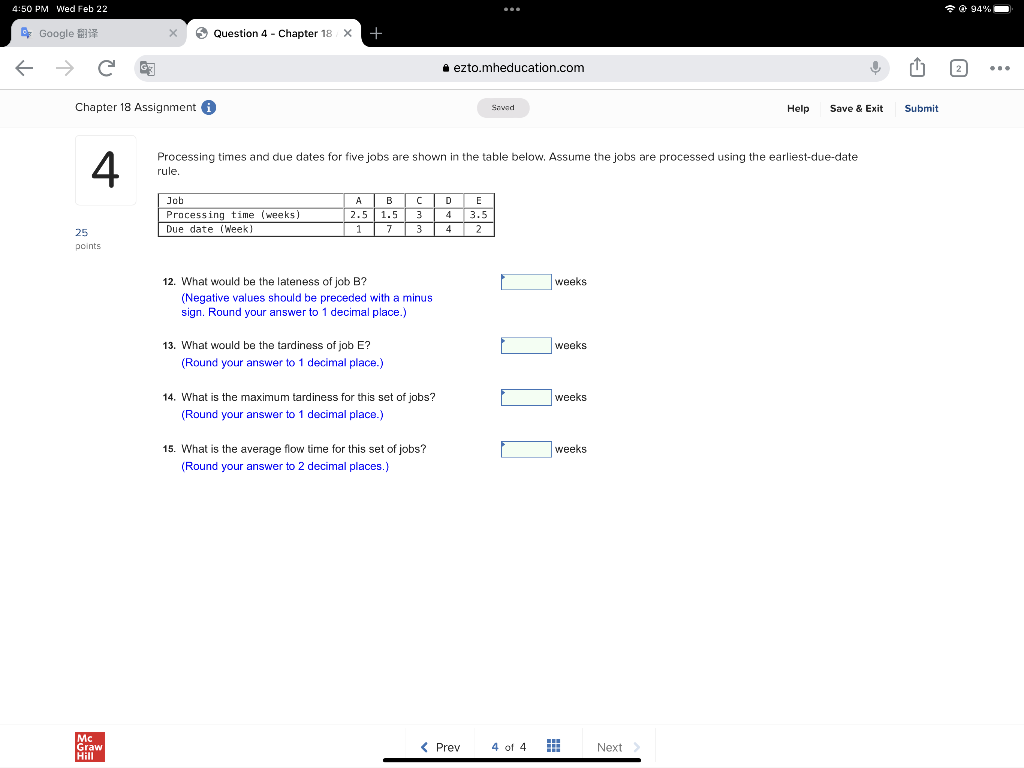
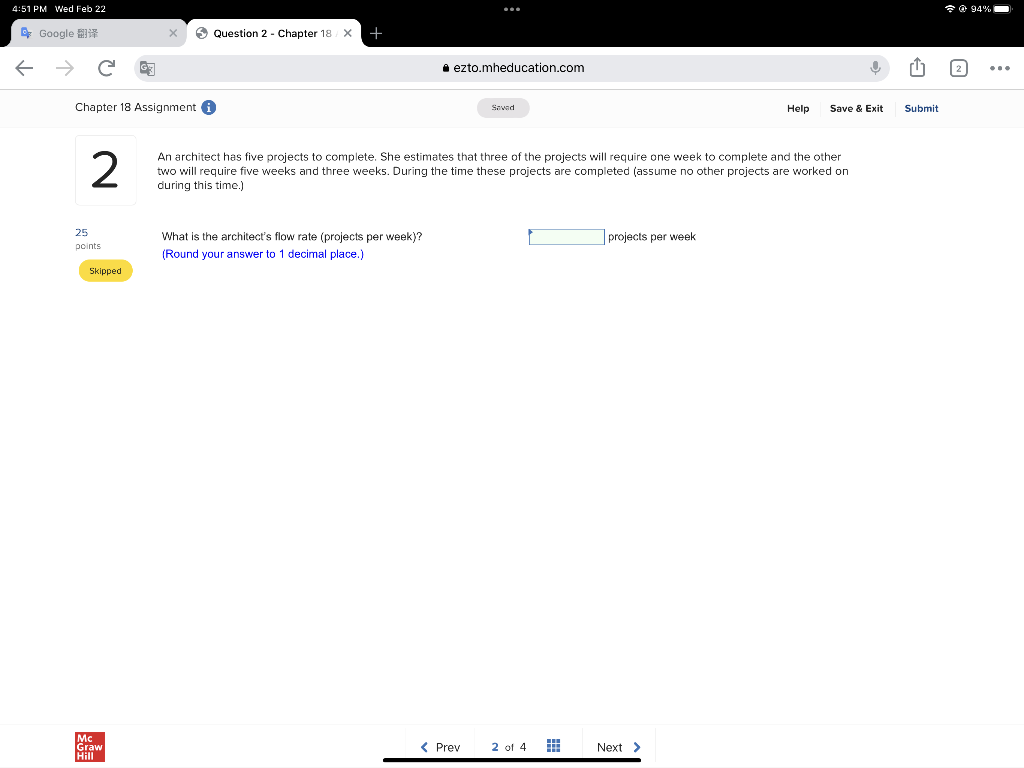
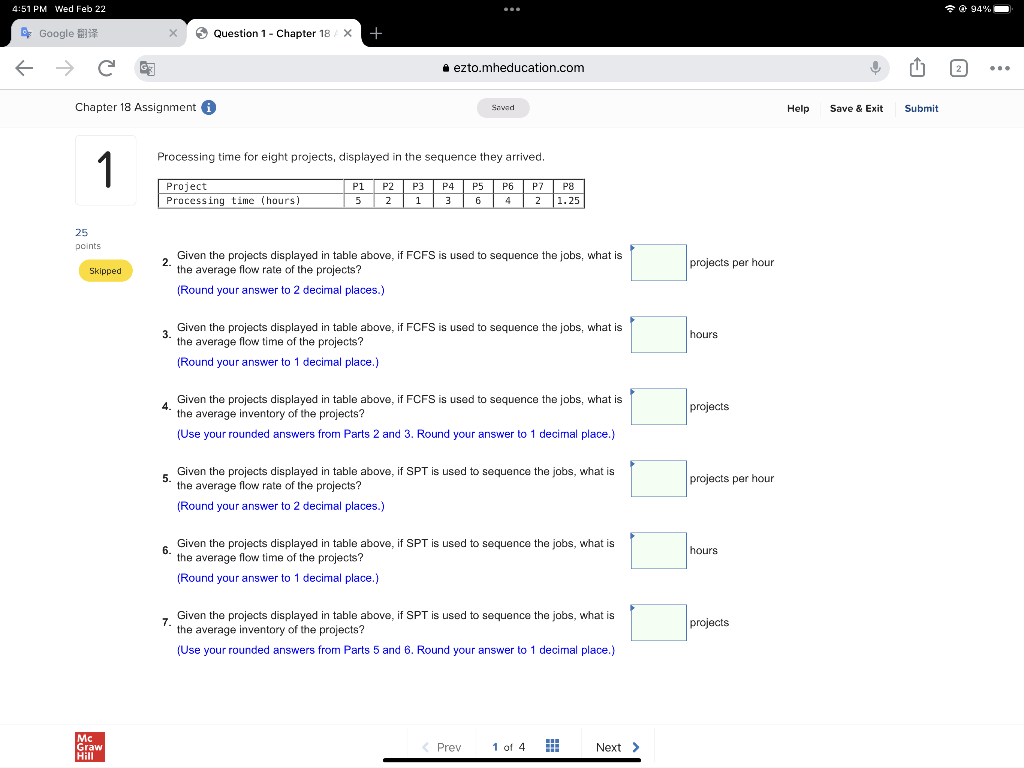
Processing times and due dates for five jobs are shown in the table below. Assume the jobs are processed using the earliest-due-date rule. 12. What would be the lateness of job B? weeks (Negative values should be preceded with a minus sign. Round your answer to 1 decimal place.) 13. What would be the tardiness of job E? weeks (Round your answer to 1 decimal place.) 14. What is the maximum tardiness for this set of jobs? weeks (Round your answer to 1 decimal place.) 15. What is the average flow time for this set of jobs? weeks (Round your answer to 2 decimal places.) An architect has five projects to complete. She estimates that three of the projects will require one week to complete and the other two will require five weeks and three weeks. During the time these projects are completed assume no other projects are worked on during this time.) What is the architect's flow rate (projects per week)? projects per week (Round your answer to 1 decimal place.) Processing time for eight projects, displayed in the sequence they arrived. 2. Given the projects displayed in table above, if FCFS is used to sequence the jobs, what is the average flow rate of the projects? projects per hour (Round your answer to 2 decimal places.) 3. Given the projects displayed in table above, if FCFS is used to sequence the jobs, what is hours the average flow time of the projects? (Round your answer to 1 decimal place.) 4. Given the projects displayed in table above, if FCFS is used to sequence the jobs, what is the average inventory of the projects? projects (Use your rounded answers from Parts 2 and 3. Round your answer to 1 decimal place.) 5. Given the projects displayed in table above, if SPT is used to sequence the jobs, what is the average flow rate of the projects? projects per hour (Round your answer to 2 decimal places.) 6. Given the projects displayed in table above, if SPT is used to sequence the jobs, what is hours the average flow time of the projects? (Round your answer to 1 decimal place.) 7. Given the projects displayed in table above, if SPT is used to sequence the jobs, what is the average inventory of the projects? projects (Use your rounded answers from Parts 5 and 6 . Round your answer to 1 decimal place.)
Step by Step Solution
There are 3 Steps involved in it

Get step-by-step solutions from verified subject matter experts
 Study Help