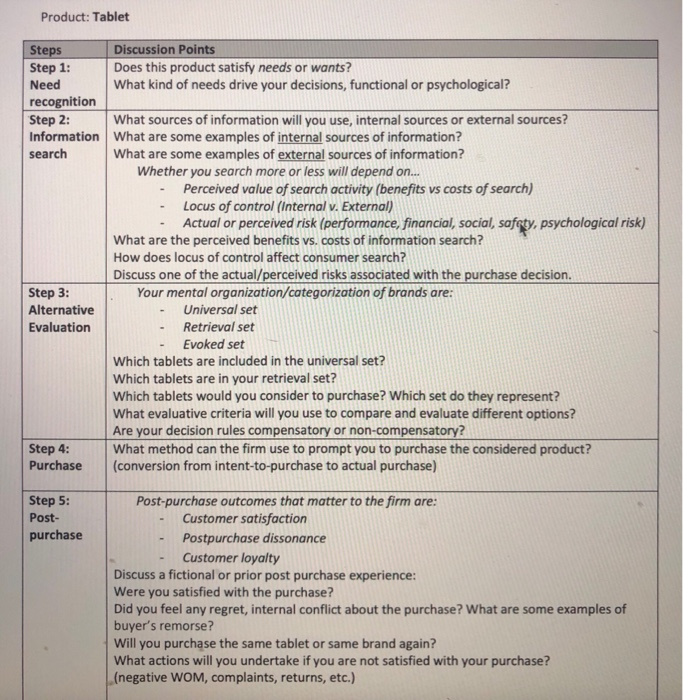
Question: Product: Tablet Steps Discussion Points Step 1: Does this product satisfy needs or wants? Need What kind of needs drive your decisions, functional or psychological?
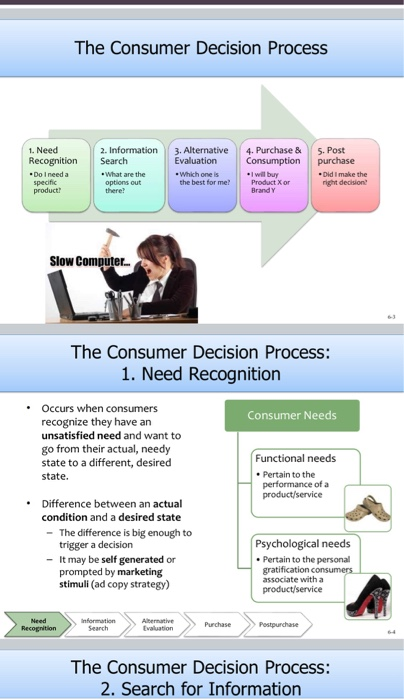
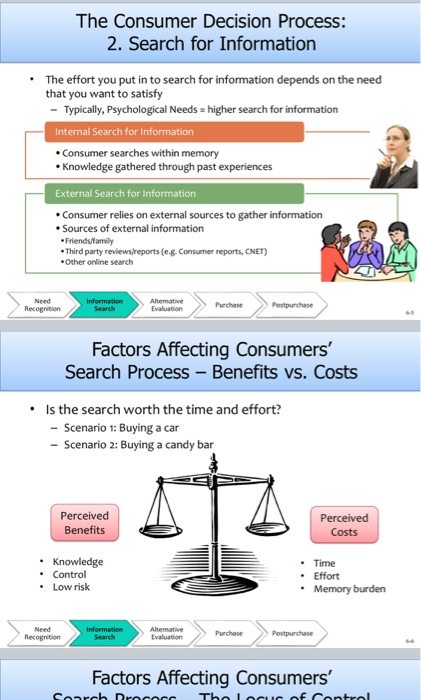
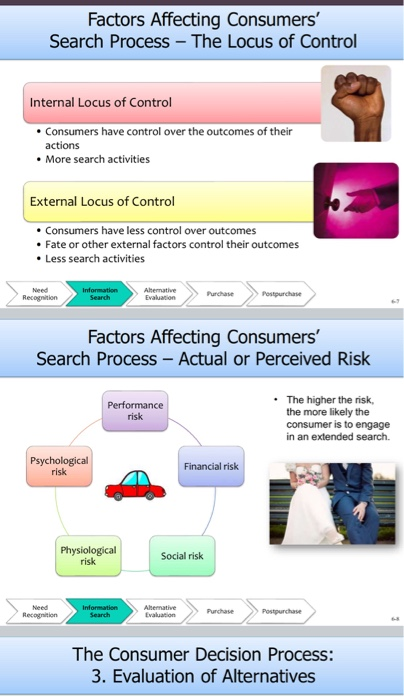
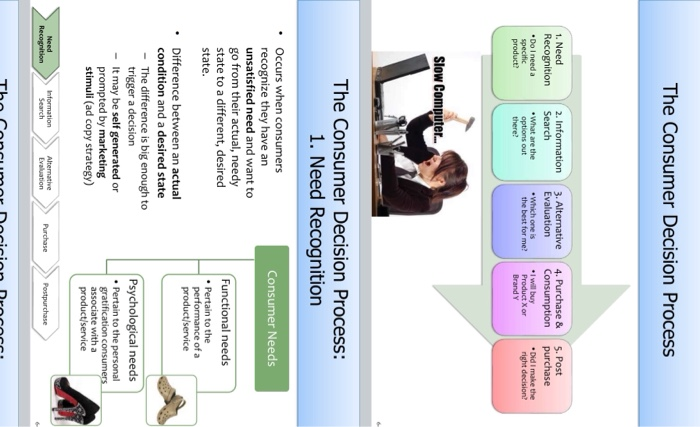
Product: Tablet Steps Discussion Points Step 1: Does this product satisfy needs or wants? Need What kind of needs drive your decisions, functional or psychological? recognition Step 2: What sources of information will you use, internal sources or external sources? Information What are some examples of internal sources of information? search What are some examples of external sources of information? Whether you search more or less will depend on... Perceived value of search activity (benefits vs costs of search) Locus of control (Internal v. External) Actual or perceived risk (performance, financial, social, safety, psychological risk) What are the perceived benefits vs. costs of information search? How does locus of control affect consumer search? Discuss one of the actual/perceived risks associated with the purchase decision. Step 3: Your mental organization/categorization of brands are: Alternative Universal set Evaluation Retrieval set Evoked set Which tablets are included in the universal set? Which tablets are in your retrieval set? Which tablets would you consider to purchase? Which set do they represent? What evaluative criteria will you use to compare and evaluate different options? Are your decision rules compensatory or non-compensatory? Step 4: What method can the firm use to prompt you to purchase the considered product? Purchase (conversion from intent-to-purchase to actual purchase) Step 5: Post- purchase Post-purchase outcomes that matter to the firm are: Customer satisfaction Postpurchase dissonance Customer loyalty Discuss a fictional or prior post purchase experience: Were you satisfied with the purchase? Did you feel any regret, internal conflict about the purchase? What are some examples of buyer's remorse? Will you purchase the same tablet or same brand again? What actions will you undertake if you are not satisfied with your purchase? (negative WOM, complaints, returns, etc.) The Consumer Decision Process 1. Need Recognition Do I need a specific product 2. Information Search What are the options out there! 3. Alternative Evaluation Which one is the best for me! 4. Purchase & Consumption I will buy Product or Brandy 5. Post purchase Did I make the right decision Slow Computer The Consumer Decision Process: 1. Need Recognition Consumer Needs Occurs when consumers recognize they have an unsatisfied need and want to go from their actual, needy state to a different, desired state. Functional needs Pertain to the performance of a product/service Difference between an actual condition and a desired state - The difference is big enough to trigger a decision - It may be self generated or prompted by marketing stimuli (ad copy strategy) Psychological needs Pertain to the personal gratification consumers associate with a product/service Need Recognition Information Search Evaluation Purchase Postpurchase The Consumer Decision Process: 2. Search for Information The Consumer Decision Process: 2. Search for Information The effort you put in to search for information depends on the need that you want to satisfy Typically, Psychological Needs = higher search for information Internal Search for Information . Consumer searches within memory Knowledge gathered through past experiences External Search for Information Consumer relies on external sources to gather information Sources of external information Friends/family *Third party reviews/reports (e.g. Consumer reports, CNET) Other online search Need Recognition Information Search Alterative Evaluation Purchase Postpurchase Factors Affecting Consumers' Search Process Benefits vs. Costs Is the search worth the time and effort? - Scenario 1: Buying a car - Scenario 2: Buying a candy bar Perceived Benefits Perceived Costs Knowledge Control Low risk Time Effort Memory burden Need Recognition Information Search Alterative Evaluation Purchase Postpurchase Factors Affecting Consumers' Coach Drecoce The lace of control Factors Affecting Consumers' Search Process The Locus of Control Internal Locus of Control Consumers have control over the outcomes of their actions . More search activities External Locus of Control Consumers have less control over outcomes Fate or other external factors control their outcomes Less search activities Need Recognition Information Search Alternative Evaluation Purchase Postpurchase Factors Affecting Consumers' Search Process Actual or Perceived Risk Performance risk The higher the risk the more likely the consumer is to engage in an extended search Psychological risk Financial risk Physiological risk Social risk Need Recognition Information Search Alternative Evaluation Purchase Postpurchase The Consumer Decision Process: 3. Evaluation of Alternatives The Consumer Decision Process 1. Need Recognition Do I need a specific product? 2. Information Search What are the options out there? 3. Alternative Evaluation Which one is the best for me! 4. Purchase & Consumption I will buy Product Xor Brand Y 5. Post purchase Did I make the right decision Slow Computer. The Consumer Decision Process: 1. Need Recognition Consumer Needs Occurs when consumers recognize they have an unsatisfied need and want to go from their actual, needy state to a different, desired state. Functional needs Pertain to the performance of a product/service Difference between an actual condition and a desired state The difference is big enough to trigger a decision - It may be self generated or prompted by marketing stimuli (ad copy strategy) Psychological needs Pertain to the personal gratification consumers associate with a product/service Need Recognition Information Search Alternative Evaluation Purchase Postpurchase Product: Tablet Steps Discussion Points Step 1: Does this product satisfy needs or wants? Need What kind of needs drive your decisions, functional or psychological? recognition Step 2: What sources of information will you use, internal sources or external sources? Information What are some examples of internal sources of information? search What are some examples of external sources of information? Whether you search more or less will depend on... Perceived value of search activity (benefits vs costs of search) Locus of control (Internal v. External) Actual or perceived risk (performance, financial, social, safety, psychological risk) What are the perceived benefits vs. costs of information search? How does locus of control affect consumer search? Discuss one of the actual/perceived risks associated with the purchase decision. Step 3: Your mental organization/categorization of brands are: Alternative Universal set Evaluation Retrieval set Evoked set Which tablets are included in the universal set? Which tablets are in your retrieval set? Which tablets would you consider to purchase? Which set do they represent? What evaluative criteria will you use to compare and evaluate different options? Are your decision rules compensatory or non-compensatory? Step 4: What method can the firm use to prompt you to purchase the considered product? Purchase (conversion from intent-to-purchase to actual purchase) Step 5: Post- purchase Post-purchase outcomes that matter to the firm are: Customer satisfaction Postpurchase dissonance Customer loyalty Discuss a fictional or prior post purchase experience: Were you satisfied with the purchase? Did you feel any regret, internal conflict about the purchase? What are some examples of buyer's remorse? Will you purchase the same tablet or same brand again? What actions will you undertake if you are not satisfied with your purchase? (negative WOM, complaints, returns, etc.) The Consumer Decision Process 1. Need Recognition Do I need a specific product 2. Information Search What are the options out there! 3. Alternative Evaluation Which one is the best for me! 4. Purchase & Consumption I will buy Product or Brandy 5. Post purchase Did I make the right decision Slow Computer The Consumer Decision Process: 1. Need Recognition Consumer Needs Occurs when consumers recognize they have an unsatisfied need and want to go from their actual, needy state to a different, desired state. Functional needs Pertain to the performance of a product/service Difference between an actual condition and a desired state - The difference is big enough to trigger a decision - It may be self generated or prompted by marketing stimuli (ad copy strategy) Psychological needs Pertain to the personal gratification consumers associate with a product/service Need Recognition Information Search Evaluation Purchase Postpurchase The Consumer Decision Process: 2. Search for Information The Consumer Decision Process: 2. Search for Information The effort you put in to search for information depends on the need that you want to satisfy Typically, Psychological Needs = higher search for information Internal Search for Information . Consumer searches within memory Knowledge gathered through past experiences External Search for Information Consumer relies on external sources to gather information Sources of external information Friends/family *Third party reviews/reports (e.g. Consumer reports, CNET) Other online search Need Recognition Information Search Alterative Evaluation Purchase Postpurchase Factors Affecting Consumers' Search Process Benefits vs. Costs Is the search worth the time and effort? - Scenario 1: Buying a car - Scenario 2: Buying a candy bar Perceived Benefits Perceived Costs Knowledge Control Low risk Time Effort Memory burden Need Recognition Information Search Alterative Evaluation Purchase Postpurchase Factors Affecting Consumers' Coach Drecoce The lace of control Factors Affecting Consumers' Search Process The Locus of Control Internal Locus of Control Consumers have control over the outcomes of their actions . More search activities External Locus of Control Consumers have less control over outcomes Fate or other external factors control their outcomes Less search activities Need Recognition Information Search Alternative Evaluation Purchase Postpurchase Factors Affecting Consumers' Search Process Actual or Perceived Risk Performance risk The higher the risk the more likely the consumer is to engage in an extended search Psychological risk Financial risk Physiological risk Social risk Need Recognition Information Search Alternative Evaluation Purchase Postpurchase The Consumer Decision Process: 3. Evaluation of Alternatives The Consumer Decision Process 1. Need Recognition Do I need a specific product? 2. Information Search What are the options out there? 3. Alternative Evaluation Which one is the best for me! 4. Purchase & Consumption I will buy Product Xor Brand Y 5. Post purchase Did I make the right decision Slow Computer. The Consumer Decision Process: 1. Need Recognition Consumer Needs Occurs when consumers recognize they have an unsatisfied need and want to go from their actual, needy state to a different, desired state. Functional needs Pertain to the performance of a product/service Difference between an actual condition and a desired state The difference is big enough to trigger a decision - It may be self generated or prompted by marketing stimuli (ad copy strategy) Psychological needs Pertain to the personal gratification consumers associate with a product/service Need Recognition Information Search Alternative Evaluation Purchase Postpurchase









 Study Help