Question: PROJECT DATA: AN URBAN TRANSPORTATION STUDY Question 1: Evaluate the overall design with respect to possible sources of bias in the results and the reasons
PROJECT DATA: AN URBAN TRANSPORTATION STUDY
Question 1: Evaluate the overall design with respect to possible sources of bias in the results and the reasons for the poor response rate.
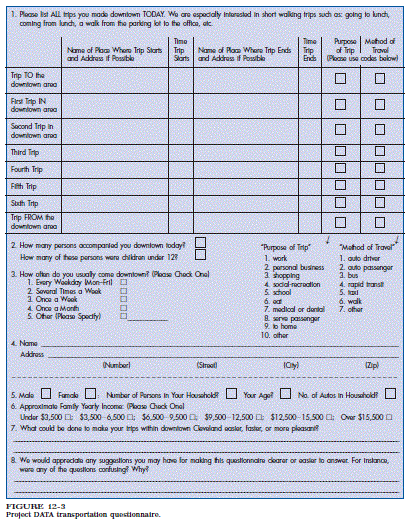
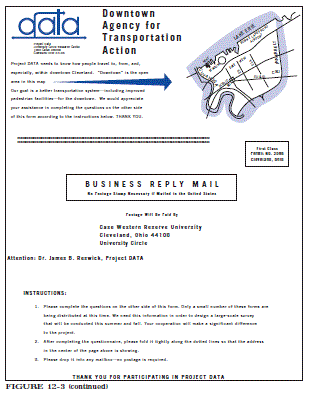
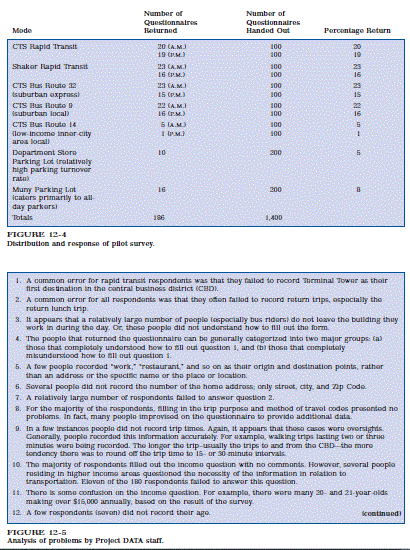
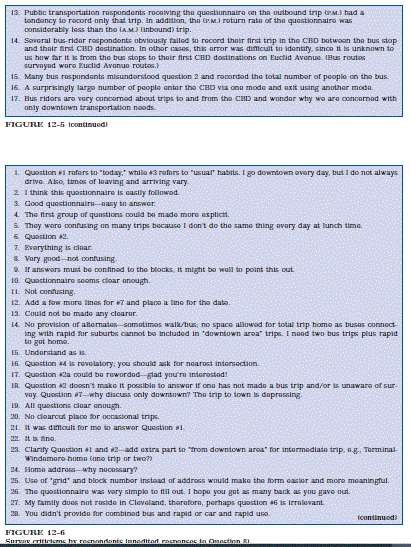
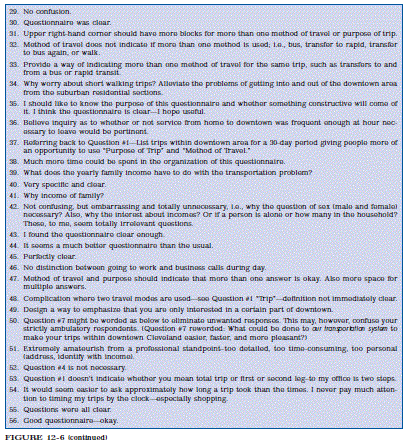
time whether to stay with the mail-back questionnaire method or try some other, more costly, procedure. Not to change would involve persuading the other members of the research team that the problems encountered in the pretest could be overcome and that the mail-back method would yield sufficiently accurate results. CASE 12-4 Project DATA: An Urban Transportation Study The Downtown Agency for Transportation Action proj- ect (Project DATA) was a collaborative approach to the problem of improving the high-density movement of people and goods within downtown Cleveland. In August 1996, the survey researcher employed by Project DATA was wondering how to collect downtown origin and destination (DOD) data for input to a comprehen- sive model of traveler behavior in downtown Cleveland. Problems had been compounded by a poor response rate to a recent test of the preferred method of data collec- tion, a mail-back questionnaire distributed to rapid- transit users, bus patrons, and automobile travelers. Consequently, the researcher had to decide in a short Background Downtown Cleveland represented one of the most important concentrations of people in the Midwest. It generally was defined as an area encircled by the Cuyahoga River Valley, the Innerbelt Freeway, and Lake Erie. For the purposes of Project DATA, this definition was modified slightly to include the down- town-oriented activity centers adjacent to the south- east corner of the area outside the Innerbelt Freeway. These centers include the future location of Cuyahoga *Funds and assistance for the project were provided by Case Western Reserve University, Battelle Memorial Institute, Clty of Cleveland, Cleveland- Seven County Transportation-Land Use Study, Cleveland Transit System, Cuyahoga County, and US Department of Housing and Urban Development. 5. The time distribution of the people-movement pat terns throughout a 24-hour period A number of alternative methods for collecting the DOD information were considered. These included matl-back questionnaires distributed to people at key locations within the downtown area, personal inter- views conducted at these same key locations, telephone surveys, trip diaries distributed to people to complete over extended periods of time, mail-back question- natres sent to houses, personal home Interviews, news paper coupons to be completed and returned by mail, and a system of distributing and collecting procoded computer cards to reflect origins and destinations of trips within the downtown area. An evaluation of the various survey designs was made by the Project DATA staff. It decided that a mall- hack questionnaire distributed at key locations within the downtown and was the most realise approach to collecting the needed information, taking into account the time and financial constraints of the project. To test this decision, a pilot survey was conducted. The objec- tives were Community College and the St. Vincent Hospital and its parking area There had been considerable progress in making downtown Cleveland more accessible through rat rapid transdt and freeways, however, facilities to expeditte the movement of people and goods within the downtown area were being installed at a much slower rate Trans- portation planners had tended to treat downtown Cleveland as a terminus potnt for regional line-haul transportation, yet the downtown Covered a broad land area with several separate activity cuntess and a solid network of business, commercial and entertainment facilities. Except for a downtown loop bus system, there was hitle transportation among these centers. The lack of transportation was regarded as a con- tributing factor in the deterioration of downtown Cleveland and many other urban arms. After the Hough riots, Cleveland was chosen by the US Depart- ment of Transportation as the site of the first large- scale effort to design a comprehensive central urban transportation network. A number of systems were under consideration, including (1) train-type systems, (2) small automatic taxts, and (3) continuous systems Each was to be evaluated by a model that would sim- ulate the decision process of different user segments. The model would consider where and how us move from one place to another for various trip purposes within the downtown area. The DOD data being col- lected by Project DATA were to be the base for the calibration of the simulation model. In addition, the data would be used in the development of interim projects to improve the existing downtown trans- portation system. Thus, there was considerable urgency behind the rouest for the data. Designing the DOD Study The first step was to establish the purpose of the study After extensive discussions, it was agreed that the fol lowing types of Information were needed: 1. The numbers and socioeconomic characteristics of people who move to, from, and within downtown Cleveland 2 The locations of the activity centers within down- town Cleveland to which these people are moving The methods of travel used to move these people to, from, and within downtown 4. The trip purposes of the people movements 1. To evaluate the ability of the survey forms and questions to obtain the required data 2 To determine the approximate survey response rate that could be expected from the various categories of people so that a proper data sampling frame could be formulated 3. To ascertain where in the downtown are the survey questionnaires should be distributed 4. To determine the best procedures for distributing the questionnaires to the of various modes of transportation The pilot survey utilized the questionnaire shown to Pure 123. Four hundred were distributed to rapid transit users as they went through the turnstiles in Testinal Tower. Another 600 were given to bus riders as they passed an imaginary downtown cordon line Theme questionnaires were distributed only during the Am. and PM. pak traffic periods. A final 400 questionnaires wise distributed within two major parking lots by placing them under windshield wipers after the automobiles had been parked. The results of the pilot survey are summ. Tad in Pgures 124, 125, and 126. Questions for Discussion 1. Critique the questionnaire. Does it provide the required data? 2 Evaluate the overall research design with respect to postble sources of bias in the results and the reasons for the poor reine rate. 3. Specify how you would improve this mail hack survey 4. Suggest an alternative design and cttettsadvan- tages and shortcomings. MIT 1. Pocze list All tips you made downtown TODAY. We are espedidly interested in short woling trips such as going to lunch, coming from lundi, a walk from the parking lot to the office, a. a Timo Time Purpose Method of Name of Place Where Trip Stors Trip Name of Place Where Trip Ends Trip of Trip Travel and Address if possible Storts and Address if possible Ends Please use codes below Trip TO the downtown area First Tip IN downtown area U Second Trip in downtown are Third Time Fourth Trip Fifth Trip Sath Top Trp FROM the downtown area OOOO 00 2 How many persons accompanied you downlown today? How many of these persons were dildren under 128 3. How often do you usually come downtown (Plase Check Onal 1. Every Workday Mon-Frila 2 Savaral Times a Wook 2 Once a Wook 4. Once a month 5. Oher (Please Specify -Purpose of Top 1. work 2 personal business 2 Shopping 4. sodal recreation 5 school 6. od 7. medical or dental ne passenger 9. to home 10. other *Mahod of Travel 1. Guto ditor 2. auto passenger 2. bus 4. rapid transi 5. 6. walk 7. other 4. Name Address Number! (Stroa IC {Zipl 5. Malo Fanak Number of Parsons in Your Household your age? No of Actos in Household 6. Approximate Family Yourly Income Please Check Onal Under $3,500 : $3,500 6,500 ; 56,500-9,500 - 39,900 -12,500 DE $12,500-15,500 C: Over $15,500 7. What could be done to make your lips within downtown Ceveland ocslar, faster, or more pleasant? 8. Wo would appradiate any suggestions you may have for making this questionnaire dearer or easier to answer. For instance, wore any of the questions confusing! Why? FIGURE 12-3 Project DATA transportation questionnaire oata Downtown Agency for Transportation Action AN Extinis mingitudine marding to the insurans THANK YOU CAR, BUSINESS REPLY MAIL Taipeid is in die Case Western Reserve University Cleveland, Ohie 44100 University Circle Attention Dt. James B. Rerwiel, Project DATA INSTRUCTIONS: dogs hall bed immer wie 3. pinting the paralias plan tals H Agi the titlet tims as that the air 1. Hy is gir THANK YOU FOR PARTICIPATING IN PROJECT DATA FIGURE 12-3 continued Number of Questionnaires Returned Number of Questionnaires Handed Out Mode Percentage Return CTS Hapid Transit 20 19 Shakar Rapid Transit 16 20 AM 19 P.) 23 AM 16 EP.M.) 23 (A.M. 15 PM) 22 CA.M.1 16 M.) 5 M.) 1 PM) 1 100 100 100 100 300 100 100 100 300 100 23 15 22 - 58 CTS Hus Route 12 suburban express CIS Hus Route 9 isuburbon local) CIS Bus Route 14 flow-income inner-city aros locall Department Store Parking Lotiralativnly high parking turnover rat) Muny Parking Lot icators primarily to all day parkorsi Totais 10 200 16 200 B 186 1,400 FIGURE 12-4 Distribution and response of pilot survey 1. A common error for rapid transit respondants was that they failed to record Theminal Tower as their first destination in the central business district (CBDI. 2. A common arrur for all respondents was that they often falled to record return trips, especially the ruturn lunch trip 3. It appears that a relatively large number of people ispocially bus riders do not leava tha buliding thay work in during the day. Or, those people did not understand how to fill out the form 4. The people that returned the questionnaire can be gunerally categorized into two major groups a those that complotely understood how to fill out questions, and those that completely mkunderstood how to fill out question 1 5. A few people robordod 'work," restaurant and soon as their origin and destination points, rather than an address or the specific name or the place or location 5. Several people did not record the number of the home address only stract, city and zip Code 7. A relatively large number of respondents falled to answer question 2. 8. For the majority of the rospondents, filling in the trip purpose and method of travel codes precondod no problems. In fact, many people improvised on the questionnaire to provide additional data 9. In a fuw instances people did not record trip tomos. Again, it appears that those casos were corsigtis Cunerally, poupla focorded this information accurately. For exampi walking trips lasting two or thru minutes ware being recorded. The longer the trip-usually the trips to and from the CBD-the more tendency there was to round of the trip time to 15-or 30 minuto marvals 10. The majority of respondents filled out the income question with no comments. Howowar soveral pooplo residing in higher income areas questioned the necessity the information in relation to transportation Elovan of the 180 respondents failed to answer this question 11. There is some confusion in the income question. For example, there were many 20- and 21-year-olds making over $15,000 annually, based on the result of the survey 12. A fow respondants servan) did not record their ago continuodi FIGURE 12-5 Analysis of problems by Project DATA stall 13. Public transportation respondents receiving the questionnaire on the outbound trip p.) had a tondency to record only that trip. In addition, the CP.M.lroturn rate of the questionnaire was considerably less than the Latinbound) trip. 14. Several bus rider respondonts obviously failed to record their first trip in the CBD batwoon the bus stop and their srst CBD destination. In othor cases, this arror was difficult to identify since it is unknown to us how far it from the bus stops to their first CBD destinations on Euclid Avenue us routes survoyed woro Kuclid Avenus routes.) 15. Many bus respondants misunderstood question 2 and recordod the total number of people on the bus. 16. A surprisingly large number of people enter the CBD via ono modo and oxit using another moda. 17. Bus ridors are very concomod about trips to and frum the CD and wonder why we are concomod with only downtown transportation noods. FIGURE 12-5 continued) 1. Questions refers to today' whilo #3 rofors to usual' habits. I go downtown every day, but I do not always drive. Ako times of loving and arriving vary. 2 I think this questionnaire is easily followed. 3. Good questionnairo-easy to answer. 4. The first group of questions could be made more explicat 5. They were confusing on many trips because I don't do the same thing overy day at lunch time. 6. Question 7. Everything is clear 8. Very good not confusing 9. I answers must be confined to the blocks. It might be well to point this out 10. Questionnaire scoms clear enough. IL Not confusing 12. Add a few more lines for 7 and place in line for the date. 13. Could not be made any clearur 14 No provision of attemates--sometimes walk/busno space allowed for total trip homo as buses connect ing with rapid sur suburbs cannot be included in downtown aroa' trips. I nood two bus trips plus rapid to got home 15. Understand as is 15. Question 4 ls revelatory; you should ask for nearest Intersection 17. Question a could be rewarded-glad you're interested! 18. Question 12 doon't make it possible to answer tf one has not made a bus trip and/or is unaware of sur- vay. Question 7---why discuss only downtown? The trip to town is depressing 19. All questions clear enough 20. No cloacut place for easional trips 21 st was dimcult for me to answer Question #l. 22. It is no 23. Clarity Question and 12-add extra part to from downtown aroa' for intormediato trip. ... Terminal Windomoro humano trip or two? 24. Home address-why nocory? 25. Use of grid and block number instead of address would make the form easter and more meaningful 26. The questionnaire was very simple to fill out. I hope you got as many back as you gave out. 27. My family does not reside in Cleveland, thereforn, perhaps question 46 is irrelevant 23. You didn't provide for combined bus and rapid or car and rapid use. fountinued) FIGURE 12-6 Survevertrims he recantants lunetto romances to motinn 81 29. No confusion 30. Questionnaire was clear. 31. Upper right hand comor should have more blocks for more than one method of travol or purpose of trip. 22. Mathod of travel does not indicato if more than one mothod is used: 1.0., bus, transfer to rapid, transfer to bus again, or walk 33. Provide a way of indicating more than ung mothod of travel for the same trip, such as transitors to and from a bus or rapid transit 34. Why worry about short walking trips? Alleviate the problems of getting into and out of the downtown area from the suburban residential sections. 35. I should like to know the purpose of this questionnaire and whothar somothing constructive will come of It. I think the questionnaire is clear.--I hopo usatul 36. Believe inquiry as to whither or not service from home to downtown was frequent enough at hour nec essary to love would be partinand 37. Roferring back to Question this trips within downtown area for a 30 day period giving people more of an opportunity to use "Purpose of mp" and "Mothod of Travel 3. Much more time could be spans in the organization of this questionnaire 20. What does the yaarly family incomo have to do with the transportation problem? 40. Vory spacitic and doar 41. Why Income of family e. Not confusing, but ombarrassing and totally unnecessary, 1.o., why the question of cor male and femalol NOCES ry? Also, why the interest about incomas? Or a person is alone or how many in the household? These, to me, soon totally irrelevant questions. 3. I found the questionnaire clear enough 44. It sooms a much better questionnaire than the usual 45. Purtly clour 45. No distinction between going to work and business culs during day 47. Mathod of travel and purpose should indicate that more than one answer is okay. Ako more space for multiple answers Complication where two travel modes are used Question 1 tip-dottrition not immediately clear. 49. Dosign a way to emphasize that you are only interested in a certain part of downtown. 50. Question 7 might be wurded as below to eliminato unwanted response. This may, however, confuse your strictly ambulatory respondents Question 7 ruwarded. What could be done to our tranportation system to make your trips within downtown Cleveland easier, faster and more pleasant? 51. Extrumely amatourish frum a professional standpoint to detailed, too time-consuming to personal address, Identity with incomal 52. Question is not necessary 53. Question doesn't indicate whether you mean total trip or first or second log to my ortion is two steps 54. I would som sier to ask approximately how long a trip took than the time. I never pay much atten tion to timing my trips by the clock uspocially shopping 55. Questions were all clear 56. Good questionnaira-okay. FIGURE 12-6 continued









 Study Help