







Question: Project Implementation Steps: 1. Sensor Deployment: - Install soil moisture sensors in the field. - Set up weather stations at key locations. 2. Automated
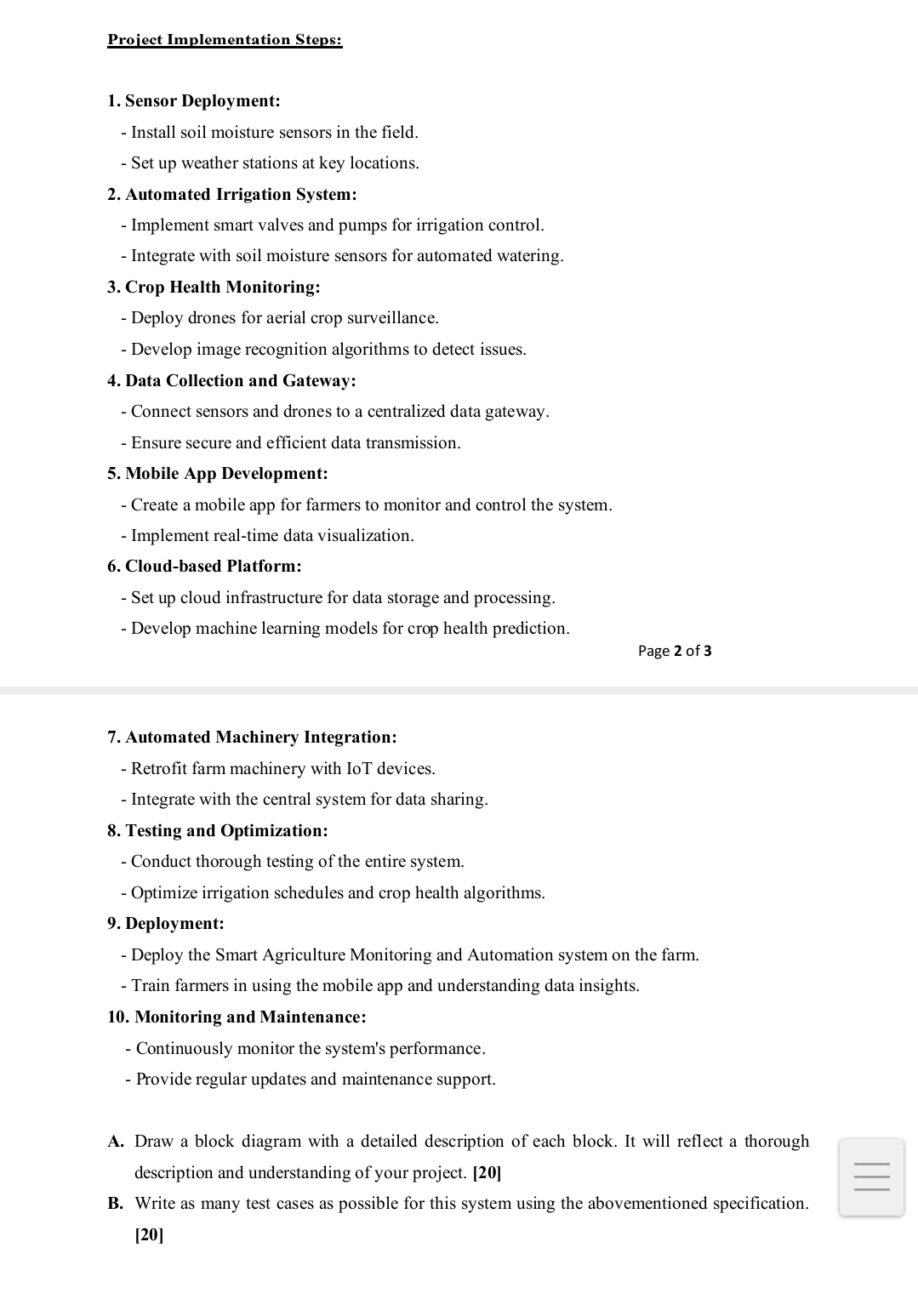
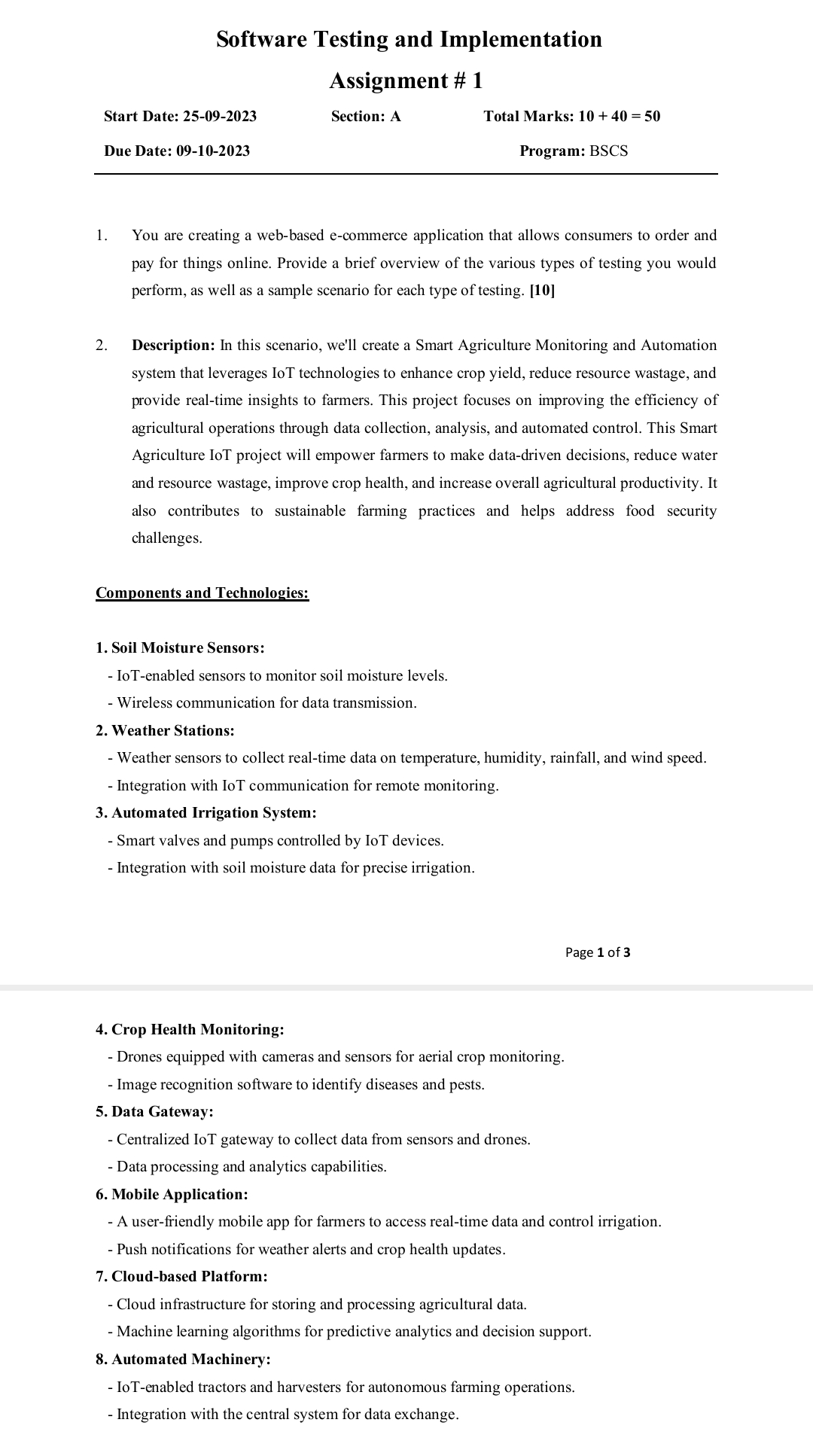
Project Implementation Steps: 1. Sensor Deployment: - Install soil moisture sensors in the field. - Set up weather stations at key locations. 2. Automated Irrigation System: - Implement smart valves and pumps for irrigation control. - Integrate with soil moisture sensors for automated watering. 3. Crop Health Monitoring: - Deploy drones for aerial crop surveillance. - Develop image recognition algorithms to detect issues. 4. Data Collection and Gateway: - Connect sensors and drones to a centralized data gateway. - Ensure secure and efficient data transmission. 5. Mobile App Development: - Create a mobile app for farmers to monitor and control the system. - Implement real-time data visualization. 6. Cloud-based Platform: - Set up cloud infrastructure for data storage and processing. - Develop machine learning models for crop health prediction. Page 2 of 3 7. Automated Machinery Integration: - Retrofit farm machinery with IoT devices. - Integrate with the central system for data sharing. 8. Testing and Optimization: - Conduct thorough testing of the entire system. - Optimize irrigation schedules and crop health algorithms. 9. Deployment: - Deploy the Smart Agriculture Monitoring and Automation system on the farm. - Train farmers in using the mobile app and understanding data insights. 10. Monitoring and Maintenance: - Continuously monitor the system's performance. - Provide regular updates and maintenance support. A. Draw a block diagram with a detailed description of each block. It will reflect a thorough description and understanding of your project. [20] B. Write as many test cases as possible for this system using the abovementioned specification. [20] Start Date: 25-09-2023 Software Testing and Implementation Assignment #1 Section: A Due Date: 09-10-2023 1. 2. You are creating a web-based e-commerce application that allows consumers to order and pay for things online. Provide a brief overview of the various types of testing you would perform, as well as a sample scenario for each type of testing. [10] Total Marks: 10 + 40 = 50 Program: BSCS Description: In this scenario, we'll create a Smart Agriculture Monitoring and Automation system that leverages IoT technologies to enhance crop yield, reduce resource wastage, and provide real-time insights to farmers. This project focuses on improving the efficiency of agricultural operations through data collection, analysis, and automated control. This Smart Agriculture IoT project will empower farmers to make data-driven decisions, reduce water and resource wastage, improve crop health, and increase overall agricultural productivity. It also contributes to sustainable farming practices and helps address food security challenges. Components and Technologies: 1. Soil Moisture Sensors: - IoT-enabled sensors to monitor soil moisture levels. - Wireless communication for data transmission. 2. Weather Stations: - Weather sensors to collect real-time data on temperature, humidity, rainfall, and wind speed. - Integration with IoT communication for remote monitoring. 3. Automated Irrigation System: - Smart valves and pumps controlled by IoT devices. - Integration with soil moisture data for precise irrigation. Page 1 of 3 4. Crop Health Monitoring: - Drones equipped with cameras and sensors for aerial crop monitoring. - Image recognition software to identify diseases and pests. 5. Data Gateway: - Centralized IoT gateway to collect data from sensors and drones. - Data processing and analytics capabilities. 6. Mobile Application: - A user-friendly mobile app for farmers to access real-time data and control irrigation. - Push notifications for weather alerts and crop health updates. 7. Cloud-based Platform: - Cloud infrastructure for storing and processing agricultural data. - Machine learning algorithms for predictive analytics and decision support. 8. Automated Machinery: - IoT-enabled tractors and harvesters for autonomous farming operations. - Integration with the central system for data exchange.
Step by Step Solution
3.48 Rating (148 Votes )
There are 3 Steps involved in it
Heres a block diagram for the Smart Agriculture Monitoring and Automation system Block Descriptions Sensor Deployment Soil Moisture Sensors IoTenabled sensors for monitoring soil moisture Weather Stat... View full answer

Get step-by-step solutions from verified subject matter experts
 Study Help