







Question: proof theta, big O, and omega notations using the definitions below: 2. Prove each of the following claims. Do not use limits in your proof.

proof theta, big O, and omega notations using the definitions below:
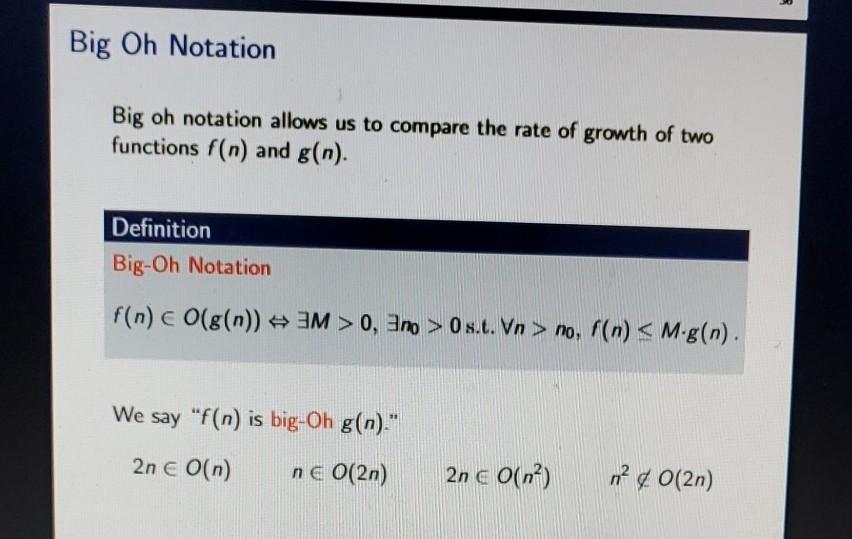
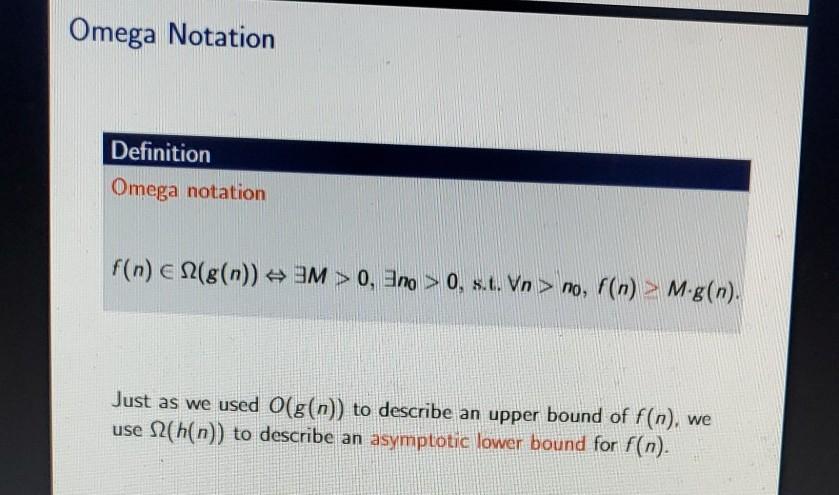
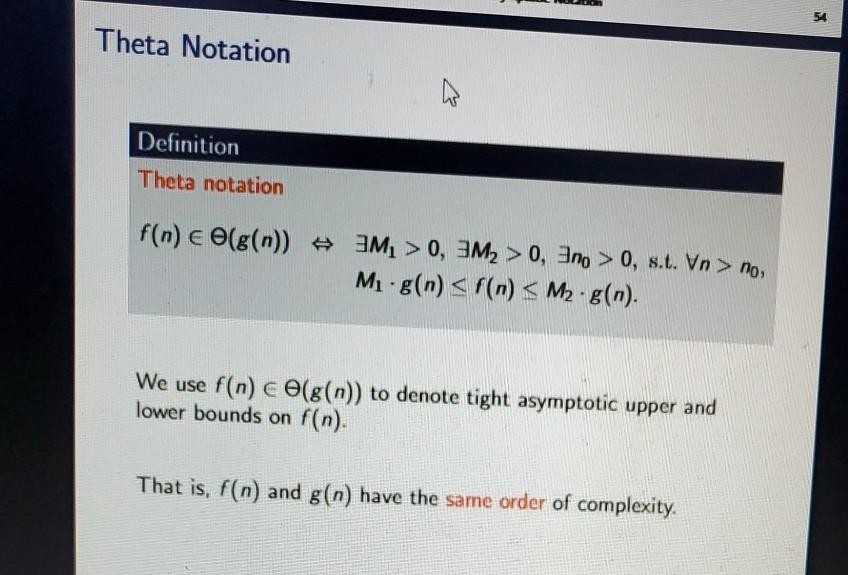
2. Prove each of the following claims. Do not use limits in your proof. (a) 5n + 20n O(n?) (b) 10n* +30n2 & 0(n) (c) 5n-ne(n) (d) on log n + 2n +logne (n log n) Big Oh Notation Big oh notation allows us to compare the rate of growth of two functions f(n) and g(n). Definition Big-Oh Notation f(n) C 0(g(n)) = 3M >0, 3n > 0s.t. Vn > no, f(n) 0, 3ng > 0, s.t. Vn > no, f(n) M.g(n). Just as we used O(g(n)) to describe an upper bound of f(n), we use S2(h(n)) to describe an asymptotic lower bound for f(n). 54 Theta Notation Definition Theta notation f(n) (g(n)) # 3M > 0, 3M, > 0, Ino > 0, s.t. Vn> no, Mi g(n)
Step by Step Solution
There are 3 Steps involved in it

Get step-by-step solutions from verified subject matter experts
 Study Help