



Question: Pt. C following results: - 9.9 million orders processed - 35,000 orders delivered late - 10,000 orders incomplete - 10,000 orders damaged - 35,000 orders
Pt. C
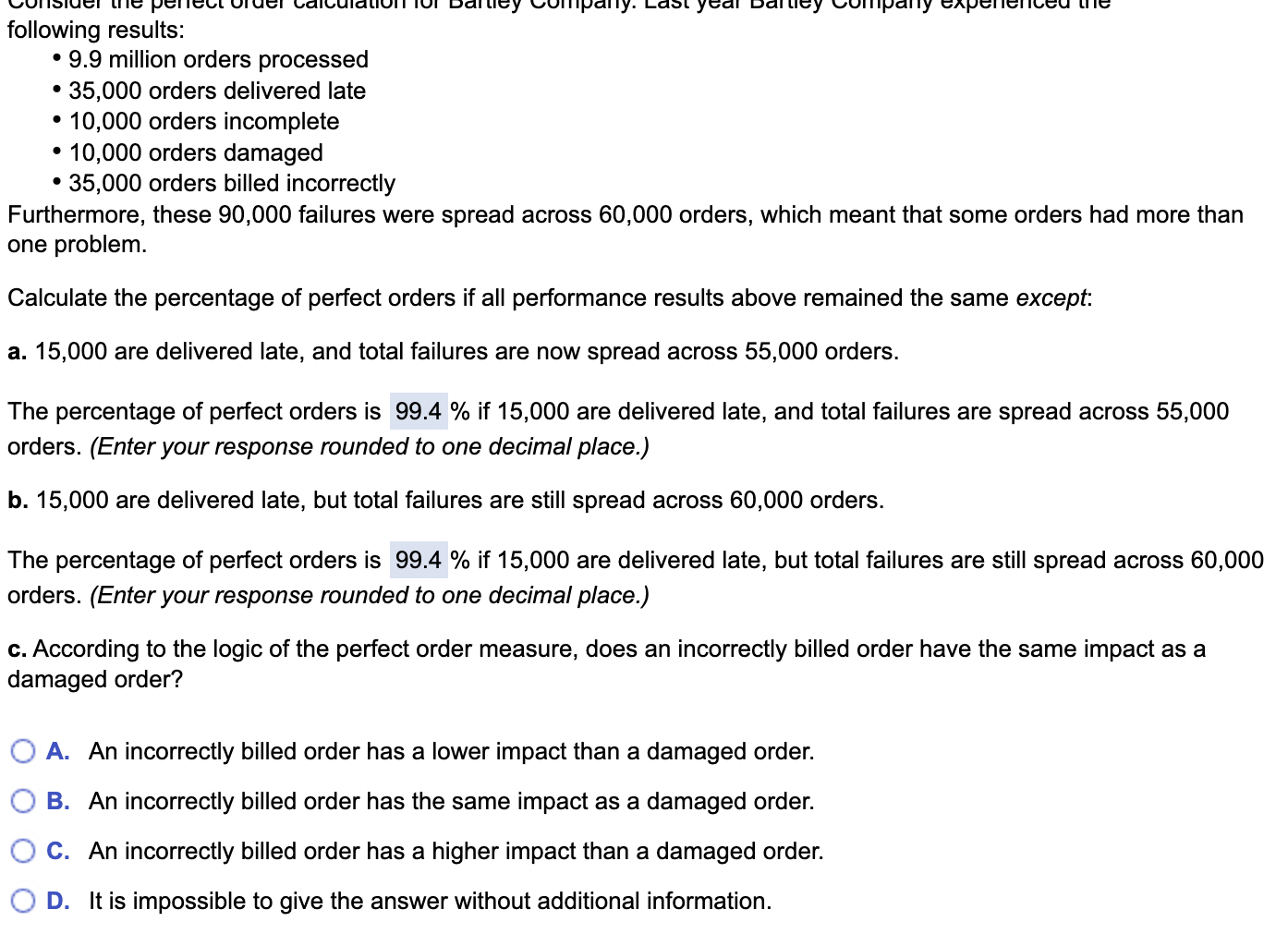
following results: - 9.9 million orders processed - 35,000 orders delivered late - 10,000 orders incomplete - 10,000 orders damaged - 35,000 orders billed incorrectly Furthermore, these 90,000 failures were spread across 60,000 orders, which meant that some orders had more than one problem. Calculate the percentage of perfect orders if all performance results above remained the same except: a. 15,000 are delivered late, and total failures are now spread across 55,000 orders. The percentage of perfect orders is % if 15,000 are delivered late, and total failures are spread across 55,000 orders. (Enter your response rounded to one decimal place.) b. 15,000 are delivered late, but total failures are still spread across 60,000 orders. The percentage of perfect orders is % if 15,000 are delivered late, but total failures are still spread across 60,000 orders. (Enter your response rounded to one decimal place.) c. According to the logic of the perfect order measure, does an incorrectly billed order have the same impact as a damaged order? A. An incorrectly billed order has a lower impact than a damaged order. B. An incorrectly billed order has the same impact as a damaged order. C. An incorrectly billed order has a higher impact than a damaged order. D. It is impossible to give the answer without additional information
Step by Step Solution
There are 3 Steps involved in it

Get step-by-step solutions from verified subject matter experts