







Question: public class DefaultIntPair implements IntPair { private int firstNum, secondNum; public DefaultIntPair(int firstNum, int secondNum) { this.firstNum = firstNum; this.secondNum = secondNum; } public int

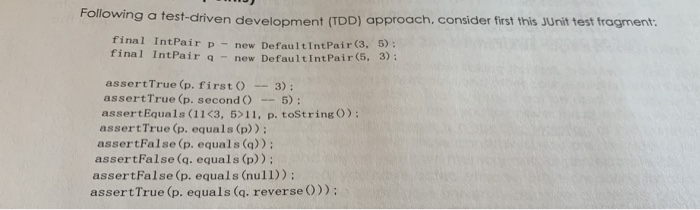
public class DefaultIntPair implements IntPair { private int firstNum, secondNum; public DefaultIntPair(int firstNum, int secondNum) { this.firstNum = firstNum; this.secondNum = secondNum; } public int first() { return firstNum; } public int second() { return secondNum; } public String toString() { return ""; } public boolean equals(Object o) { if (this == o) return true; if (o == null) return false; DefaultIntPair intPair = (DefaultIntPair) o; return firstNum == intPair.firstNum && secondNum == intPair.secondNum; } public IntPair reverse() { DefaultIntPair reversedPair = new DefaultIntPair(secondNum, firstNum); return reversedPair; } }c) 2 Nowgeneralize the IntPair interface by making it generic in the item type of the pair.allow ing us to store two items not only of type int but of arbitrary reference type as long as both items are of that same type. Show the code (or explain what needs to be changed) for the resulting generic interface Pair
Step by Step Solution
There are 3 Steps involved in it
1 Expert Approved Answer
Step: 1 Unlock

Question Has Been Solved by an Expert!
Get step-by-step solutions from verified subject matter experts
Step: 2 Unlock
Step: 3 Unlock
 Study Help