







Question: public class Main [ public static void main(String args[]) { Test t1= new Test (5, 7); t1.print(): } class Test [ private int x,
![public class Main [ public static void main(String args[]) { Test t1=](https://dsd5zvtm8ll6.cloudfront.net/si.experts.images/questions/2022/12/638a0035d8be2_405638a003593913.jpg)

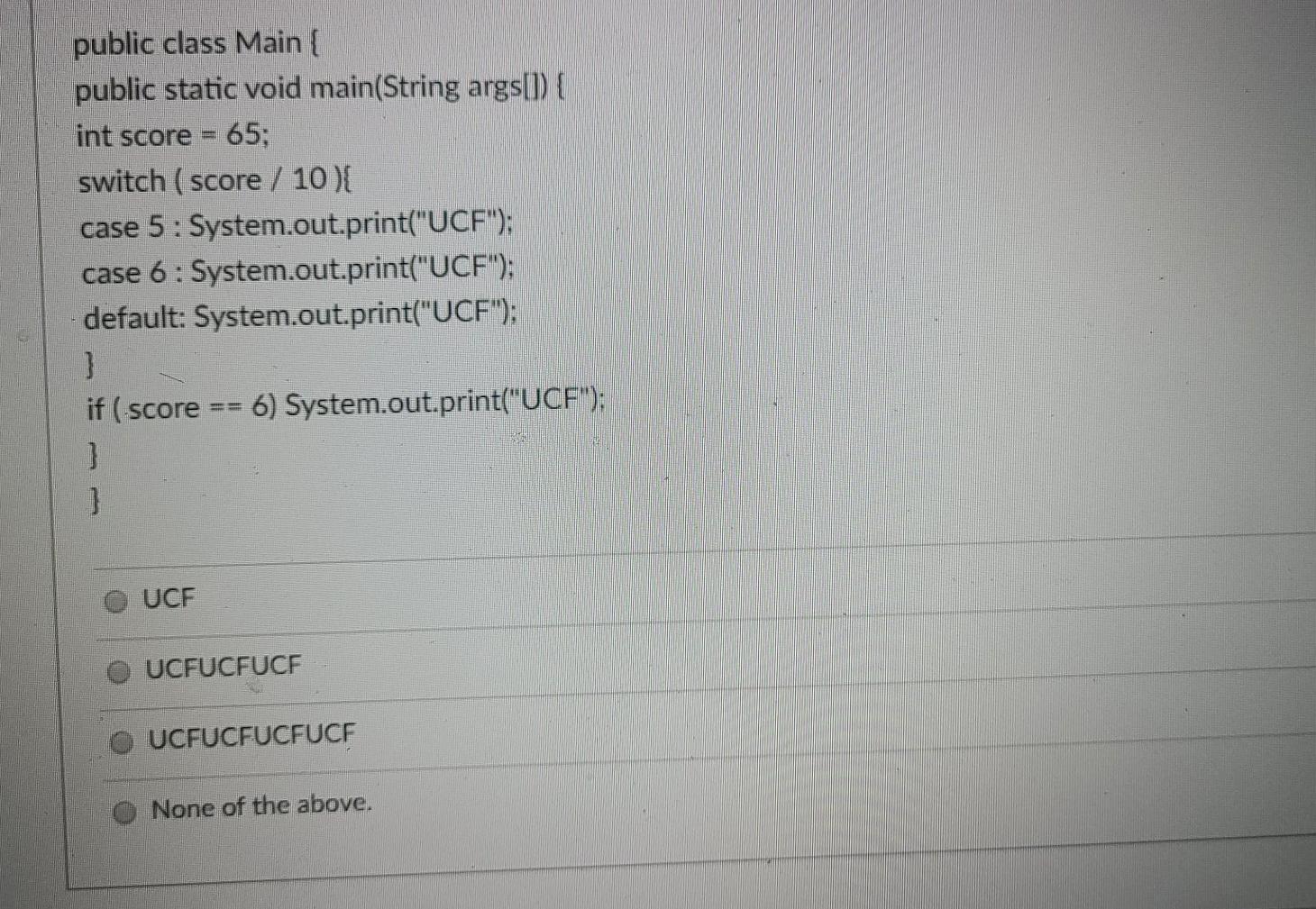
public class Main [ public static void main(String args[]) { Test t1= new Test (5, 7); t1.print(): } class Test [ private int x, y: public void setAll (int x, int y) { this.x = x; this.y = y; } public Test (int x, int y){ setAll(x,y); } public void print(){ System.out.println(x + y); } } 3 x+y 12 None of the above public class Main { public static void main(String args[]) { int x = 1, y = 2; System.out.println( ++x+++y); } } ( 5 3 None of the above public class Main { public static void main(String args[]) { int score 65; switch (score / 10){ case 5: System.out.print("UCF"); case 6: System.out.print("UCF"); default: System.out.print("UCF"); } if (score 6) System.out.print("UCF"); } } UCF UCFUCFUCF UCFUCFUCFUCF None of the above.
Step by Step Solution
3.55 Rating (165 Votes )
There are 3 Steps involved in it
The detailed answer for the above question is provided below Q1 The correct opt... View full answer

Get step-by-step solutions from verified subject matter experts
 Study Help