







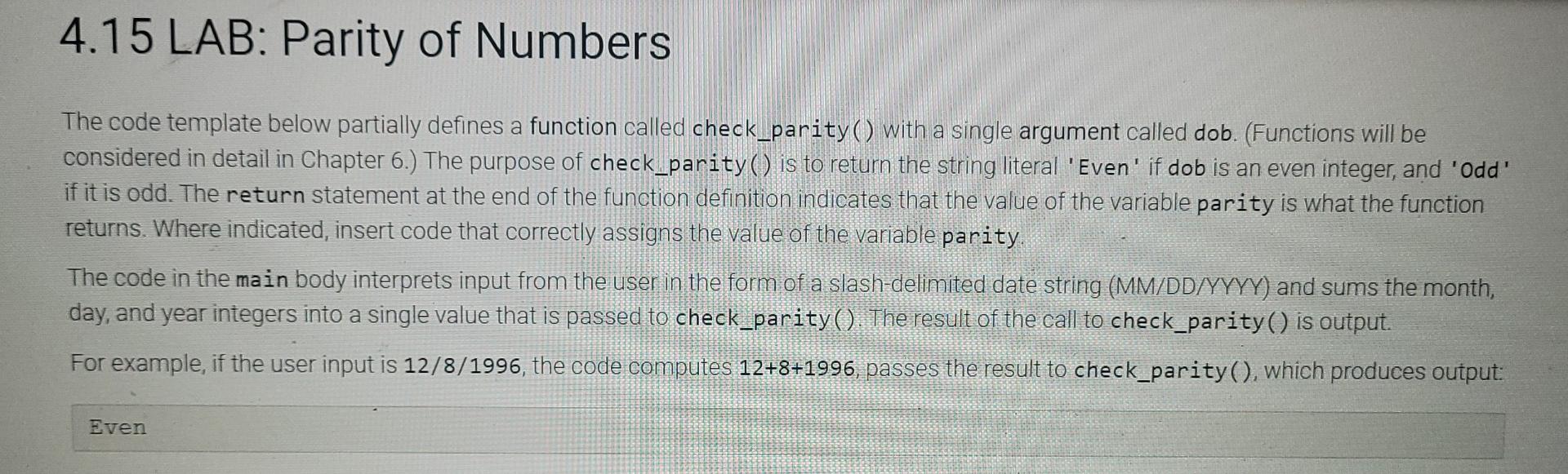
Question: python 4.15 LAB: Parity of Numbers The code template below partially defines a function called check_parity () with a single argument called dob. (Functions will
python
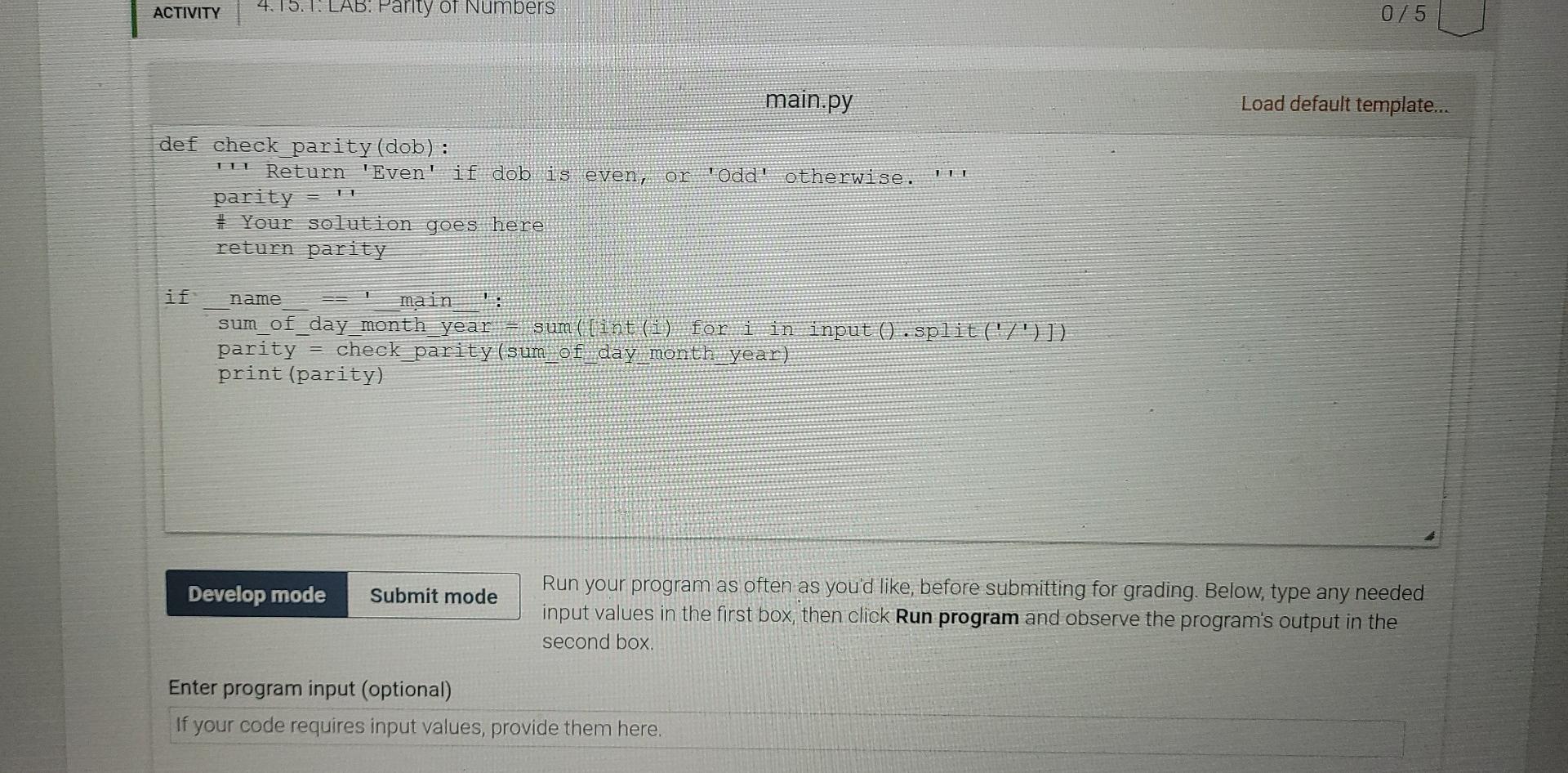
4.15 LAB: Parity of Numbers The code template below partially defines a function called check_parity () with a single argument called dob. (Functions will be considered in detail in Chapter 6.) The purpose of check_parity() is to return the string literal 'Even' if dob is an even integer, and 'Odd' if it is odd. The return statement at the end of the function definition indicates that the value of the variable parity is what the function returns. Where indicated, insert code that correctly assigns the value of the variable parity. The code in the main body interprets input from the user in the form of a slash-delimited date string (MM/DD/YYYY) and sums the month, day, and year integers into a single value that is passed to check_parity(). The result of the call to check_parity() is output. For example, if the user input is 12/8/1996, the code computes 12+8+1996, passes the result to check_parity(), which produces output: Even ACTIVITY 4.15.1. LAB. Parity of Numbers 075 main.py Load default template... or 'Odd! otherwise. LLL def check_parity (dob): Return 'Even if dob is even, parity # Your solution goes here return parity if name main : sum_of_day_month year sum ( [int (i) for i in input ().split('|')]) parity = check parity (sum of day month year) print (parity) Develop mode Submit mode Run your program as often as you'd like, before submitting for grading. Below, type any needed input values in the first box, then click Run program and observe the program's output in the second box. Enter program input (optional) If your code requires input values, provide them here
Step by Step Solution
There are 3 Steps involved in it

Get step-by-step solutions from verified subject matter experts
 Study Help