







Question: Python programming problem: Instructions: In class, we talked about Infix and Postfix expressions. A postfix expression can be evaluated using the Stack data structure. From
Python programming problem:
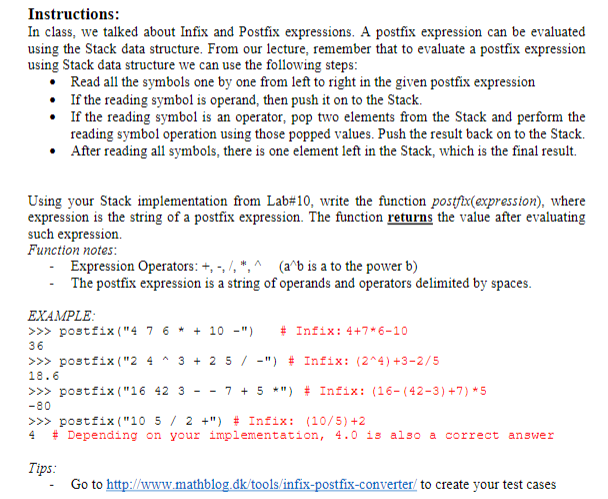
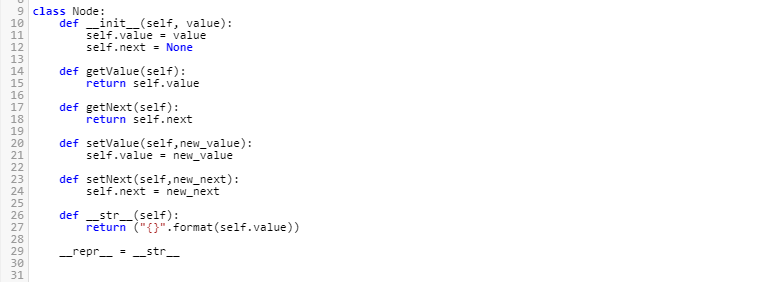
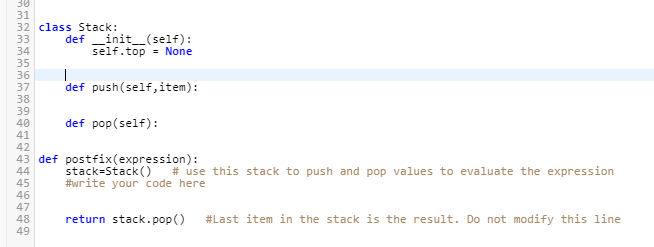
Instructions: In class, we talked about Infix and Postfix expressions. A postfix expression can be evaluated using the Stack data structure. From ou lecture, remember that to evaluate a postfix expression using Stack data structure we can use the following steps Read all the symbols one by one from left to right in the given postfix expression If the reading symbol is operand, then push it on to the Stack If the reading symbol is an operator, pop two elements from the Stack and perform the reading symbol operation using those popped values. Push the result back on to the Stack After readingal symbols, there is one element lef in the Stack, which is the final result. Using your Stack implementation from Lab# 10, write the function posth(expression), where expression is the string of a postfix expression. The function returns the value after evaluating such expression Function notes Expression Operats+, ,, *. (a*b is a to the power b) The postfix expression is a string of operands and operators delimited by spaces EXAMPLE >>> postfix ( "4 7 6 * + 10-") # Infix: 4+7*6-10 3 6 >>> postfix ("2 4 ^ 3 + 2 5 / -") # Infix: (2^4) +3-2/5 18.6 >>> postfix (" 16 42 3--7 + 5 *") # Infix: (16-(42-3)+7)*5 -80 >>> postfix ( "10 5 / 2 +") # Infix: (10/51+2 Depending on your implementation, 4.0 ?? also a correct answer Tips Go to http://www.mathblog.dk/tools infix-postfix-coverte/to create your test cases
Step by Step Solution
There are 3 Steps involved in it

Get step-by-step solutions from verified subject matter experts
 Study Help