



Question: Q 1 / A six - lane urban freeway ( three lanes in each direction ) is on rolling terrain with the traffic stream consists
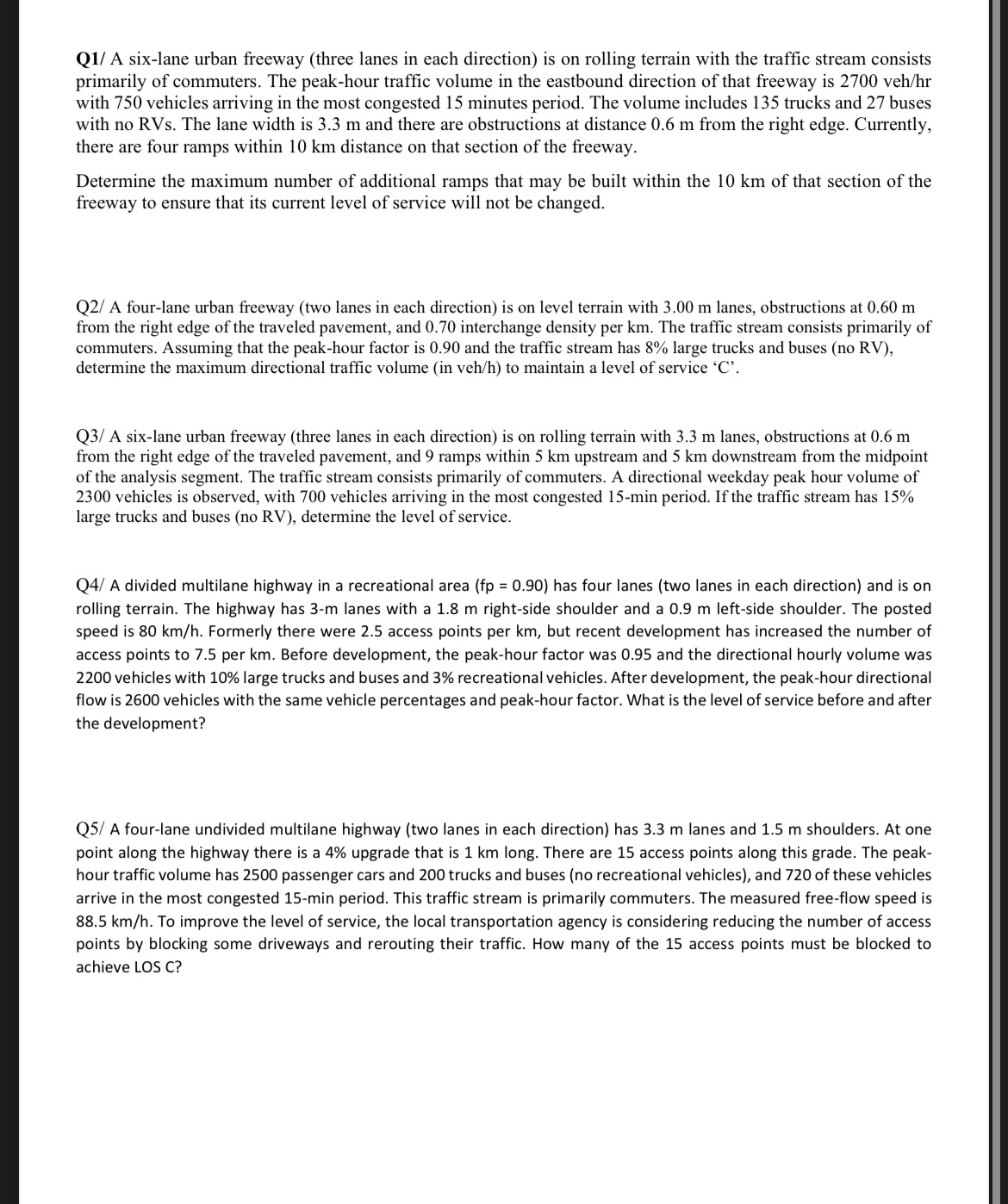
Q A sixlane urban freeway three lanes in each direction is on rolling terrain with the traffic stream consists primarily of commuters. The peakhour traffic volume in the eastbound direction of that freeway is with vehicles arriving in the most congested minutes period. The volume includes trucks and buses with no RVs The lane width is and there are obstructions at distance from the right edge. Currently, there are four ramps within distance on that section of the freeway.
Determine the maximum number of additional ramps that may be built within the of that section of the freeway to ensure that its current level of service will not be changed.
Q A fourlane urban freeway two lanes in each direction is on level terrain with lanes, obstructions at from the right edge of the traveled pavement, and interchange density per The traffic stream consists primarily of commuters. Assuming that the peakhour factor is and the traffic stream has large trucks and buses no RV determine the maximum directional traffic volume in veh to maintain a level of service
Q A sixlane urban freeway three lanes in each direction is on rolling terrain with lanes, obstructions at from the right edge of the traveled pavement, and ramps within upstream and downstream from the midpoint of the analysis segment. The traffic stream consists primarily of commuters. A directional weekday peak hour volume of vehicles is observed, with vehicles arriving in the most congested min period. If the traffic stream has large trucks and buses no RV determine the level of service.
Q A divided multilane highway in a recreational area has four lanes two lanes in each direction and is on rolling terrain. The highway has lanes with a rightside shoulder and a leftside shoulder. The posted speed is Formerly there were access points per km but recent development has increased the number of access points to per km Before development, the peakhour factor was and the directional hourly volume was vehicles with large trucks and buses and recreational vehicles. After development, the peakhour directional flow is vehicles with the same vehicle percentages and peakhour factor. What is the level of service before and after the development?
Q A fourlane undivided multilane highway two lanes in each direction has lanes and shoulders. At one point along the highway there is a upgrade that is long. There are access points along this grade. The peakhour traffic volume has passenger cars and trucks and buses no recreational vehicles and of these vehicles arrive in the most congested min period. This traffic stream is primarily commuters. The measured freeflow speed is To improve the level of service, the local transportation agency is considering reducing the number of access points by blocking some driveways and rerouting their traffic. How many of the access points must be blocked to achieve LOS C
Step by Step Solution
There are 3 Steps involved in it
1 Expert Approved Answer
Step: 1 Unlock

Question Has Been Solved by an Expert!
Get step-by-step solutions from verified subject matter experts
Step: 2 Unlock
Step: 3 Unlock