



Question: Q 2. Evaluate VW''s actions based on the factors in Exhibit 5-5. How would you describe the issue of the intensity of VW's actions? I
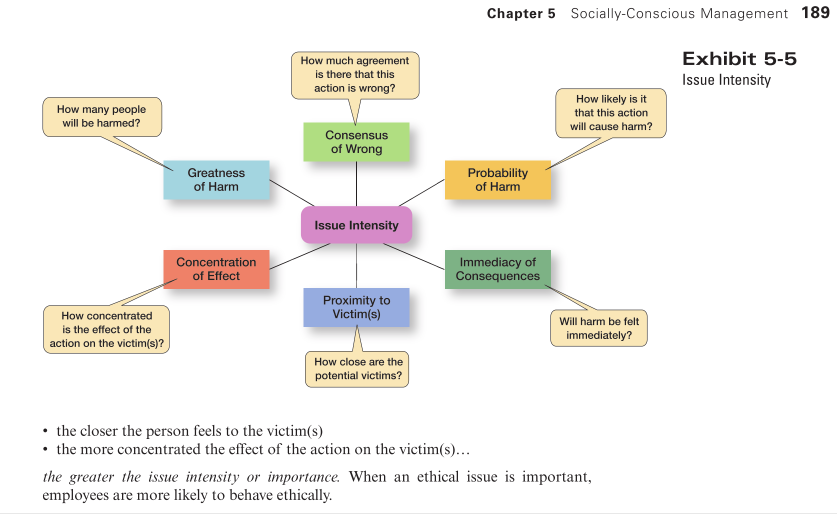
Q 2. Evaluate VW''s actions based on the factors in Exhibit 5-5. How would you describe the issue of the intensity of VW's actions? I expect you to use Exhibit 5.5. For each characteristic, mention Yes or No. A Yes means it is relevant, and a No means it is not relevant. and then, write why it is relevant or not relevant. Then, in the end, see whether you have more Yes or No. If more Yes, Issue Intensity is high, If more No, issue intensity is low. Towards the end, write your conclusion on the issue of intensity (whether high or low).
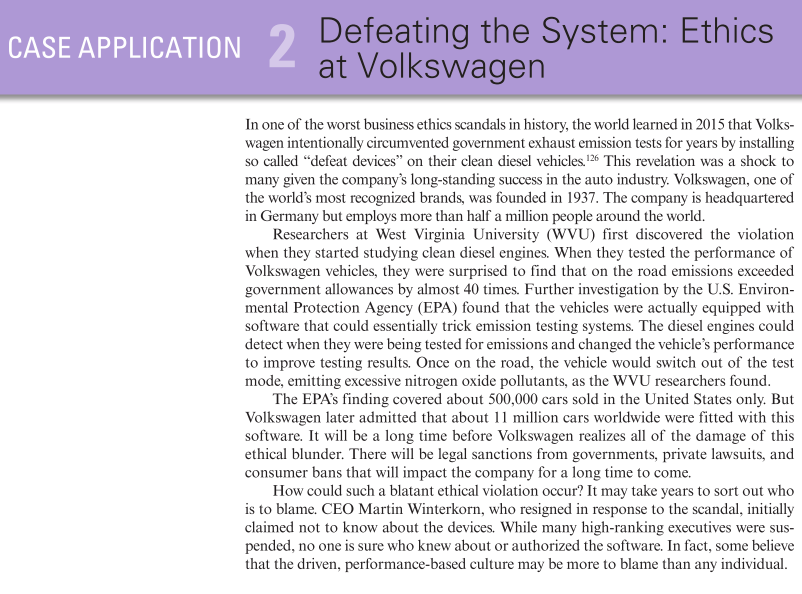
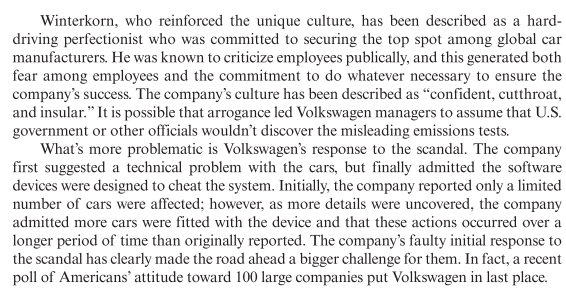
CASE APPLICATION 2 Defeating the System: Ethics at Volkswagen In one of the worst business ethics scandals in history, the world learned in 2015 that Volks- wagen intentionally circumvented government exhaust emission tests for years by installing so called "defeat devices" on their clean diesel vehicles. 126 This revelation was a shock to many given the company's long-standing success in the auto industry. Volkswagen, one of the world's most recognized brands, was founded in 1937. The company is headquartered in Germany but employs more than half a million people around the world. Researchers at West Virginia University (WVU) first discovered the violation when they started studying clean diesel engines. When they tested the performance of Volkswagen vehicles, they were surprised to find that on the road emissions exceeded government allowances by almost 40 times. Further investigation by the U.S. Environ- mental Protection Agency (EPA) found that the vehicles were actually equipped with software that could essentially trick emission testing systems. The diesel engines could detect when they were being tested for emissions and changed the vehicle's performance to improve testing results. Once on the road, the vehicle would switch out of the test mode, emitting excessive nitrogen oxide pollutants, as the WVU researchers found. The EPA's finding covered about 500,000 cars sold in the United States only. But Volkswagen later admitted that about 11 million cars worldwide were fitted with this software. It will be a long time before Volkswagen realizes all of the damage of this ethical blunder. There will be legal sanctions from governments, private lawsuits, and consumer bans that will impact the company for a long time to come. How could such a blatant ethical violation occur? It may take years to sort out who is to blame. CEO Martin Winterkorn, who resigned in response to the scandal, initially claimed not to know about the devices. While many high-ranking executives were sus- pended, no one is sure who knew about or authorized the software. In fact, some believe that the driven, performance-based culture may be more to blame than any individual. Winterkorn, who reinforced the unique culture, has been described as a hard- driving perfectionist who was committed to securing the top spot among global car manufacturers. He was known to criticize employees publically, and this generated both fear among employees and the commitment to do whatever necessary to ensure the company's success. The company's culture has been described as "confident, cutthroat, and insular. It is possible that arrogance led Volkswagen managers to assume that U.S. government or other officials wouldn't discover the misleading emissions tests. What's more problematic is Volkswagen's response to the scandal. The company first suggested a technical problem with the cars, but finally admitted the software devices were designed to cheat the system. Initially, the company reported only a limited number of cars were affected; however, as more details were uncovered, the company admitted more cars were fitted with the device and that these actions occurred over a longer period of time than originally reported. The company's faulty initial response to the scandal has clearly made the road ahead a bigger challenge for them. In fact, a recent poll of Americans' attitude toward 100 large companies put Volkswagen in last place. Chapter 5 Socially-Conscious Management 189 How much agreement is there that this action is wrong? Exhibit 5-5 Issue Intensity How many people will be harmed? How likely is it that this action will cause harm? Consensus of Wrong Greatness of Harm Probability of Harm Issue Intensity Concentration of Effect Immediacy of Consequences Proximity to Victim(s) How concentrated is the effect of the action on the victim(s)? Will harm be felt immediately? How close are the potential victims? the closer the person feels to the victim(s) the more concentrated the effect of the action on the victim(s)... the greater the issue intensity or importance. When an ethical issue is important, employees are more likely to behave ethicallyStep by Step Solution
There are 3 Steps involved in it
1 Expert Approved Answer
Step: 1 Unlock

Question Has Been Solved by an Expert!
Get step-by-step solutions from verified subject matter experts
Step: 2 Unlock
Step: 3 Unlock