







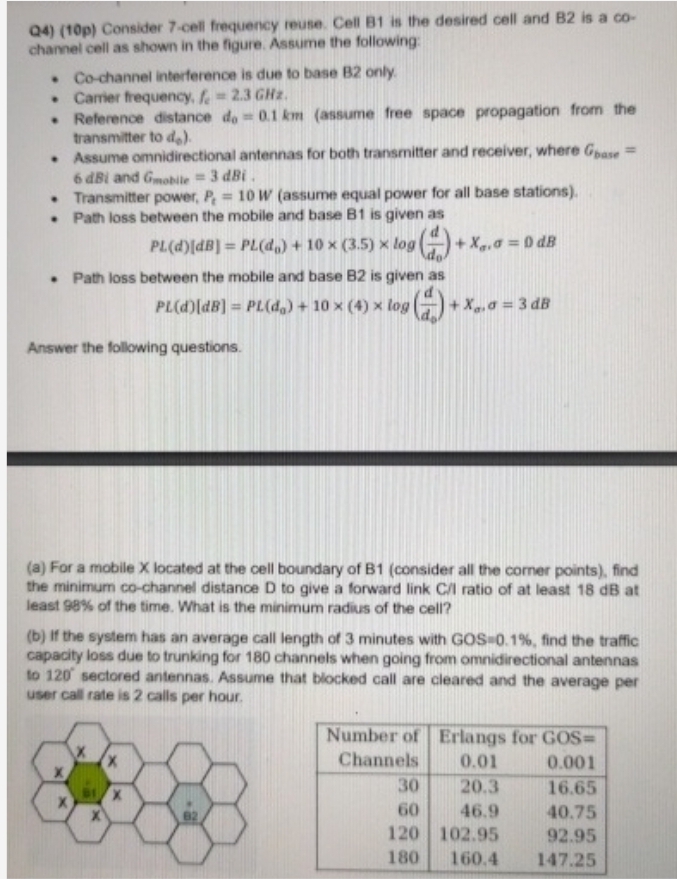
Question: Q 4 ) ( 1 0 p ) Consider 7 - cell frequency reuse. Cell B 1 is the desired cell and B 2 is
Q p Consider cell frequency reuse. Cell B is the desired cell and B is a cochannel cell as shown in the figure. Assume the following:
Cochannel interference is due to base B only.
Camer frequency,
Reference distance assume free space propagation from the transmitter to
Assume omnidirectional antennas for both transmitter and receiver, where dBi and dBi.
Transmitter power, assume equal power for all base stations
Path loss between the mobile and base B is given as
Path loss between the mobile and base B is given as
Answer the following questions.
a For a mobile X located at the cell boundary of Bconsider all the comer points find the minimum cochannel distance D to give a forward link CI ratio of at least dB at least of the time. What is the minimum radius of the cell?
b If the system has an average call length of minutes with GOS find the traffic capacity loss due to trunking for channels when going from omnidirectional antennas to sectored antennas. Assume that blocked call are cleared and the average per user call rate is calls per hour.
tableNumber ofErlangs for GOSChannels
Step by Step Solution
There are 3 Steps involved in it
1 Expert Approved Answer
Step: 1 Unlock

Question Has Been Solved by an Expert!
Get step-by-step solutions from verified subject matter experts
Step: 2 Unlock
Step: 3 Unlock
 Study Help