







Question: Q. What attributes should Unilever take into account while developing a clothes washing solution for low income consumers of North Eastern Brazi? its my assignment
Q. What attributes should Unilever take into account while developing a clothes washing solution for low income consumers of North Eastern Brazi? its my assignment question related to case unilever in brazil please can you please send me as soon as possible I will be very thank full please
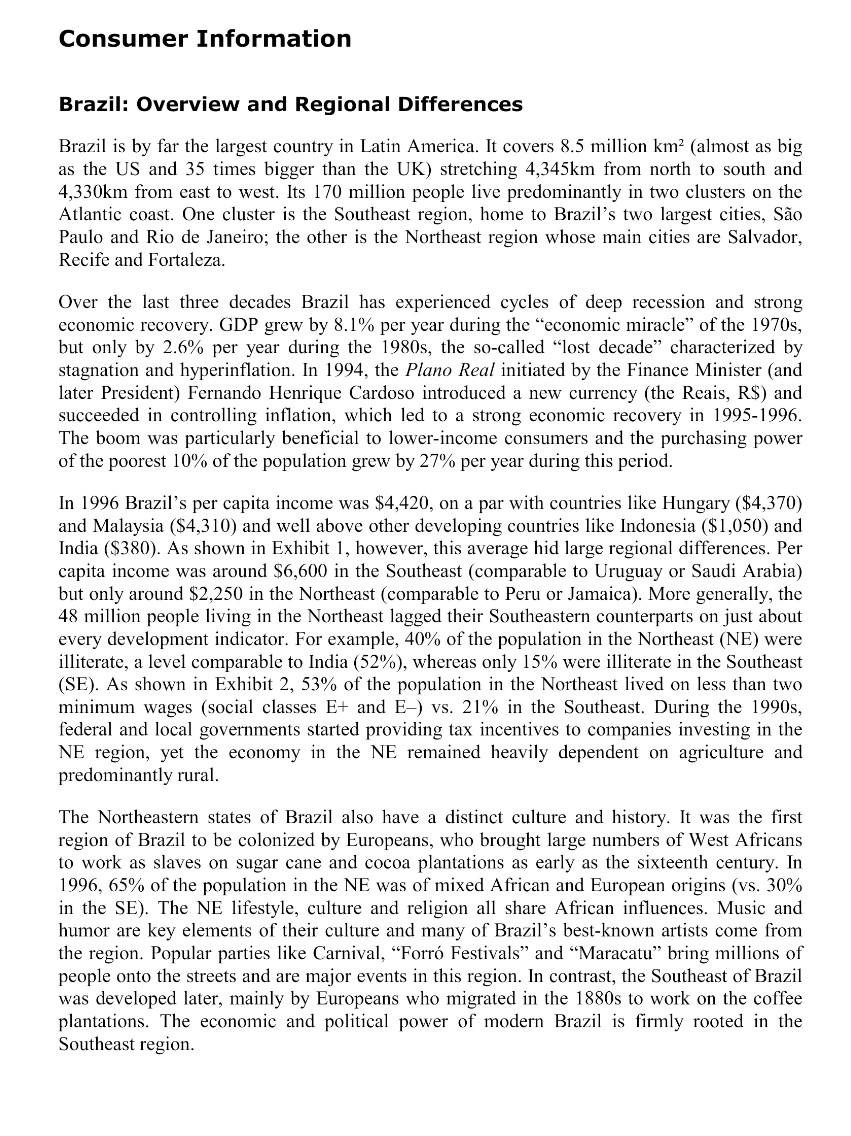
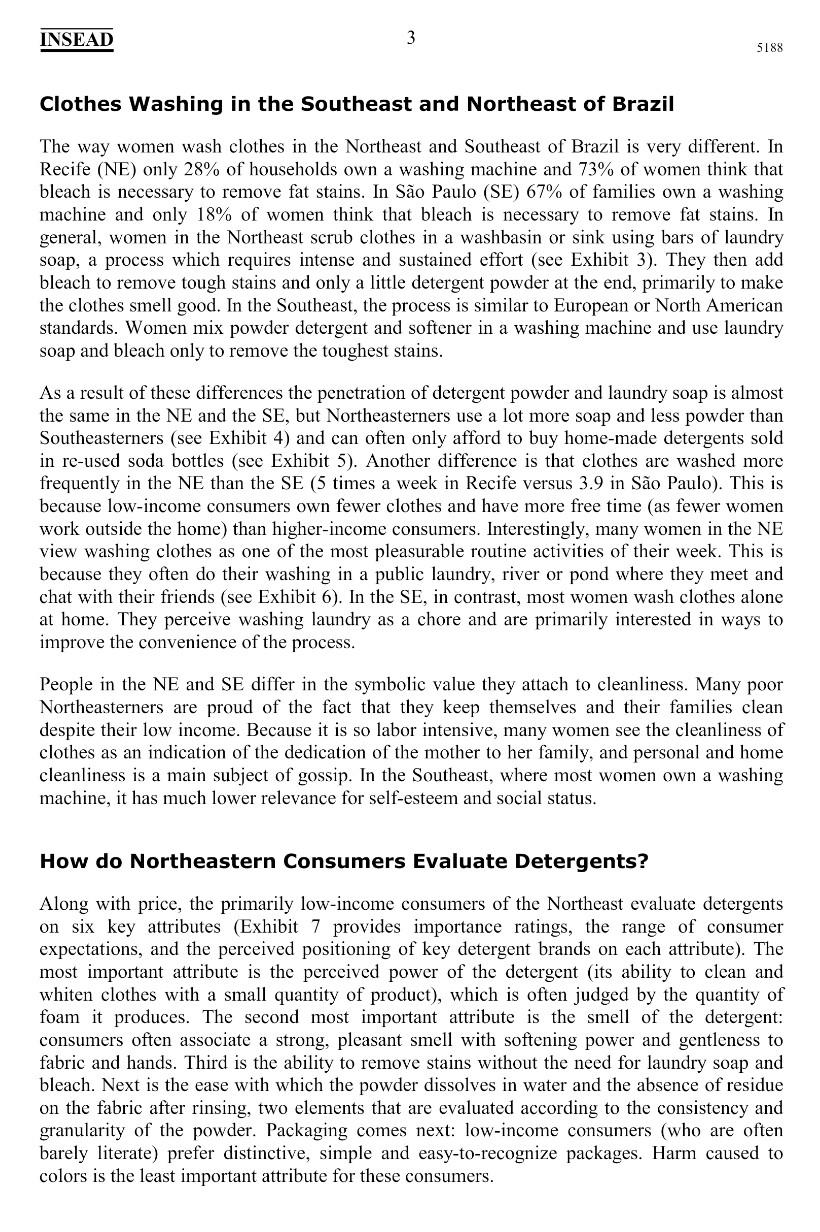
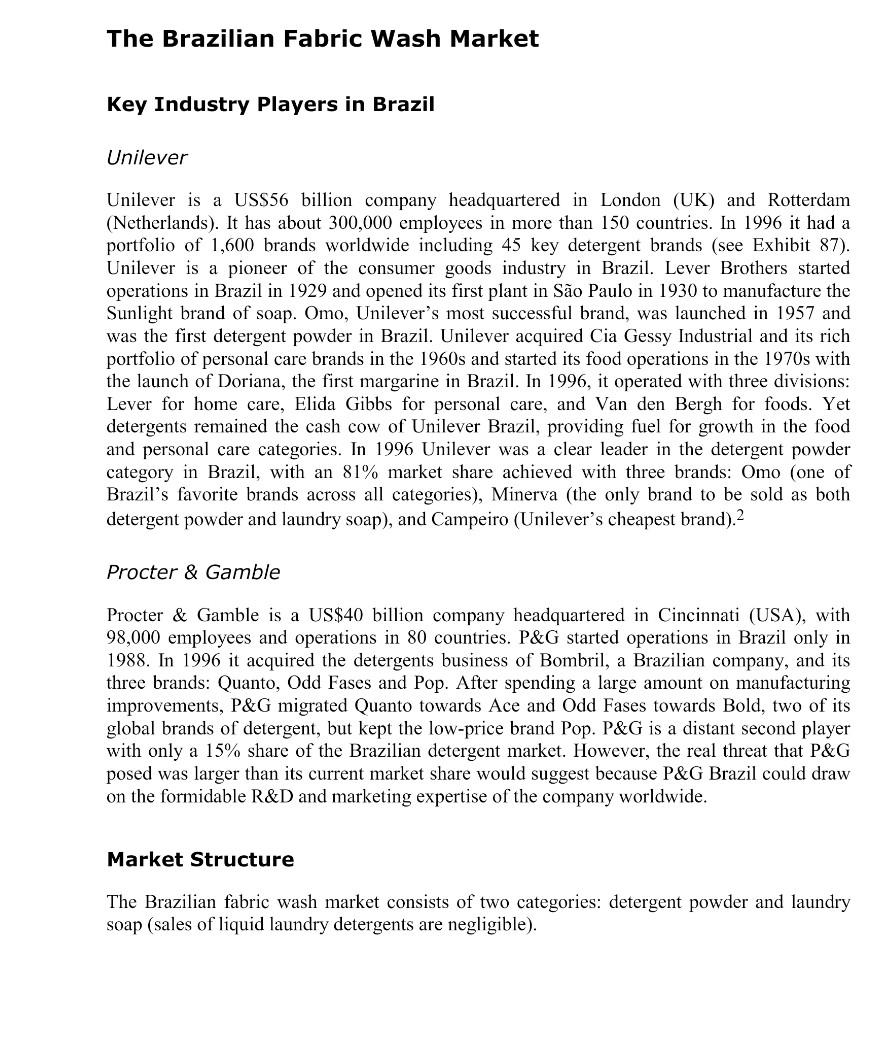
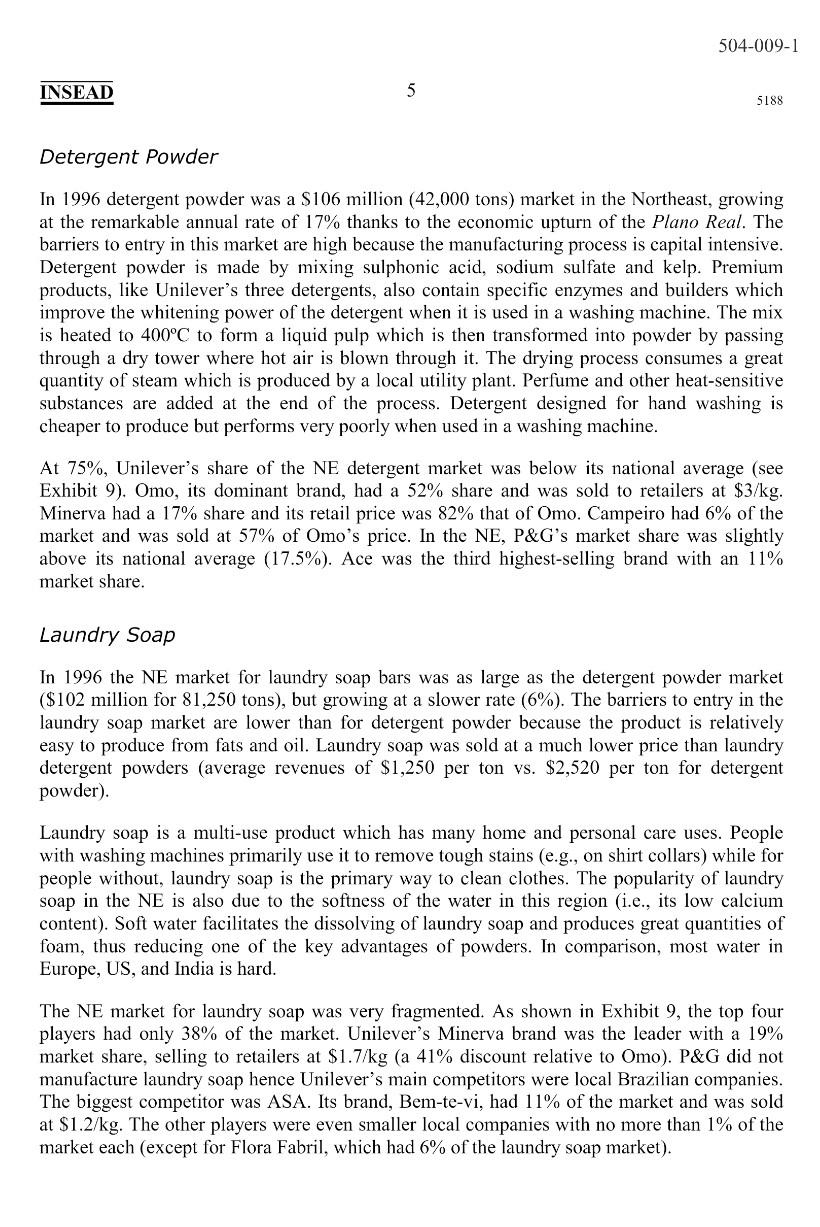
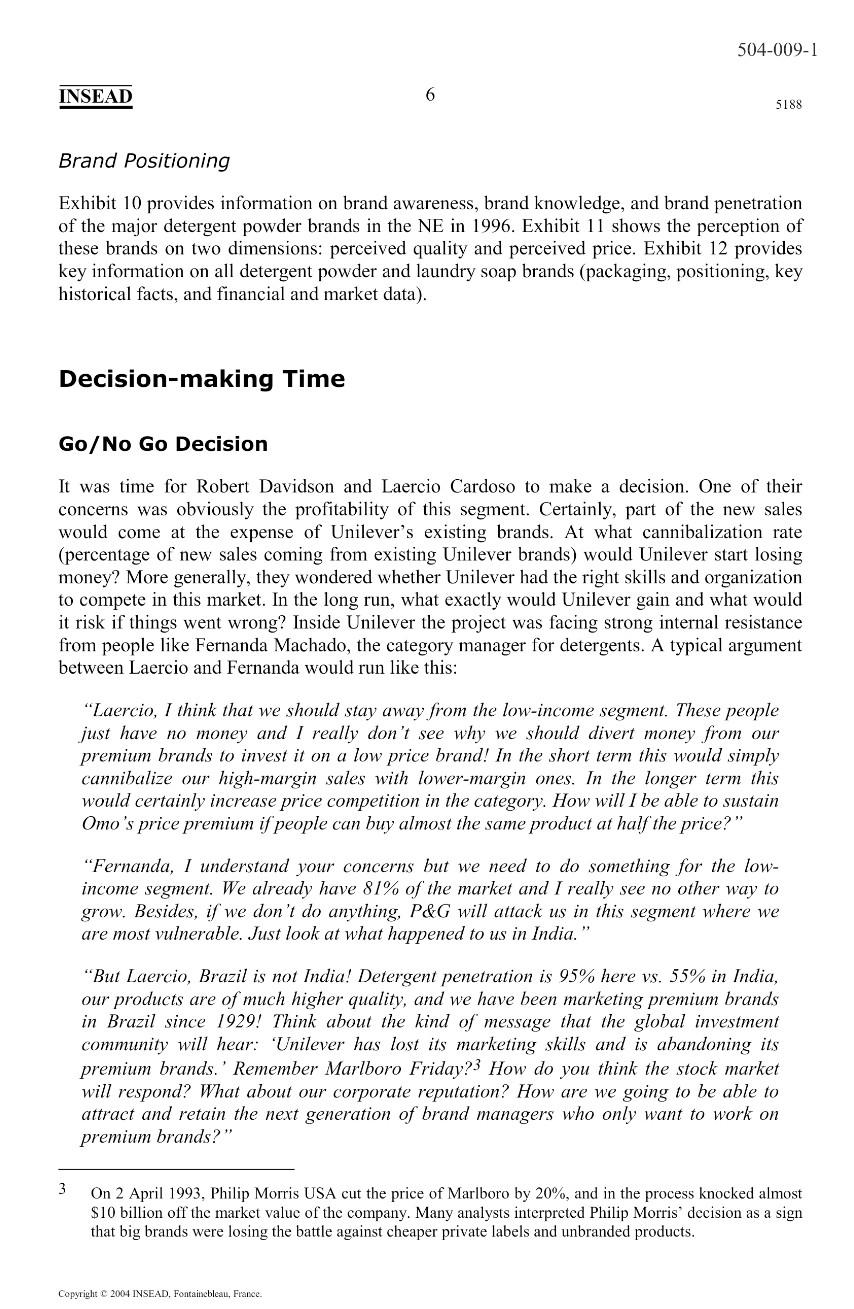
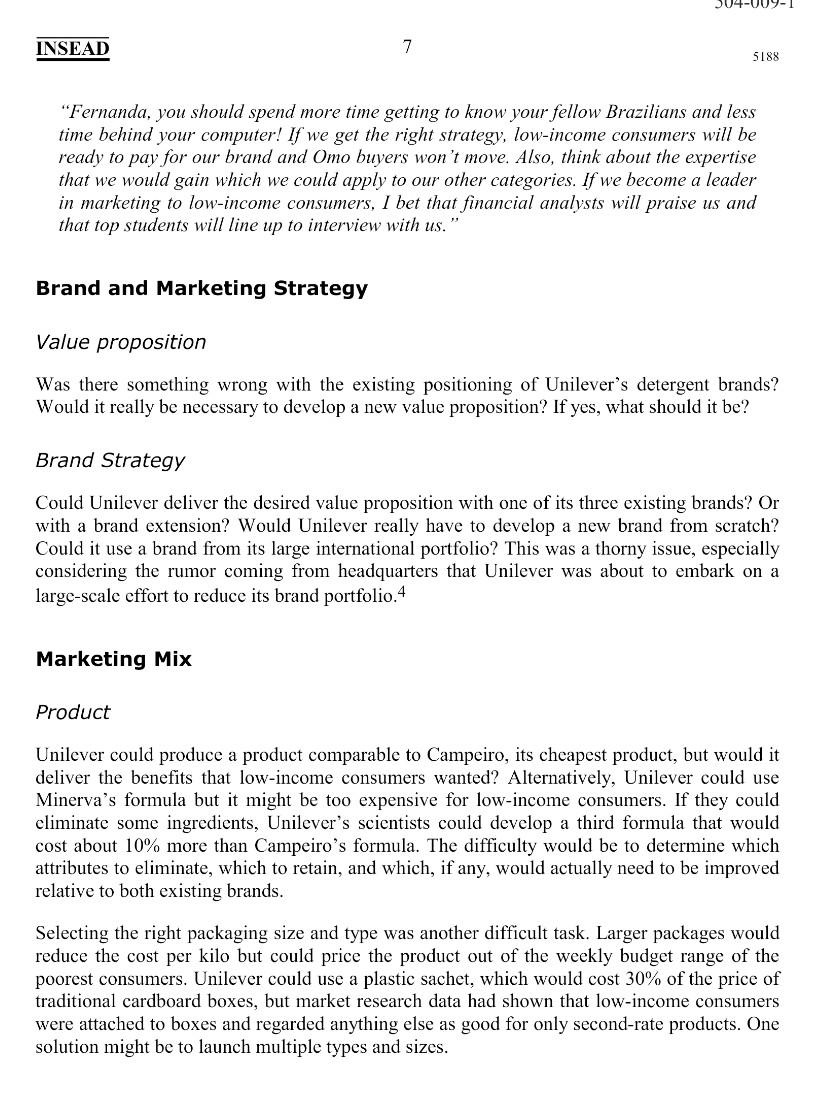
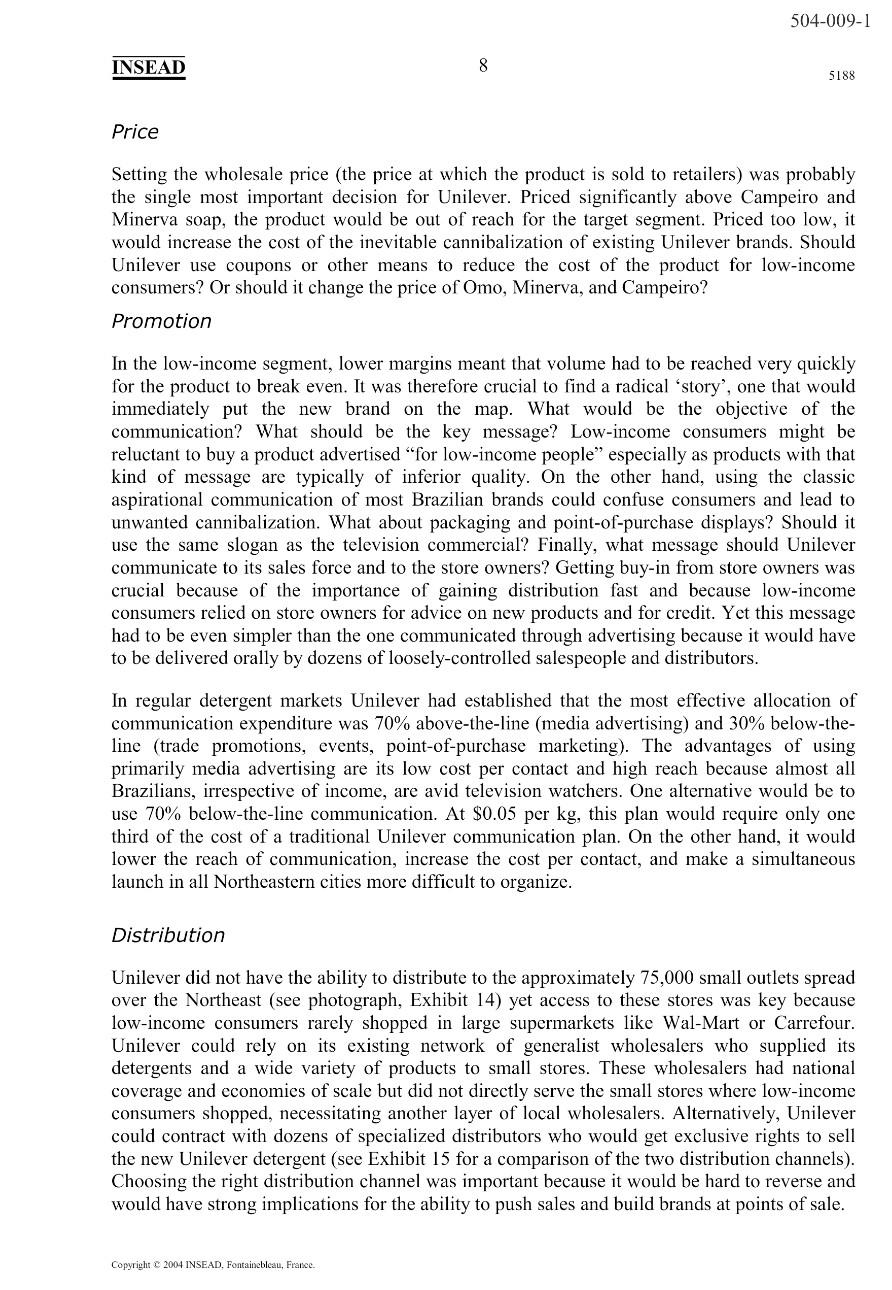
Consumer Information Brazil: Overview and Regional Differences Brazil is by far the largest country in Latin America. It covers 8.5 million km2 (almost as big as the US and 35 times bigger than the UK) stretching 4,345km from north to south and 4,330km from east to west. Its 170 million people live predominantly in two clusters on the Atlantic coast. One cluster is the Southeast region, home to Brazil's two largest cities, So Paulo and Rio de Janeiro; the other is the Northeast region whose main cities are Salvador, Recife and Fortaleza. Over the last three decades Brazil has experienced cycles of deep recession and strong economic recovery. GDP grew by 8.1% per year during the "economic miracle" of the 1970s, but only by 2.6% per year during the 1980s, the so-called "lost decade" characterized by stagnation and hyperinflation. In 1994, the Plano Real initiated by the Finance Minister (and later President) Fernando Henrique Cardoso introduced a new currency (the Reais, R$) and succeeded in controlling inflation, which led to a strong economic recovery in 1995-1996. The boom was particularly beneficial to lower-income consumers and the purchasing power of the poorest 10% of the population grew 27% per year during this period. In 1996 Brazil's per capita income was $4,420, on a par with countries like Hungary ($4,370) and Malaysia (S4,310) and well above other developing countries like Indonesia ($1,050) and India ($380). As shown in Exhibit 1, however, this average hid large regional differences. Per capita income was around $6,600 in the Southeast (comparable to Uruguay or Saudi Arabia) but only around $2,250 in the Northeast (comparable to Peru or Jamaica). More generally, the 48 million people living in the Northeast lagged their Southeastern counterparts on just about every development indicator. For example, 40% of the population in the Northeast (NE) were illiterate, a level comparable to India (52%), whereas only 15% were illiterate in the Southeast (SE). As shown in Exhibit 2, 53% of the population in the Northeast lived on less than two minimum wages (social classes E+ and E-) vs. 21% in the Southeast. During the 1990s, federal and local governments started providing tax incentives to companies investing in the NE region, yet the economy in the NE remained heavily dependent on agriculture and predominantly rural. The Northeastern states of Brazil also have a distinct culture and history. It was the first region of Brazil to be colonized by Europeans, who brought large numbers of West Africans to work as slaves on sugar cane and cocoa plantations as early as the sixteenth century. In 1996, 65% of the population in the NE was of mixed African and European origins (vs. 30% in the SE). The NE lifestyle, culture and religion all share African influences. Music and humor are key elements of their culture and many of Brazil's best-known artists come from the region. Popular parties like Carnival, Forr Festivals and Maracatu bring millions of people onto the streets and are major events in this region. In contrast, the Southeast of Brazil was developed later, mainly by Europeans who migrated in the 1880s to work on the coffee plantations. The economic and political power of modern Brazil is firmly rooted in the Southeast region. INSEAD 3 5188 Clothes Washing in the Southeast and Northeast of Brazil The way women wash clothes in the Northeast and Southeast of Brazil is very different. In Recife (NE) only 28% of households own a washing machine and 73% of women think that bleach is necessary to remove fat stains. In So Paulo (SE) 67% of families own a washing machine and only 18% of women think that bleach is necessary to remove fat stains. In general, women in the Northeast scrub clothes in a washbasin or sink using bars of laundry soap, a process which requires intense and sustained effort (see Exhibit 3). They then add bleach to remove tough stains and only a little detergent powder at the end, primarily to make the clothes smell good. In the Southeast, the process is similar to European or North American standards. Women mix powder detergent and softener in a washing machine and use laundry soap and bleach only to remove the toughest stains. As a result of these differences the penetration of detergent powder and laundry soap is almost the same in the NE and the SE, but Northeasterners use a lot more soap and less powder than Southeasterners (see Exhibit 4) and can often only afford to buy home-made detergents sold in re-used soda bottles (see Exhibit 5). Another difference is that clothes arc washed more frequently in the NE than the SE (5 times a week in Recife versus 3.9 in So Paulo). This is because low-income consumers own fewer clothes and have more free time (as fewer women work outside the home) than higher-income consumers. Interestingly, many women in the NE view washing clothes as one of the most pleasurable routine activities of their week. This is because they often do their washing in a public laundry, river or pond where they meet and chat with their friends (see Exhibit 6). In the SE, in contrast, most women wash clothes alone at home. They perceive washing laundry as a chore and are primarily interested in ways to improve the convenience of the process. People in the NE and SE differ in the symbolic value they attach to cleanliness. Many poor Northeasterners are proud of the fact that they keep themselves and their families clean despite their low income. Because it is so labor intensive, many women see the cleanliness of clothes as an indication of the dedication of the mother to her family, and personal and home cleanliness is a main subject of gossip. In the Southeast, where most women own a washing machine, it has much lower relevance for self-esteem and social status. How do Northeastern Consumers Evaluate Detergents? Along with price, the primarily low-income consumers of the Northeast evaluate detergents on six key attributes (Exhibit 7 provides importance ratings, the range of consumer expectations, and the perceived positioning of key detergent brands on each attribute). The most important attribute is the perceived power of the detergent (its ability to clean and whiten clothes with a small quantity of product), which is often judged by the quantity of foam it produces. The second most important attribute is the smell of the detergent: consumers often associate a strong, pleasant smell with softening power and gentleness to fabric and hands. Third is the ability to remove stains without the need for laundry soap and bleach. Next is the ease with which the powder dissolves in water and the absence of residue on the fabric after rinsing, two elements that are evaluated according to the consistency and granularity of the powder. Packaging comes next: low-income consumers (who are often barely literate) prefer distinctive, simple and easy-to-recognize packages. Harm caused to colors is the least important attribute for these consumers. The Brazilian Fabric Wash Market Key Industry Players in Brazil Unilever Unilever is a US$56 billion company headquartered in London (UK) and Rotterdam (Netherlands). It has about 300,000 employees in more than 150 countries. In 1996 it had a portfolio of 1,600 brands worldwide including 45 key detergent brands (see Exhibit 87). Unilever is a pioneer of the consumer goods industry in Brazil. Lever Brothers started operations in Brazil in 1929 and opened its first plant in So Paulo in 1930 to manufacture the Sunlight brand of soap. Omo, Unilever's most successful brand, was launched in 1957 and was the first detergent powder in Brazil. Unilever acquired Cia Gessy Industrial and its rich portfolio of personal care brands in the 1960s and started its food operations in the 1970s with the launch of Doriana, the first margarine in Brazil. In 1996, it operated with three divisions: Lever for home care, Elida Gibbs for personal care, and Van den Bergh for foods. Yet detergents remained the cash cow of Unilever Brazil, providing fuel for growth in the food and personal care categories. In 1996 Unilever was a clear leader in the detergent powder category in Brazil, with an 81% market share achieved with three brands: Omo (one of Brazil's favorite brands across all categories), Minerva (the only brand to be sold as both detergent powder and laundry soap), and Campeiro (Unilever's cheapest brand).2 Procter & Gamble Procter & Gamble is a US$40 billion company headquartered in Cincinnati (USA), with 98,000 employees and operations in 80 countries. P&G started operations in Brazil only in 1988. In 1996 it acquired the detergents business of Bombril, a Brazilian company, and its three brands: Quanto, Odd Fases and Pop. After spending a large amount on manufacturing improvements, P&G migrated Quanto towards Ace and Odd Fases towards Bold, two of its global brands of detergent, but kept the low-price brand Pop. P&G is a distant second player with only a 15% share of the Brazilian detergent market. However, the real threat that P&G posed was larger than its current market share would suggest because P&G Brazil could draw on the formidable R&D and marketing expertise of the company worldwide. Market Structure The Brazilian fabric wash market consists of two categories: detergent powder and laundry soap (sales of liquid laundry detergents are negligible). 504-009-1 INSEAD 6 5188 Brand Positioning Exhibit 10 provides information on brand awareness, brand knowledge, and brand penetration of the major detergent powder brands in the NE in 1996. Exhibit 11 shows the perception of these brands on two dimensions: perceived quality and perceived price. Exhibit 12 provides key information on all detergent powder and laundry soap brands (packaging, positioning, key historical facts, and financial and market data). Decision-making Time Go/No Go Decision It was time for Robert Davidson and Laercio Cardoso to make a decision. One of their concerns was obviously the profitability of this segment. Certainly, part of the new sales would come at the expense of Unilever's existing brands. At what cannibalization rate (percentage of new sales coming from existing Unilever brands) would Unilever start losing money? More generally, they wondered whether Unilever had the right skills and organization to compete in this market. In the long run, what exactly would Unilever gain and what would it risk if things went wrong? Inside Unilever the project was facing strong internal resistance from people like Fernanda Machado, the category manager for detergents. A typical argument between Laercio and Fernanda would run like this: "Laercio, I think that we should stay away from the low-income segment. These people just have no money and I really don't see why we should divert money from our premium brands to invest it on a low price brand! In the short term this would simply cannibalize our high-margin sales with lower-margin ones. In the longer term this would certainly increase price competition in the category. How will I be able to sustain Omo's price premium if people can buy almost the same product at half the price?" "Fernanda, I understand your concerns but we need to do something for the low- income segment. We already have 81% of the market and I really see no other way to grow. Besides, if we don't do anything, P&G will attack us in this segment where we are most vulnerable. Just look at what happened to us in India." But Laercio, Brazil is not India! Detergent penetration is 95% here vs. 55% in India, our products are of much higher quality, and we have been marketing premium brands in Brazil since 1929! Think about the kind of message that the global investment community will hear: 'Unilever has lost its marketing skills and is abandoning its premium brands.' Remember Marlboro Friday? How do you think the stock market will respond? What about our corporate reputation? How are we going to be able to attract and retain the next generation of brand managers who only want to work on premium brands?" 3 On 2 April 1993, Philip Morris USA cut the price of Marlboro by 20%, and in the process knocked almost $10 billion off the market value of the company. Many analysts interpreted Philip Morris' decision as a sign that big brands were losing the battle against cheaper private labels and unbranded products. Copyright c 2004 INSEAD, Fontainebleau, France D04-09-1 INSEAD 7 5188 "Fernanda, you should spend more time getting to know your fellow Brazilians and less time behind your computer! If we get the right strategy, low-income consumers will be ready to pay for our brand and Omo buyers won't move. Also, think about the expertise that we would gain which we could apply to our other categories. If we become a leader in marketing to low-income consumers, I bet that financial analysts will praise us and that top students will line up to interview with us. Brand and Marketing Strategy Value proposition Was there something wrong with the existing positioning of Unilever's detergent brands? Would it really be necessary to develop a new value proposition? If yes, what should it be? Brand Strategy Could Unilever deliver the desired value proposition with one of its three existing brands? Or with a brand extension? Would Unilever really have to develop a new brand from scratch? Could it use a brand from its large international portfolio? This was a thorny issue, especially considering the rumor coming from headquarters that Unilever was about to embark on a large-scale effort to reduce its brand portfolio.4 Marketing Mix Product Unilever could produce a product comparable to Campeiro, its cheapest product, but would it deliver the benefits that low-income consumers wanted? Alternatively, Unilever could use Minerva's formula but it might be too expensive for low-income consumers. If they could climinate some ingredients, Unilever's scientists could develop a third formula that would cost about 10% more than Campeiro's formula. The difficulty would be to determine which attributes to eliminate, which to retain, and which, if any, would actually need to be improved relative to both existing brands. Selecting the right packaging size and type was another difficult task. Larger packages would reduce the cost per kilo but could price the product out of the weekly budget range of the poorest consumers. Unilever could use a plastic sachet, which would cost 30% of the price of traditional cardboard boxes, but market research data had shown that low-income consumers were attached to boxes and regarded anything else as good for only second-rate products. One solution might be to launch multiple types and sizes. 504-009-1 INSEAD 8 5188 Price Setting the wholesale price (the price at which the product is sold to retailers) was probably the single most important decision for Unilever. Priced significantly above Campeiro and Minerva soap, the product would be out of reach for the target segment. Priced too low, it would increase the cost of the inevitable cannibalization of existing Unilever brands. Should Unilever use coupons or other means to reduce the cost of the product for low-income consumers? Or should it change the price of Omo, Minerva, and Campeiro? Promotion In the low-income segment, lower margins meant that volume had to be reached very quickly for the product to break even. It was therefore crucial to find a radical 'story', one that would immediately put the new brand on the map. What would be the objective of the communication? What should be the key message? Low-income consumers might be reluctant to buy a product advertised "for low-income people especially as products with that kind of message are typically of inferior quality. On the other hand, using the classic aspirational communication of most Brazilian brands could confuse consumers and lead to unwanted cannibalization. What about packaging and point-of-purchase displays? Should it use the same slogan as the television commercial? Finally, what message should Unilever communicate to its sales force and to the store owners? Getting buy-in from store owners was crucial because of the importance of gaining distribution fast and because low-income consumers relied on store owners for advice on new products and for credit. Yet this message had to be even simpler than the one communicated through advertising because it would have to be delivered orally by dozens of loosely-controlled salespeople and distributors. In regular detergent markets Unilever had established that the most effective allocation of communication expenditure was 70% above-the-line (media advertising) and 30% below-the- line (trade promotions, events, point-of-purchase marketing). The advantages of using primarily media advertising are its low cost per contact and high reach because almost all Brazilians, irrespective of income, are avid television watchers. One alternative would be to use 70% below-the-line communication. At $0.05 per kg, this plan would require only one third of the cost of a traditional Unilever communication plan. On the other hand, it would lower the reach of communication, increase the cost per contact, and make a simultaneous launch in all Northeastern cities more difficult to organize. Distribution Unilever did not have the ability to distribute to the approximately 75,000 small outlets spread over the Northeast (see photograph, Exhibit 14) yet access to these stores was key because low-income consumers rarely shopped in large supermarkets like Wal-Mart or Carrefour. Unilever could rely on its existing network of generalist wholesalers who supplied its detergents and a wide variety of products to small stores. These wholesalers had national coverage and economies of scale but did not directly serve the small stores where low-income consumers shopped, necessitating another layer of local wholesalers. Alternatively, Unilever could contract with dozens of specialized distributors who would get exclusive rights to sell the new Unilever detergent (see Exhibit 15 for a comparison of the two distribution channels). Choosing the right distribution channel was important because it would be hard to reverse and would have strong implications for the ability to push sales and build brands at points of sale. Copyright 2004 INSEAD, Fontainebleau, France
Step by Step Solution
There are 3 Steps involved in it
1 Expert Approved Answer
Step: 1 Unlock

Question Has Been Solved by an Expert!
Get step-by-step solutions from verified subject matter experts
Step: 2 Unlock
Step: 3 Unlock
 Study Help