







Question: Q1. Assuming there is no random variability or bias, indicate whether confounding is present or absent, and the type of confounding (assume that the number
Q1.Assuming there is no random variability or bias, indicate whether confounding is present or absent, and the type of confounding (assume that the number of participants in each strata of the confounder is the same)
| Unadjusted Relative Risk | Confounder associated with exposure? | Confounder associated with outcome? | Relative Risk in Stratum 1 of Confounder | Relative Risk in Stratum 2 of Confounder | Confounding present? | Confounding Type? |
| 3.2 | Yes | No | 3.1 | 3.3 | ||
| 2 | Yes | Yes | 1.5 | 2.5 | ||
| 0.5 | Yes | Yes | 0.7 | 0.9 | ||
| 1.1 | Yes | Yes | 0.8 | 0.6 | ||
| 2.3 | Yes | Yes | 1.2 | 1.3 | ||
| 0.8 | Yes | Yes | 0.7 | 0.65 | ||
| 0.7 | Yes | Yes | 0.65 | 0.74 | ||
| 0.8 | Yes | Yes | 1.3 | 1.5 |
Resource: Epidemiology: Beyond the Basics 4th Edition,
5.5.5 Types of Confounding Effects: Negative, Positive, and "Qualitative" Confounding. (page 197)
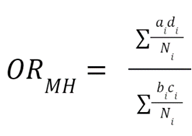
ad M N OR MH bc E N
Step by Step Solution
There are 3 Steps involved in it
1 Expert Approved Answer
Step: 1 Unlock

Question Has Been Solved by an Expert!
Get step-by-step solutions from verified subject matter experts
Step: 2 Unlock
Step: 3 Unlock
 Study Help