







Question: Q1. Please summarize the main issue(s) described in the case. Q2a. What is Best Buy's Permanent Pricing Matching (PPM)policy? Q2b. How does the PPM affect

Q1. Please summarize the main issue(s) described in the case.
Q2a. What is Best Buy's Permanent Pricing Matching (PPM)policy?
Q2b. How does the PPM affect Best Buy's business?
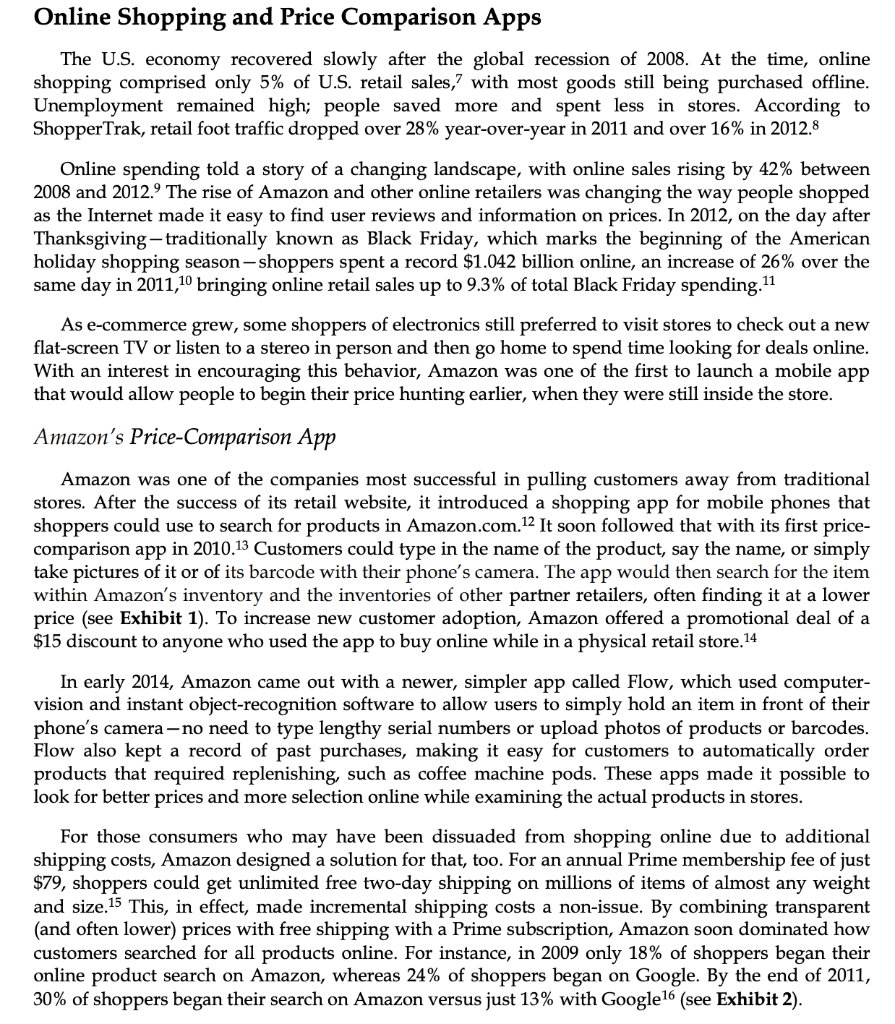
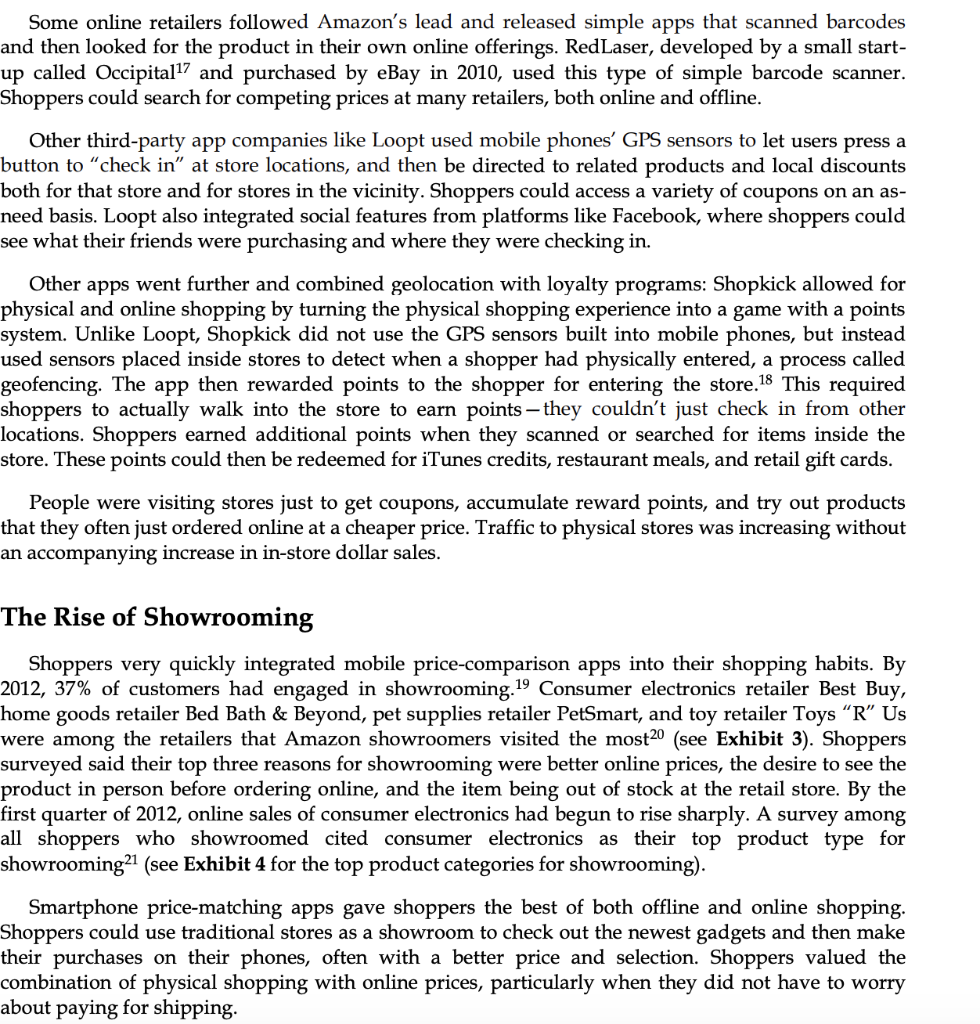
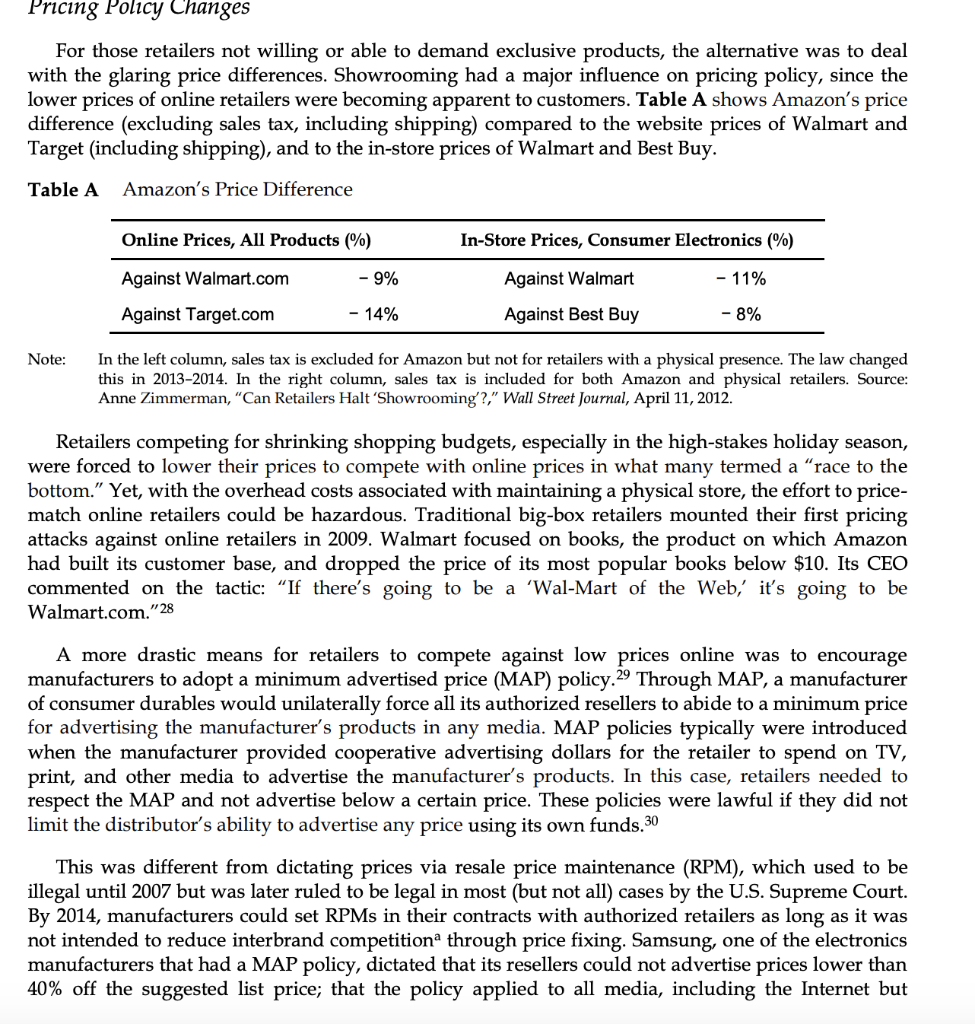
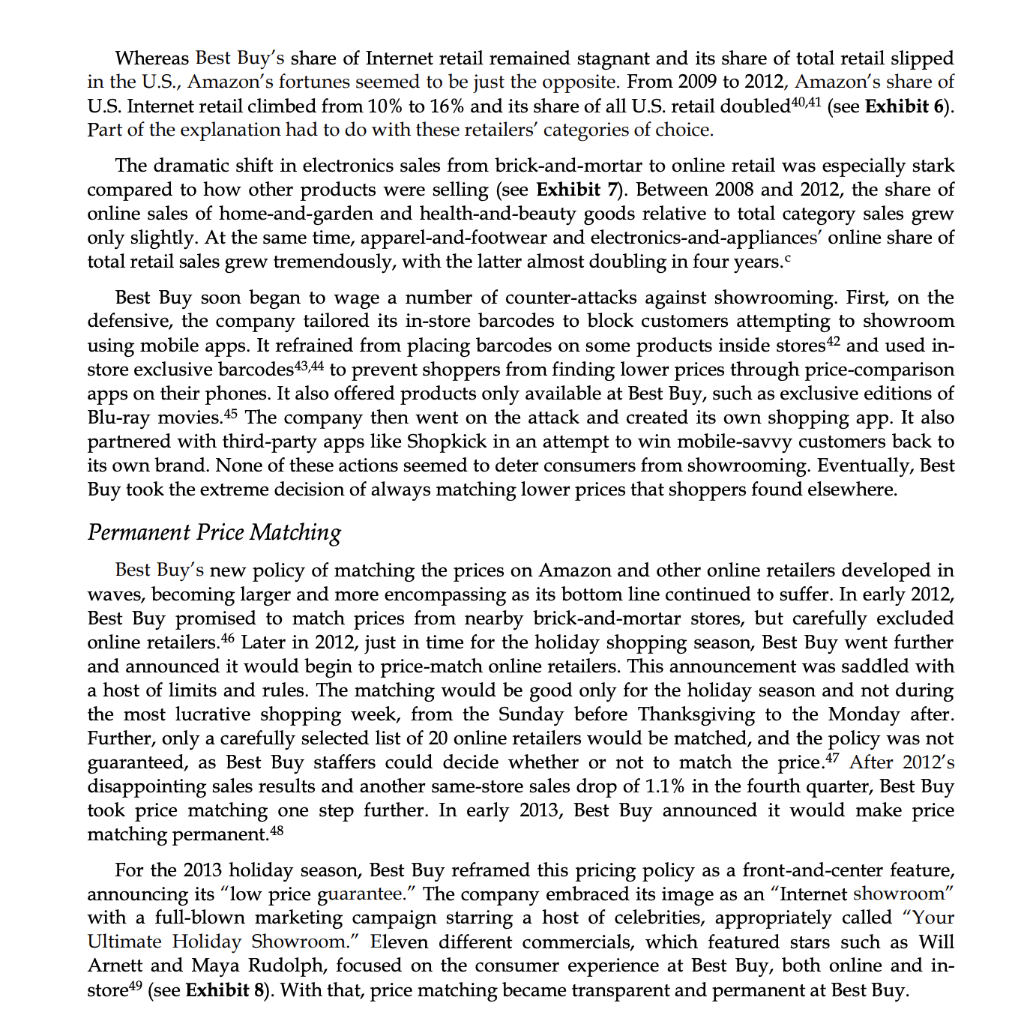
At the height of the 2012 holiday shopping season, stores were packed with customers checking out the best and brightest of the year's gadgets. People crowded around store counters to tap touchscreen buttons, marvel at the glowing displays of the newest tablets, and play the latest games and apps right there in the store. Despite the modest increase in store traffic, the cash registers at the end of the day told a sobering story. At home-goods retailer Target, sales were flat, with no increase in revenue at all over the previous year. Best Buy, the world's largest electronics retailer, fared even worse: sales at stores opened in the previous year had fallen by over 4%. At department store J.C. Penney, same-store sales fell by 26% compared to the same period the year before. This was a marked contrast to the global online retail market, which was expanding at a rate of 17% per year.4 While many traditional retailers had been responding to weak holiday shopping by holding their customary "doorbuster" sales offering significant discounts, Amazon, eBay, and other online retailers opted to release mobile phone apps designed to give shoppers an easy way to search online for the best deals. Shoppers with a tight holiday budget still went to physical stores to check out new products, but these mobile apps could now be used to easily find better prices and discounts online. In effect, shoppers began using brick-and-mortar retail stores as showrooms. During 2012's holiday shopping season, 27% of mobile phone owners used their phone while inside a store to look up the price of a product elsewhere.5 Price differences had in effect become transparent and effortless to compare. Traditional retailers now faced a critical question: How could they compete in a world in which shoppers could easily see competing prices and offers? Retailers initially experimented with a combination of counter-attacks. Clothing retailer Macy's redesigned its stores to work more closely with mobile devices, allowing shoppers to pay for items with their phones and tablets in-store. Other stores offered perks unavailable from online competitors, like extended customer service. Target and Walmart chose to fight fire with fire and created their own shopping apps to reach shoppers with coupons and discounts, while Old Navy, J.C. Penney, and Crate & Barrel introduced shopping apps designed by third-party companies. The most extreme reaction came from consumer electronics retailer Best Buy, which decided to permanently price-match online competitors. This meant that Best Buy would match any price that customers found from an approved list of competitors, including online retailers such as Amazon. Could a traditional brick-and-mortar retailer like Best Buy, which had higher operating costs than online retailers, afford to permanently price-match its online competitors?
Step by Step Solution
There are 3 Steps involved in it
Q1... View full answer

Get step-by-step solutions from verified subject matter experts
 Study Help