







Question: Q3. (15 points) Consider the following HTML code snippets foo.com/index.html: Kiframe src-http://bar2.com/index.html> bar1.com/index.html: a. Suppose that bar3.com is under the control of an attacker. Which
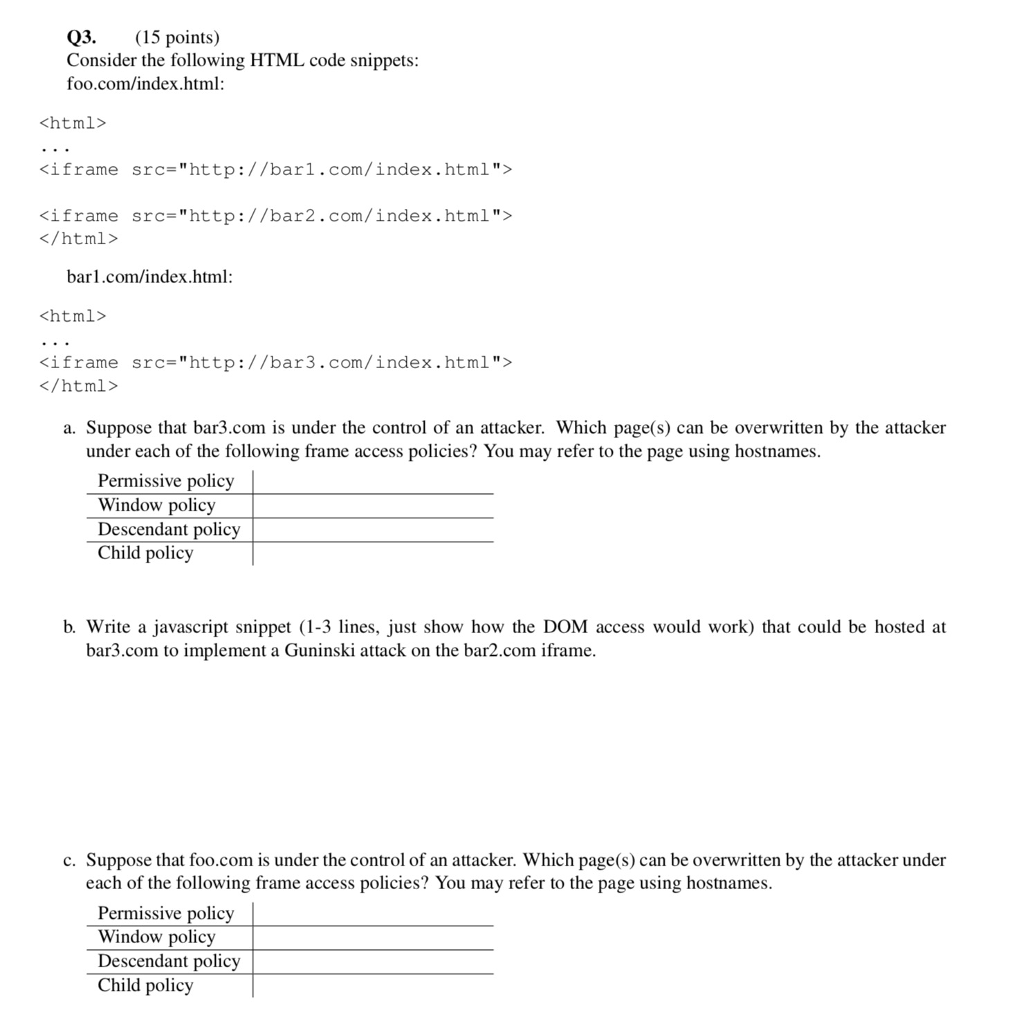
Q3. (15 points) Consider the following HTML code snippets foo.com/index.html: Kiframe src-"http://bar2.com/index.html"> bar1.com/index.html: a. Suppose that bar3.com is under the control of an attacker. Which page(s) can be overwritten by the attacker under each of the following frame access policies? You may refer to the page using hostnames Permissive policy Window policy Descendant policy Child policy b. Write a javascript snippet (1-3 lines, just show how the DOM access would work) that could be hosted at bar3.com to implement a Guninski attack on the bar2.com iframe c. Suppose that foo.com is under the control of an attacker. Which page(s) can be overwritten by the attacker under each of the following frame access policies? You may refer to the page using hostnames Permissive policy Window policy Descendant policy Child policy Q3. (15 points) Consider the following HTML code snippets foo.com/index.html: Kiframe src-"http://bar2.com/index.html"> bar1.com/index.html: a. Suppose that bar3.com is under the control of an attacker. Which page(s) can be overwritten by the attacker under each of the following frame access policies? You may refer to the page using hostnames Permissive policy Window policy Descendant policy Child policy b. Write a javascript snippet (1-3 lines, just show how the DOM access would work) that could be hosted at bar3.com to implement a Guninski attack on the bar2.com iframe c. Suppose that foo.com is under the control of an attacker. Which page(s) can be overwritten by the attacker under each of the following frame access policies? You may refer to the page using hostnames Permissive policy Window policy Descendant policy Child policy
Step by Step Solution
There are 3 Steps involved in it

Get step-by-step solutions from verified subject matter experts
 Study Help