



Question: qualitative analysis technique in soccer 3) Step #2 of developing a deterministic model is to break the result into distinct, consecutive parts, if possible, that
qualitative analysis technique in soccer
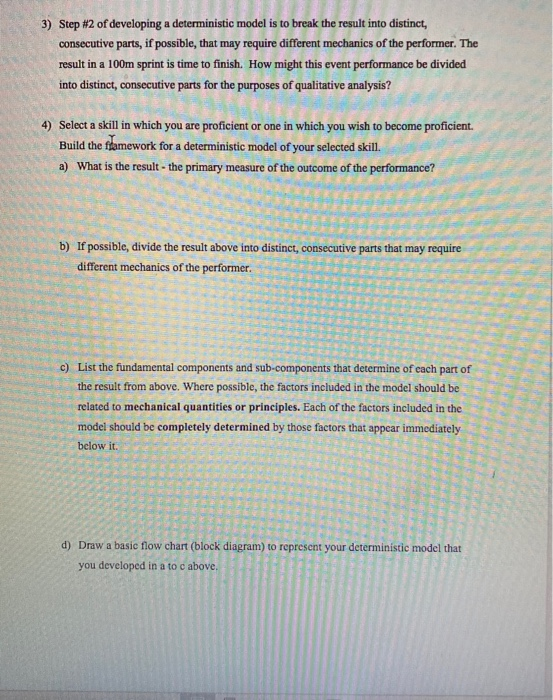
3) Step #2 of developing a deterministic model is to break the result into distinct, consecutive parts, if possible, that may require different mechanics of the performer. The result in a 100m sprint is time to finish. How might this event performance be divided into distinct, consecutive parts for the purposes of qualitative analysis? 4) Select a skill in which you are proficient or one in which you wish to become proficient. Build the famework for a deterministic model of your selected skill. a) What is the result - the primary measure of the outcome of the performance? b) If possible, divide the result above into distinct, consecutive parts that may require different mechanics of the performer. c) List the fundamental components and sub-components that determine of each part of the result from above. Where possible, the factors included in the model should be related to mechanical quantities or principles. Each of the factors included in the model should be completely determined by those factors that appear immediately below it. d) Draw a basic flow chart (block diagram) to represent your deterministic model that you developed in a to c above. 3) Step #2 of developing a deterministic model is to break the result into distinct, consecutive parts, if possible, that may require different mechanics of the performer. The result in a 100m sprint is time to finish. How might this event performance be divided into distinct, consecutive parts for the purposes of qualitative analysis? 4) Select a skill in which you are proficient or one in which you wish to become proficient. Build the famework for a deterministic model of your selected skill. a) What is the result - the primary measure of the outcome of the performance? b) If possible, divide the result above into distinct, consecutive parts that may require different mechanics of the performer. c) List the fundamental components and sub-components that determine of each part of the result from above. Where possible, the factors included in the model should be related to mechanical quantities or principles. Each of the factors included in the model should be completely determined by those factors that appear immediately below it. d) Draw a basic flow chart (block diagram) to represent your deterministic model that you developed in a to c above
Step by Step Solution
There are 3 Steps involved in it
1 Expert Approved Answer
Step: 1 Unlock

Question Has Been Solved by an Expert!
Get step-by-step solutions from verified subject matter experts
Step: 2 Unlock
Step: 3 Unlock