



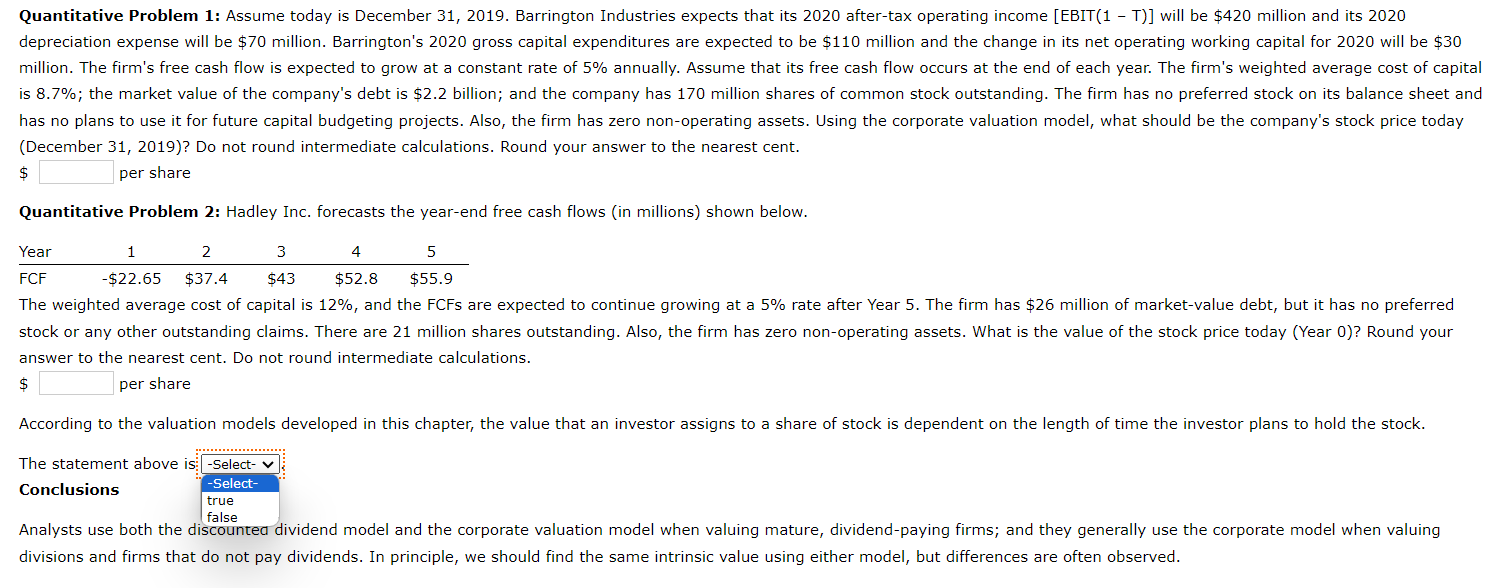
Question: Quantitative Problem 1: Assume today is December 31,2019 . Barrington Industries expects that its 2020 after-tax operating income [EBIT(1 - T)] will be $420 million
![expects that its 2020 after-tax operating income [EBIT(1 - T)] will be](https://dsd5zvtm8ll6.cloudfront.net/si.experts.images/questions/2024/10/67143bb8740e2_25667143bb80a663.jpg)
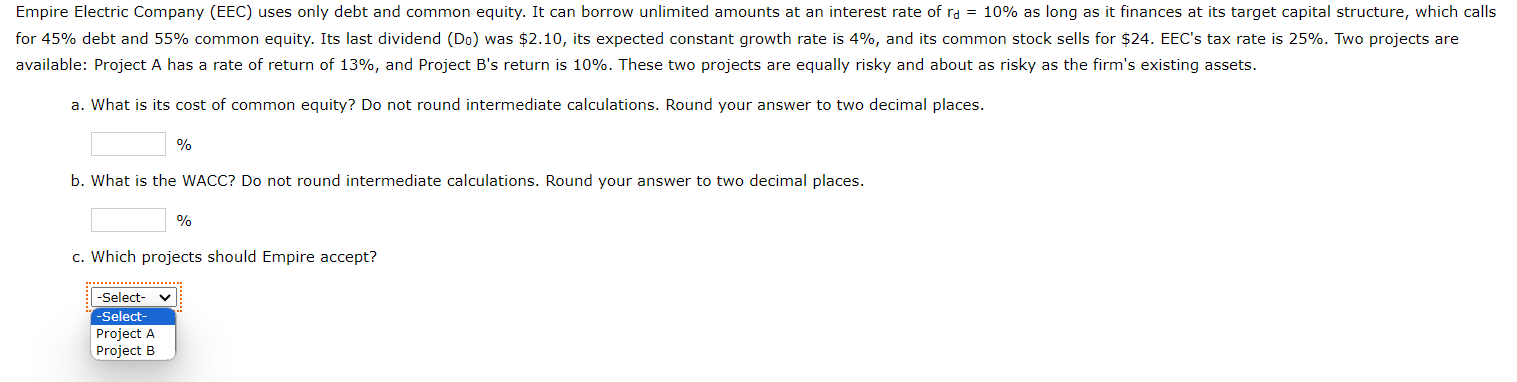
Quantitative Problem 1: Assume today is December 31,2019 . Barrington Industries expects that its 2020 after-tax operating income [EBIT(1 - T)] will be $420 million and its 2020 depreciation expense will be $70 million. Barrington's 2020 gross capital expenditures are expected to be $110 million and the change in its net operating working capital for 2020 will be $30 million. The firm's free cash flow is expected to grow at a constant rate of 5% annually. Assume that its free cash flow occurs at the end of each year. The firm's weighted average cost of capita is 8.7%; the market value of the company's debt is $2.2 billion; and the company has 170 million shares of common stock outstanding. The firm has no preferred stock on its balance sheet and has no plans to use it for future capital budgeting projects. Also, the firm has zero non-operating assets. Using the corporate valuation model, what should be the company's stock price today (December 31, 2019)? Do not round intermediate calculations. Round your answer to the nearest cent. $pershare a. How far away is the horizon date? I. The terminal, or horizon, date is infinity since common stocks do not have a maturity date. II. The terminal, or horizon, date is Year 0 since the value of a common stock is the present value of all future expected dividends at time zero. III. The terminal, or horizon, date is the date when the growth rate becomes nonconstant. This occurs at time zero. IV. The terminal, or horizon, date is the date when the growth rate becomes constant. This occurs at the beginning of Year 2 . V. The terminal, or horizon, date is the date when the growth rate becomes constant. This occurs at the end of Year 2. b. What is the firm's horizon, or continuing, value? Do not round intermediate calculations. Round your answer to the nearest cent. $ c. What is the firm's intrinsic value today, P0 ? Do not round intermediate calculations. Round your answer to the nearest cent. $ available: Project A has a rate of return of 13%, and Project B's return is 10%. These two projects are equally risky and about as risky as the firm's existing assets. a. What is its cost of common equity? Do not round intermediate calculations. Round your answer to two decimal places. % b. What is the WACC? Do not round intermediate calculations. Round your answer to two decimal places. % c. Which projects should Empire accept? -Select- Project A Project B
Step by Step Solution
There are 3 Steps involved in it

Get step-by-step solutions from verified subject matter experts