



Question: Quantitative Problem: Barton Industries estimates its cost of common equity by using three approaches: the CAPM, the bond - yield - plus - risk -
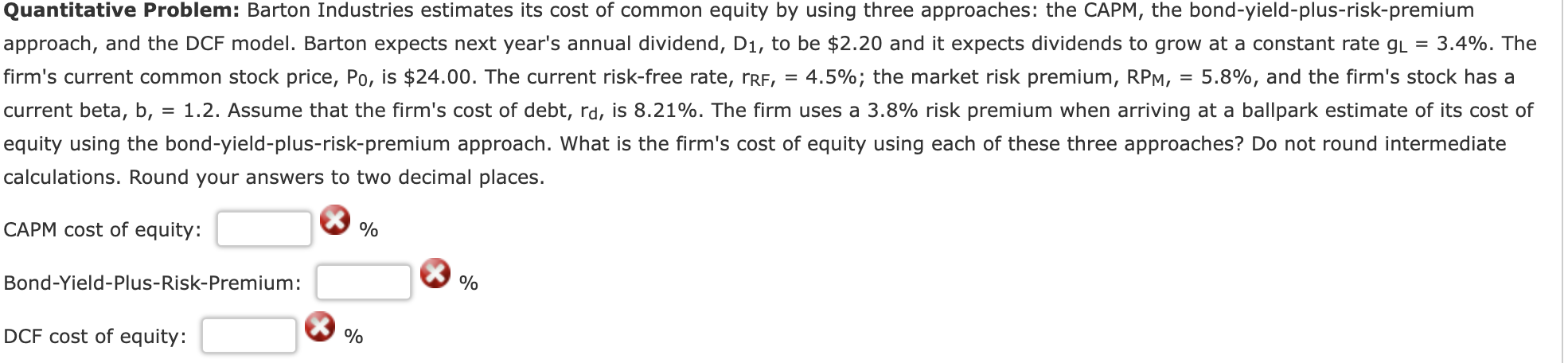
Quantitative Problem: Barton Industries estimates its cost of common equity by using three approaches: the CAPM, the bondyieldplusriskpremium
approach, and the DCF model. Barton expects next year's annual dividend, to be $ and it expects dividends to grow at a constant rate gL The
firm's current common stock price, is $ The current riskfree rate, ; the market risk premium, and the firm's stock has a
current beta, Assume that the firm's cost of debt, is The firm uses a risk premium when arriving at a ballpark estimate of its cost of
equity using the bondyieldplusriskpremium approach. What is the firm's cost of equity using each of these three approaches? Do not round intermediate
calculations. Round your answers to two decimal places.
CAPM cost of equity:
BondYieldPlusRiskPremium:
DCF cost of equity:
Step by Step Solution
There are 3 Steps involved in it
1 Expert Approved Answer
Step: 1 Unlock

Question Has Been Solved by an Expert!
Get step-by-step solutions from verified subject matter experts
Step: 2 Unlock
Step: 3 Unlock