







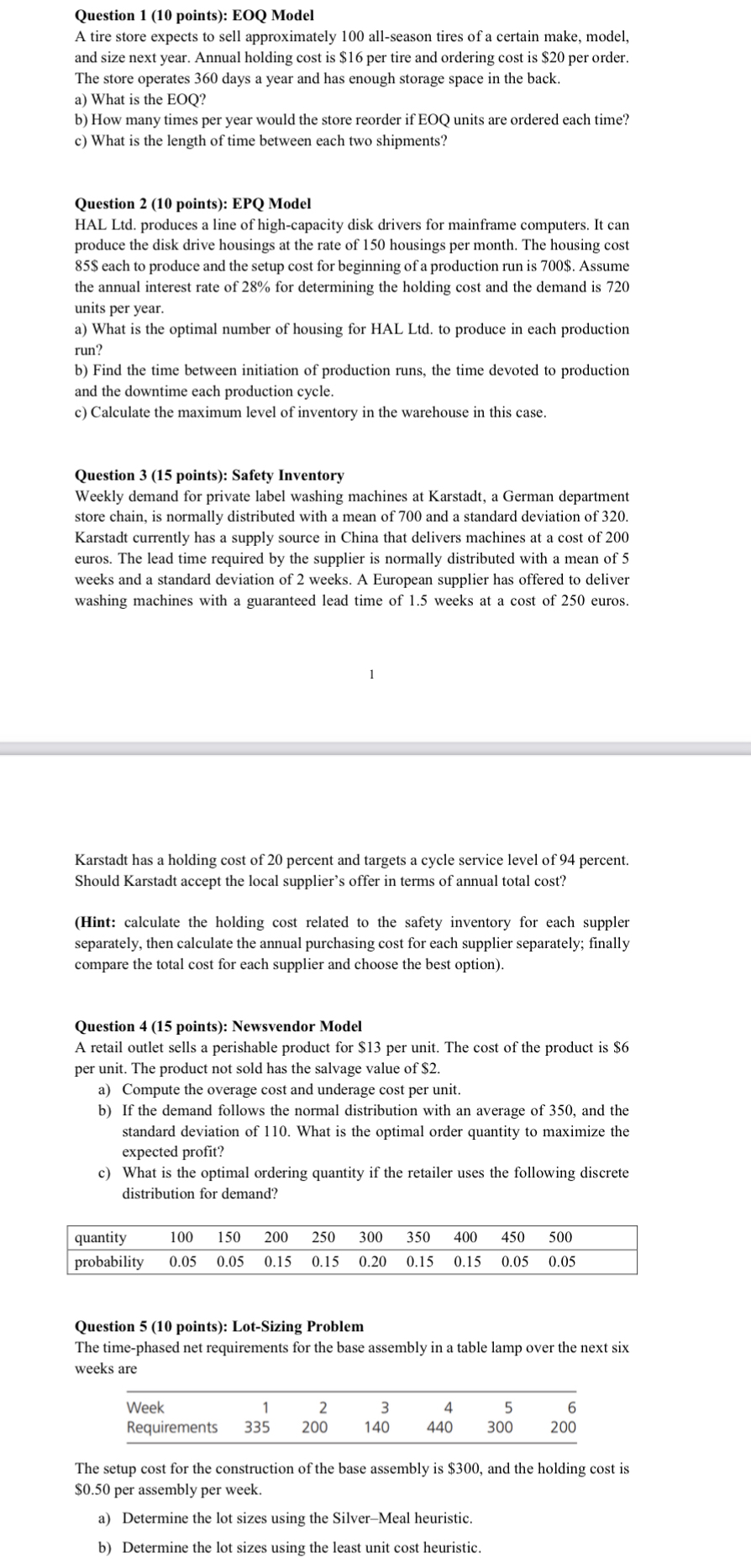
Question: Question 1 ( 1 0 points ) : EOQ Model A tire store expects to sell approximately 1 0 0 all - season tires of
Question points: EOQ Model
A tire store expects to sell approximately allseason tires of a certain make, model, and size next year. Annual holding cost is $ per tire and ordering cost is $ per order. The store operates days a year and has enough storage space in the back.
a What is the EOQ?
b How many times per year would the store reorder if EOQ units are ordered each time?
c What is the length of time between each two shipments?
Question points: EPQ Model
HAL Ltd produces a line of highcapacity disk drivers for mainframe computers. It can produce the disk drive housings at the rate of housings per month. The housing cost $ each to produce and the setup cost for beginning of a production run is $ Assume the annual interest rate of for determining the holding cost and the demand is units per year.
a What is the optimal number of housing for HAL Ltd to produce in each production run?
b Find the time between initiation of production runs, the time devoted to production and the downtime each production cycle.
c Calculate the maximum level of inventory in the warehouse in this case.
Question points: Safety Inventory
Weekly demand for private label washing machines at Karstadt, a German department store chain, is normally distributed with a mean of and a standard deviation of Karstadt currently has a supply source in China that delivers machines at a cost of euros. The lead time required by the supplier is normally distributed with a mean of weeks and a standard deviation of weeks. A European supplier has offered to deliver washing machines with a guaranteed lead time of weeks at a cost of euros.
Karstadt has a holding cost of percent and targets a cycle service level of percent. Should Karstadt accept the local supplier's offer in terms of annual total cost?
Hint: calculate the holding cost related to the safety inventory for each suppler separately, then calculate the annual purchasing cost for each supplier separately; finally compare the total cost for each supplier and choose the best option
Question points: Newsvendor Model
A retail outlet sells a perishable product for $ per unit. The cost of the product is $ per unit. The product not sold has the salvage value of $
a Compute the overage cost and underage cost per unit.
b If the demand follows the normal distribution with an average of and the standard deviation of What is the optimal order quantity to maximize the expected profit?
c What is the optimal ordering quantity if the retailer uses the following discrete distribution for demand?
tablequantityprobability
Question points: LotSizing Problem
The timephased net requirements for the base assembly in a table lamp over the next six weeks are
tableWeekRequirements
The setup cost for the construction of the base assembly is $ and the holding cost is $ per assembly per week.
a Determine the lot sizes using the SilverMeal heuristic.
b Determine the lot sizes using the least unit cost heuristic.
Step by Step Solution
There are 3 Steps involved in it
1 Expert Approved Answer
Step: 1 Unlock

Question Has Been Solved by an Expert!
Get step-by-step solutions from verified subject matter experts
Step: 2 Unlock
Step: 3 Unlock
 Study Help