







Question: Question 1 (1 point) Type 0 hypervisors are most commonly found in mainframe computers. True False Question 2 (1 point) VMWare ESX is an example
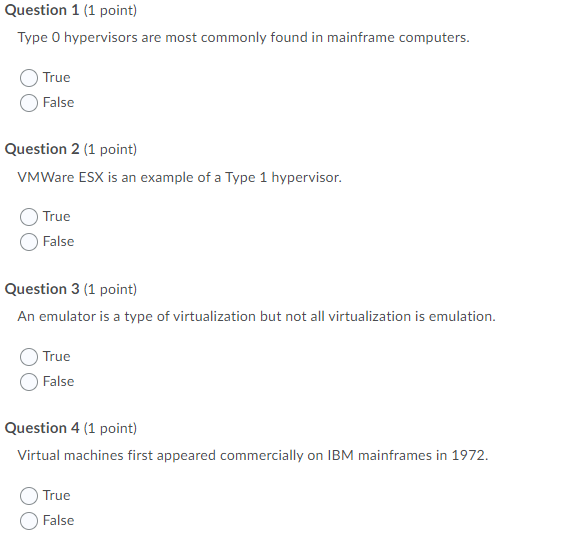
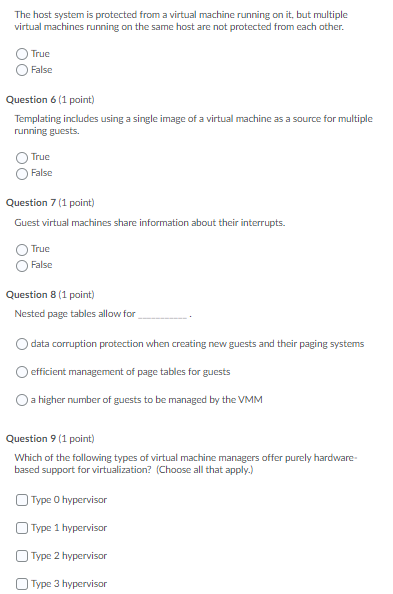
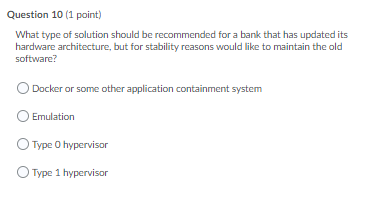
Question 1 (1 point) Type 0 hypervisors are most commonly found in mainframe computers. True False Question 2 (1 point) VMWare ESX is an example of a Type 1 hypervisor. True False Question 3 (1 point) An emulator is a type of virtualization but not all virtualization is emulation. True False Question 4 (1 point) Virtual machines first appeared commercially on IBM mainframes in 1972. True False The host system is protected from a virtual machine running on it, but multiple virtual machines running on the same host are not protected from each other. True False Question 6 (1 point) Templating includes using a single image of a virtual machine as a source for multiple running guests. True False Question 7 (1 point) Guest virtual machines share information about their interrupts. True False Question 8 (1 point) Nested page tables allow for data corruption protection when creating new guests and their paging systems efficient management of page tables for guests a higher number of guests to be managed by the VMM Question 9 (1 point) Which of the following types of virtual machine managers offer purely hardware- based support for virtualization? (Choose all that apply.) O Type O hypervisor Type 1 hypervisor Type 2 hypervisor Type 3 hypervisor Question 10 (1 point) What type of solution should be recommended for a bank that has updated its hardware architecture, but for stability reasons would like to maintain the old software? Docker or some other application containment system Emulation Type o hypervisor Type 1 hypervisor
Step by Step Solution
There are 3 Steps involved in it

Get step-by-step solutions from verified subject matter experts
 Study Help