







Question: Question 1 1 pts When price increases span that means the economy is experiencing the entire economy; inflation all international economies; deflation the energy industry;
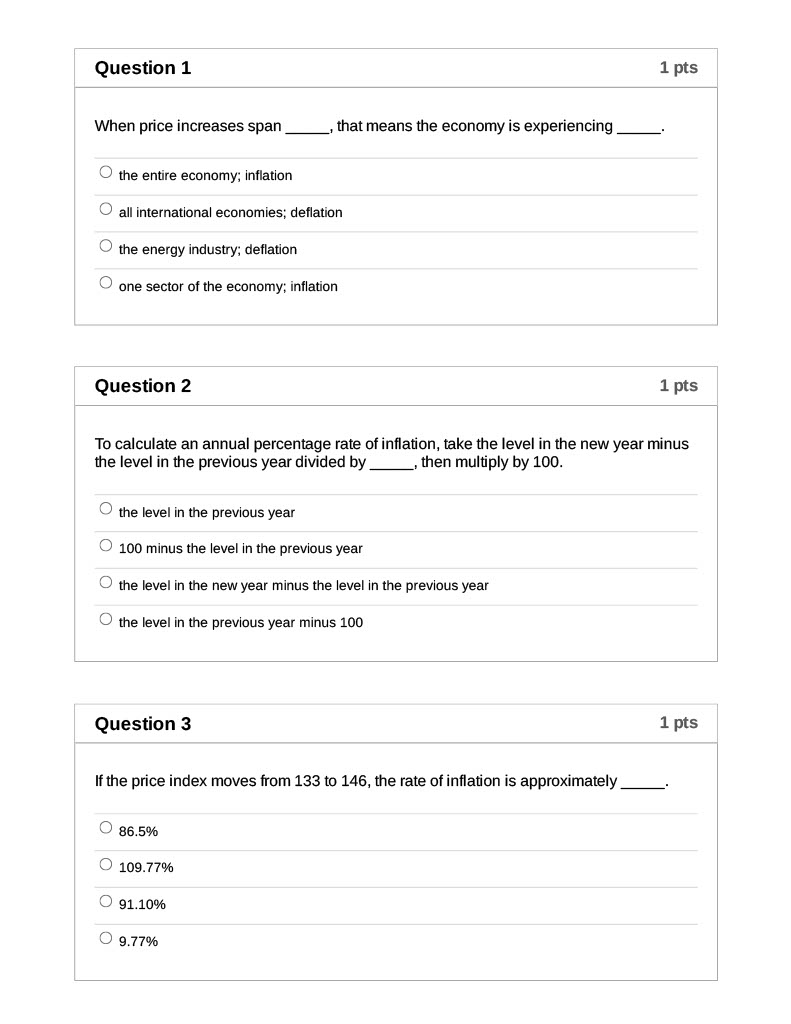
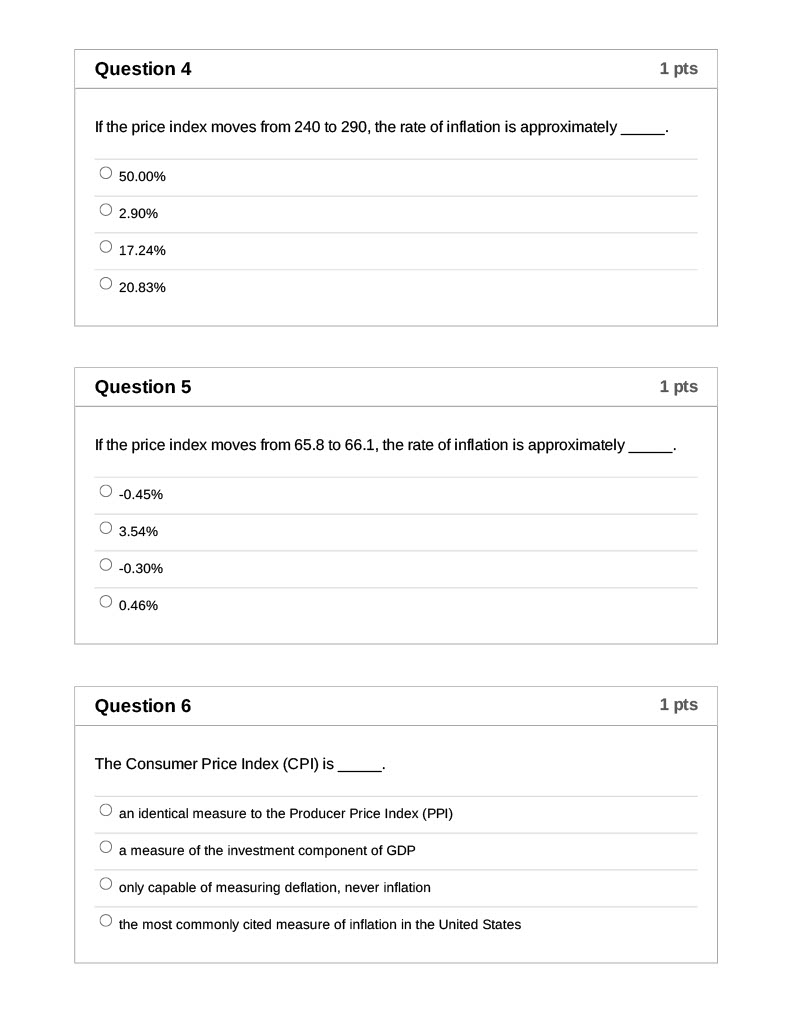
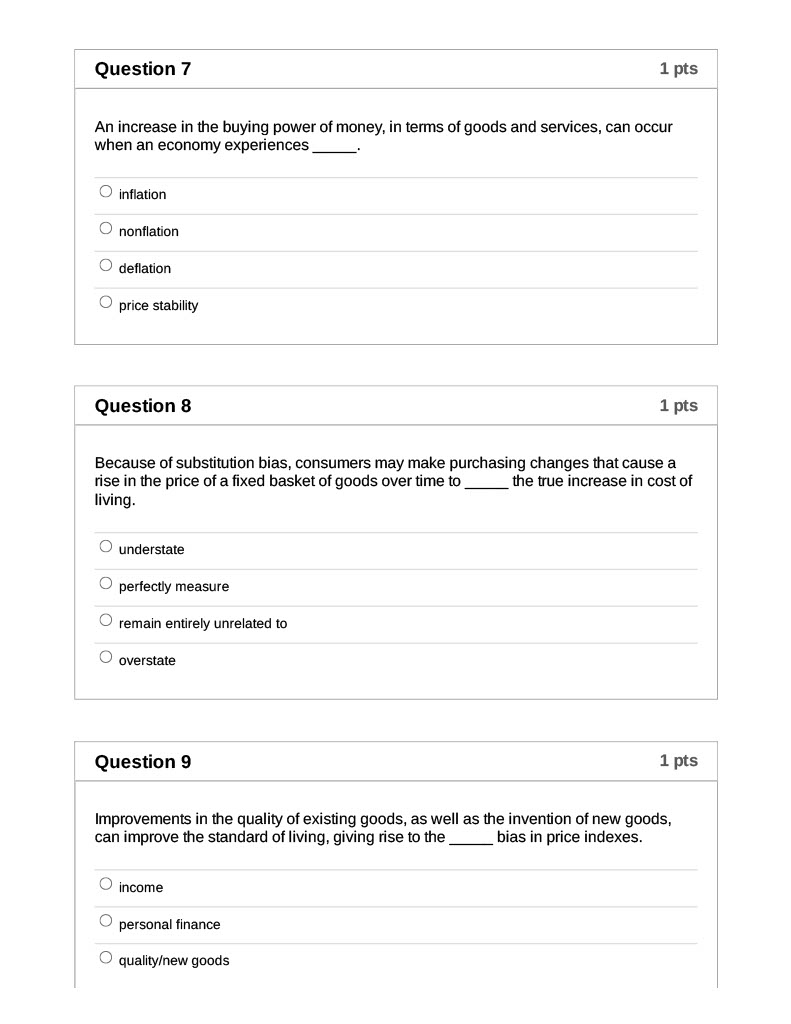
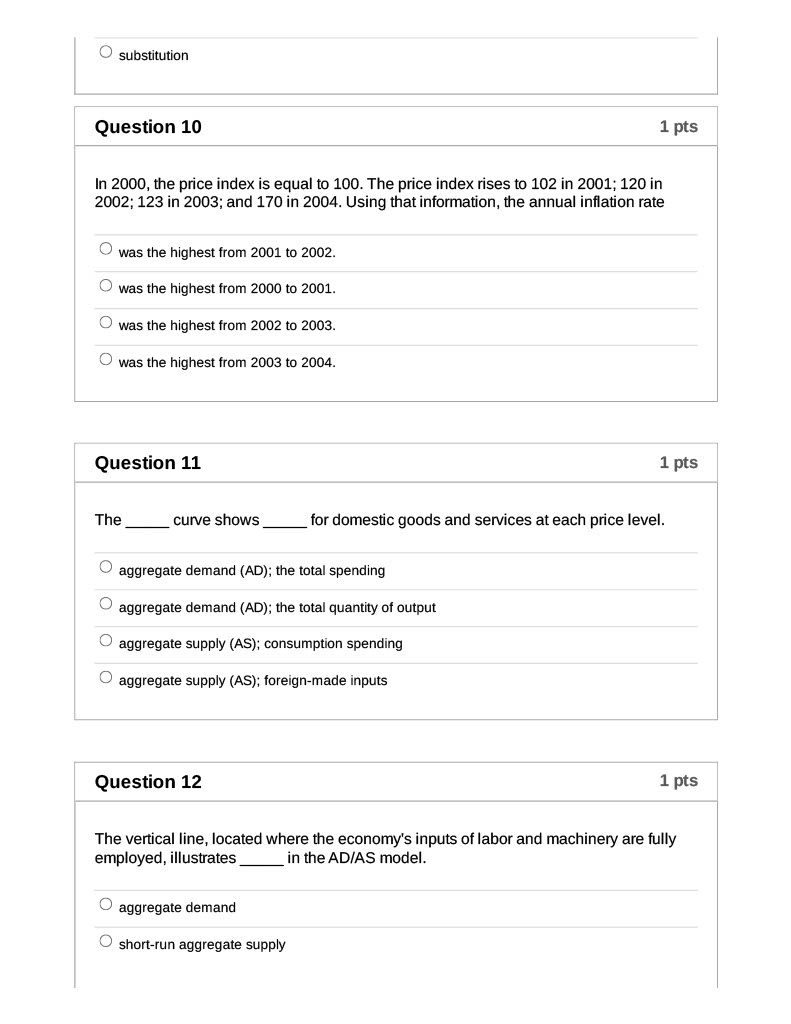
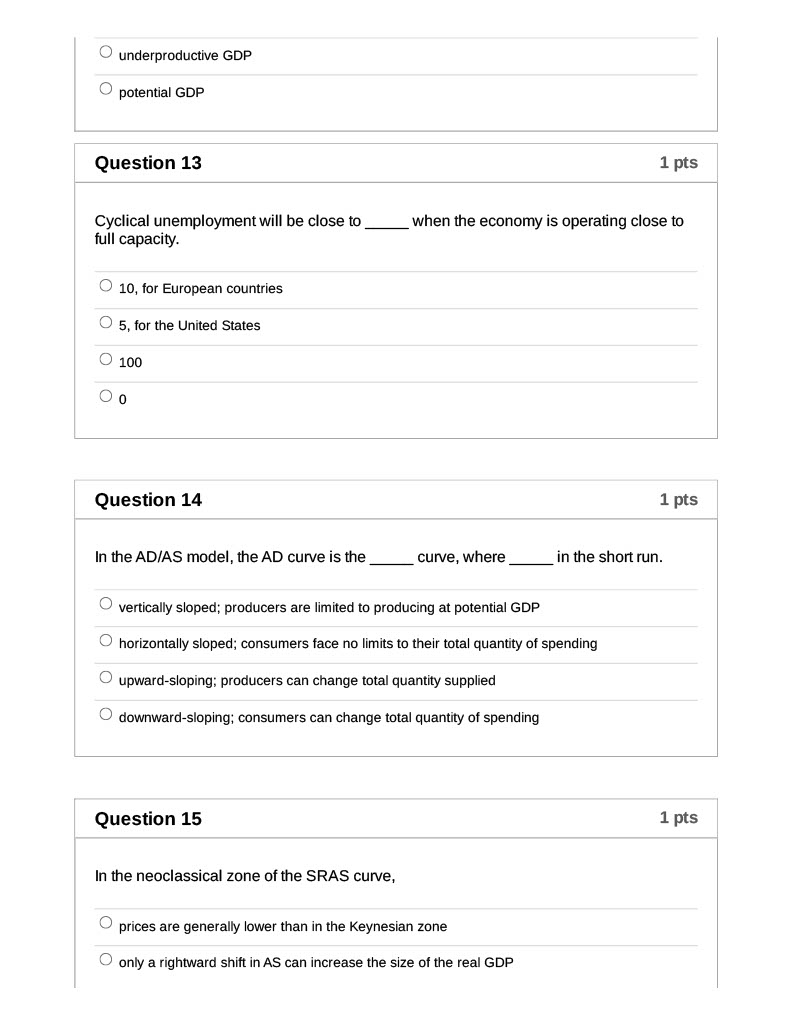
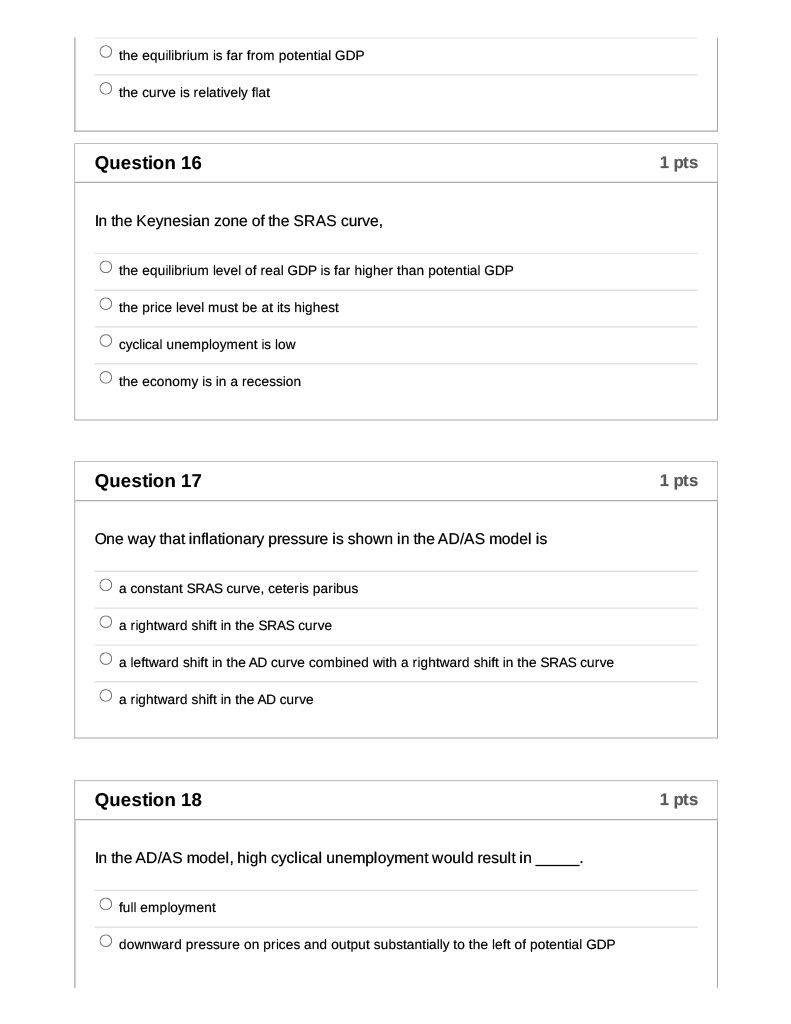
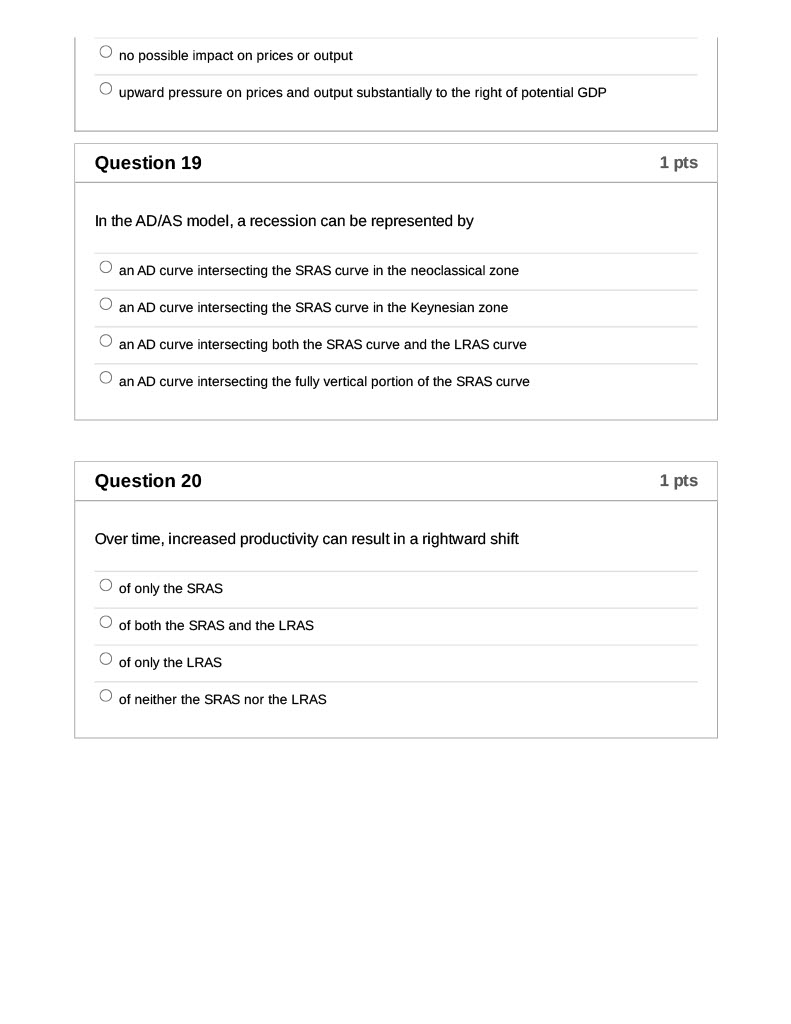
Question 1 1 pts When price increases span that means the economy is experiencing the entire economy; inflation all international economies; deflation the energy industry; deflation one sector of the economy; inflation Question 2 1 pts To calculate an annual percentage rate of inflation, take the level in the new year minus the level in the previous year divided by , then multiply by 100. the level in the previous year 100 minus the level in the previous year the level in the new year minus the level in the previous year O the level in the previous year minus 100 Question 3 1 pts If the price index moves from 133 to 146, the rate of inflation is approximately O 86.5% 109.77% 91.10% O 9.77%Question 4 1 pts If the price index moves from 240 to 290, the rate of inflation is approximately_ 50.00% O 2.90% O 17.24% O 20.83% Question 5 1 pts If the price index moves from 65.8 to 66.1, the rate of inflation is approximately O -0.45% O 3.54% O -0.30% O 0.46% Question 6 1 pts The Consumer Price Index (CPI) is an identical measure to the Producer Price Index (PPI) a measure of the investment component of GDP only capable of measuring deflation, never inflation the most commonly cited measure of inflation in the United StatesQuestion 7 1 pts An increase in the buying power of money, in terms of goods and services, can occur when an economy experiences inflation nonflation O deflation O price stability Question 8 1 pts Because of substitution bias, consumers may make purchasing changes that cause a rise in the price of a fixed basket of goods over time to the true increase in cost of living. O understate O perfectly measure remain entirely unrelated to overstate Question 9 1 pts Improvements in the quality of existing goods, as well as the invention of new goods, can improve the standard of living, giving rise to the bias in price indexes. income personal finance O qualityew goodssubstitution Question 10 1 pts In 2000, the price index is equal to 100. The price index rises to 102 in 2001; 120 in 2002; 123 in 2003; and 170 in 2004. Using that information, the annual inflation rate was the highest from 2001 to 2002. was the highest from 2000 to 2001. O was the highest from 2002 to 2003. O was the highest from 2003 to 2004. Question 11 1 pts The curve shows for domestic goods and services at each price level. aggregate demand (AD); the total spending O aggregate demand (AD); the total quantity of output aggregate supply (AS); consumption spending O aggregate supply (AS); foreign-made inputs Question 12 1 pts The vertical line, located where the economy's inputs of labor and machinery are fully employed, illustrates in the AD/AS model. O aggregate demand short-run aggregate supplyunderproductive GDP potential GDP Question 13 1 pts Cyclical unemployment will be close to when the economy is operating close to full capacity. 10, for European countries O 5, for the United States 100 Oo Question 14 1 pts In the AD/AS model, the AD curve is the . curve, where in the short run. O vertically sloped; producers are limited to producing at potential GDP horizontally sloped; consumers face no limits to their total quantity of spending O upward-sloping; producers can change total quantity supplied O downward-sloping; consumers can change total quantity of spending Question 15 1 pts In the neoclassical zone of the SRAS curve, prices are generally lower than in the Keynesian zone only a rightward shift in AS can increase the size of the real GDPthe equilibrium is far from potential GDP the curve is relatively flat Question 16 1 pts In the Keynesian zone of the SRAS curve, the equilibrium level of real GDP is far higher than potential GDP the price level must be at its highest cyclical unemployment is low the economy is in a recession Question 17 1 pts One way that inflationary pressure is shown in the AD/AS model is a constant SRAS curve, ceteris paribus a rightward shift in the SRAS curve a leftward shift in the AD curve combined with a rightward shift in the SRAS curve O a rightward shift in the AD curve Question 18 1 pts In the AD/AS model, high cyclical unemployment would result in full employment downward pressure on prices and output substantially to the left of potential GDPno possible impact on prices or output upward pressure on prices and output substantially to the right of potential GDP Question 19 1 pts In the AD/AS model, a recession can be represented by an AD curve intersecting the SRAS curve in the neoclassical zone an AD curve intersecting the SRAS curve in the Keynesian zone an AD curve intersecting both the SRAS curve and the LRAS curve an AD curve intersecting the fully vertical portion of the SRAS curve Question 20 1 pts Over time, increased productivity can result in a rightward shift of only the SRAS of both the SRAS and the LRAS of only the LRAS of neither the SRAS nor the LRAS
Step by Step Solution
There are 3 Steps involved in it

Get step-by-step solutions from verified subject matter experts
 Study Help