







Question: Question 1 3 In our example use - after - free attack on Fast bins, we allocated and then freed 1 0 size (
Question
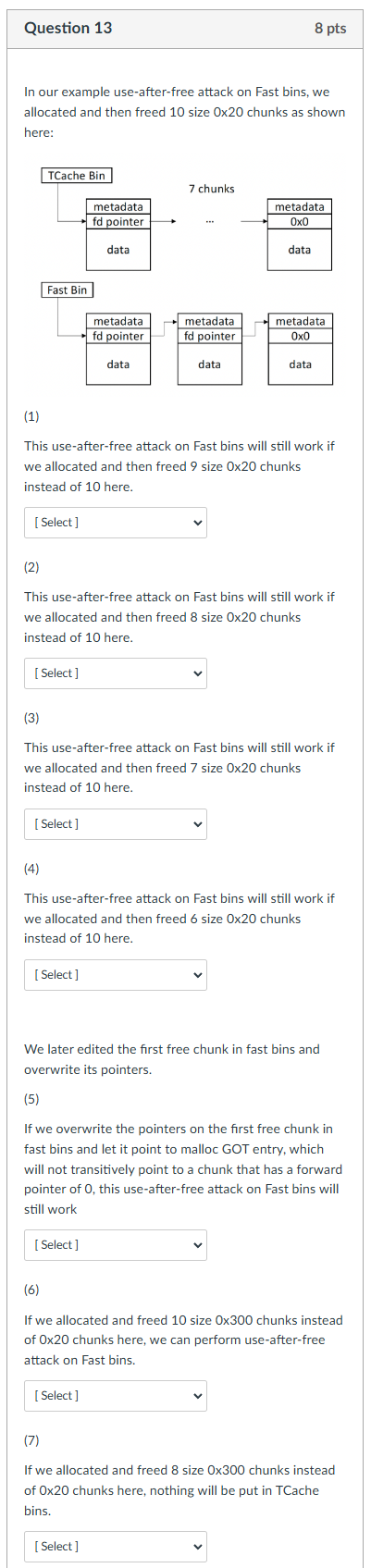
In our example useafterfree attack on Fast bins, we allocated and then freed size times chunks as shown here:
This useafterfree attack on Fast bins will still work if we allocated and then freed size times chunks instead of here.
This useafterfree attack on Fast bins will still work if we allocated and then freed size times chunks instead of here.
This useafterfree attack on Fast bins will still work if we allocated and then freed size times chunks instead of here.
This useafterfree attack on Fast bins will still work if we allocated and then freed size times chunks instead of here.
We later edited the first free chunk in fast bins and overwrite its pointers.
If we overwrite the pointers on the first free chunk in fast bins and let it point to malloc GOT entry, which will not transitively point to a chunk that has a forward pointer of this useafterfree attack on Fast bins will still work
If we allocated and freed size times chunks instead of times chunks here, we can perform useafterfree attack on Fast bins.
If we allocated and freed size times chunks instead of times chunks here, nothing will be put in TCache bins.
Step by Step Solution
There are 3 Steps involved in it
1 Expert Approved Answer
Step: 1 Unlock

Question Has Been Solved by an Expert!
Get step-by-step solutions from verified subject matter experts
Step: 2 Unlock
Step: 3 Unlock
 Study Help