Question: Question 1. (4 points) Describe the difference between bullish and bearish views. Reference multiple asset classes. Describe the steps in a short sale. Question 2.
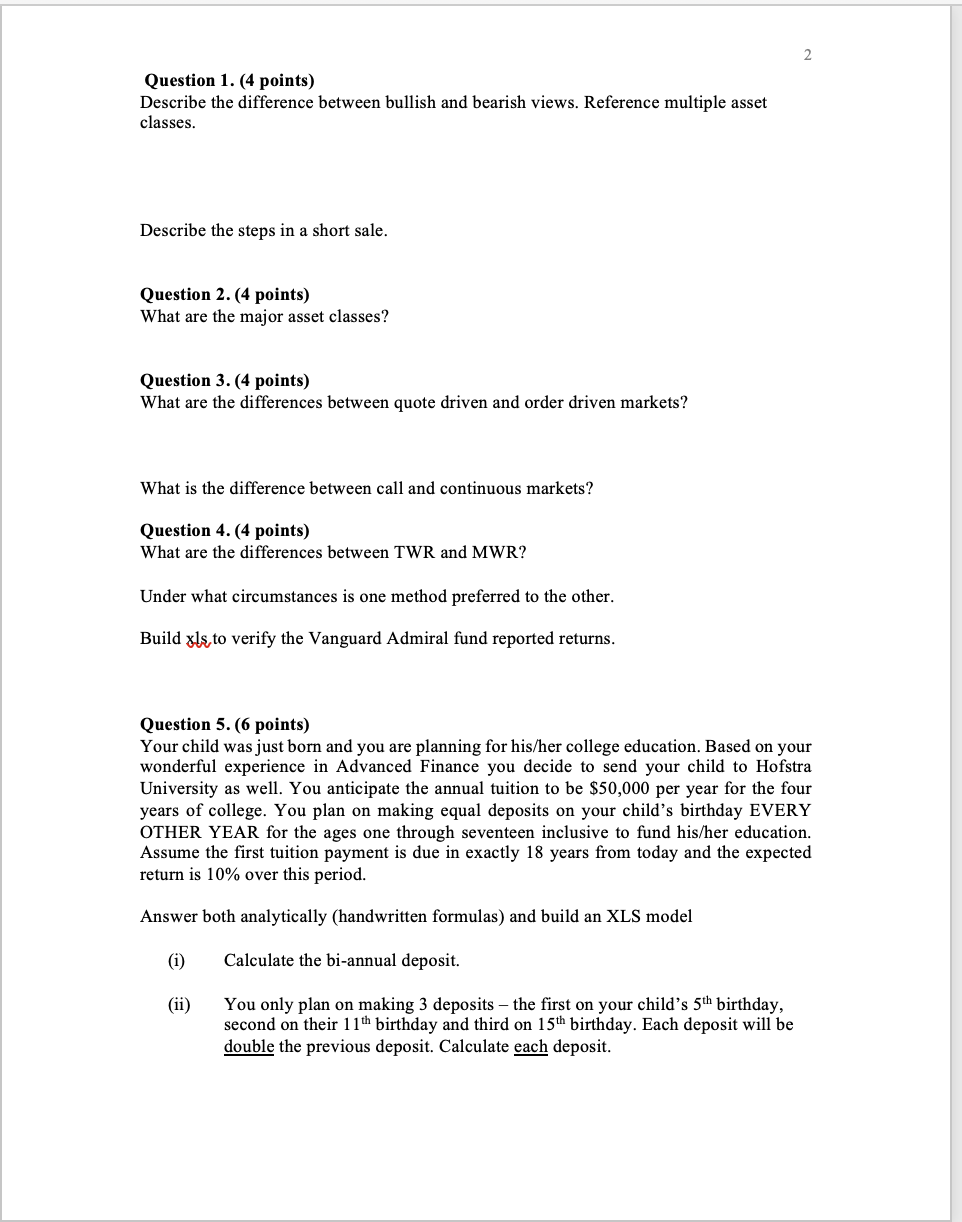
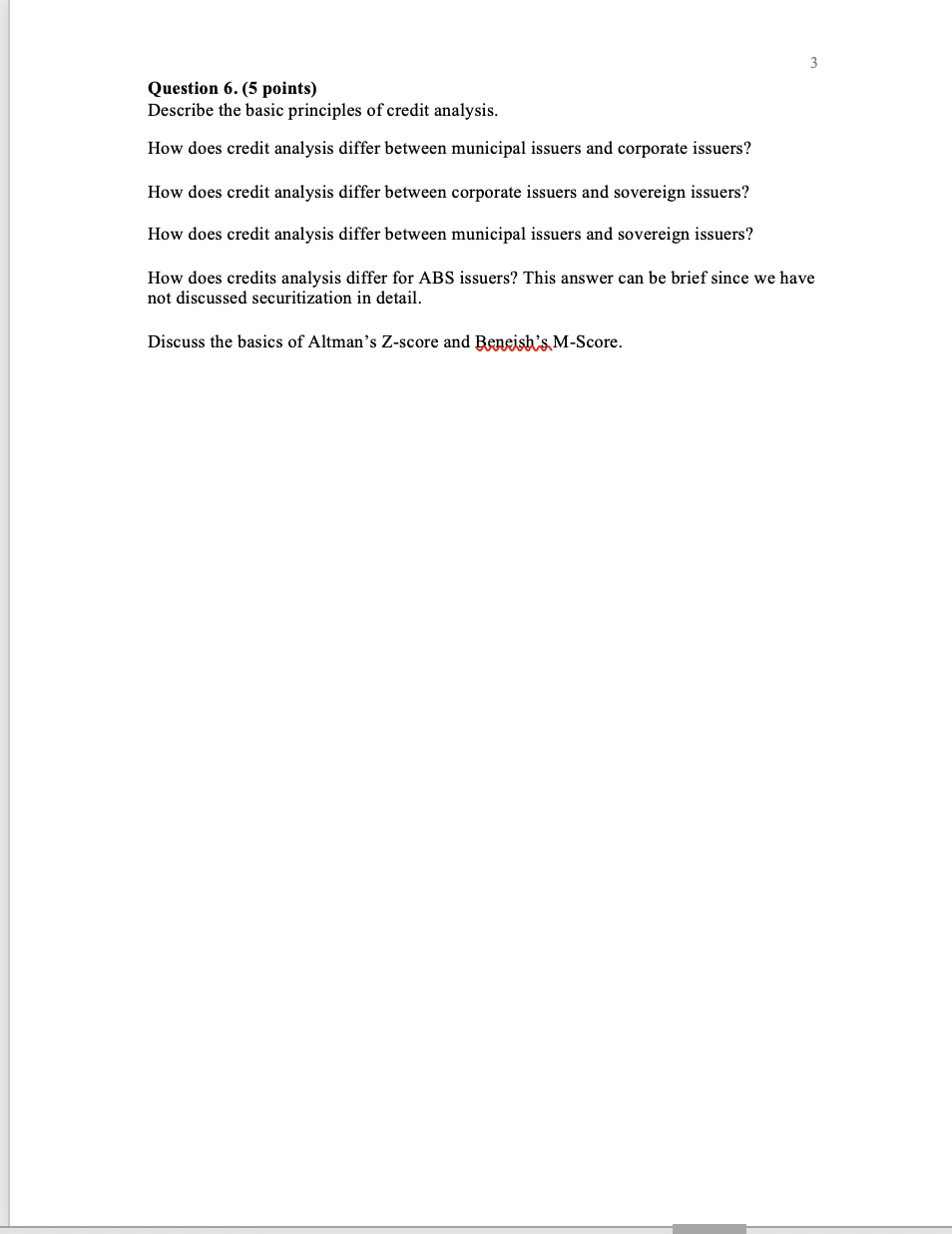
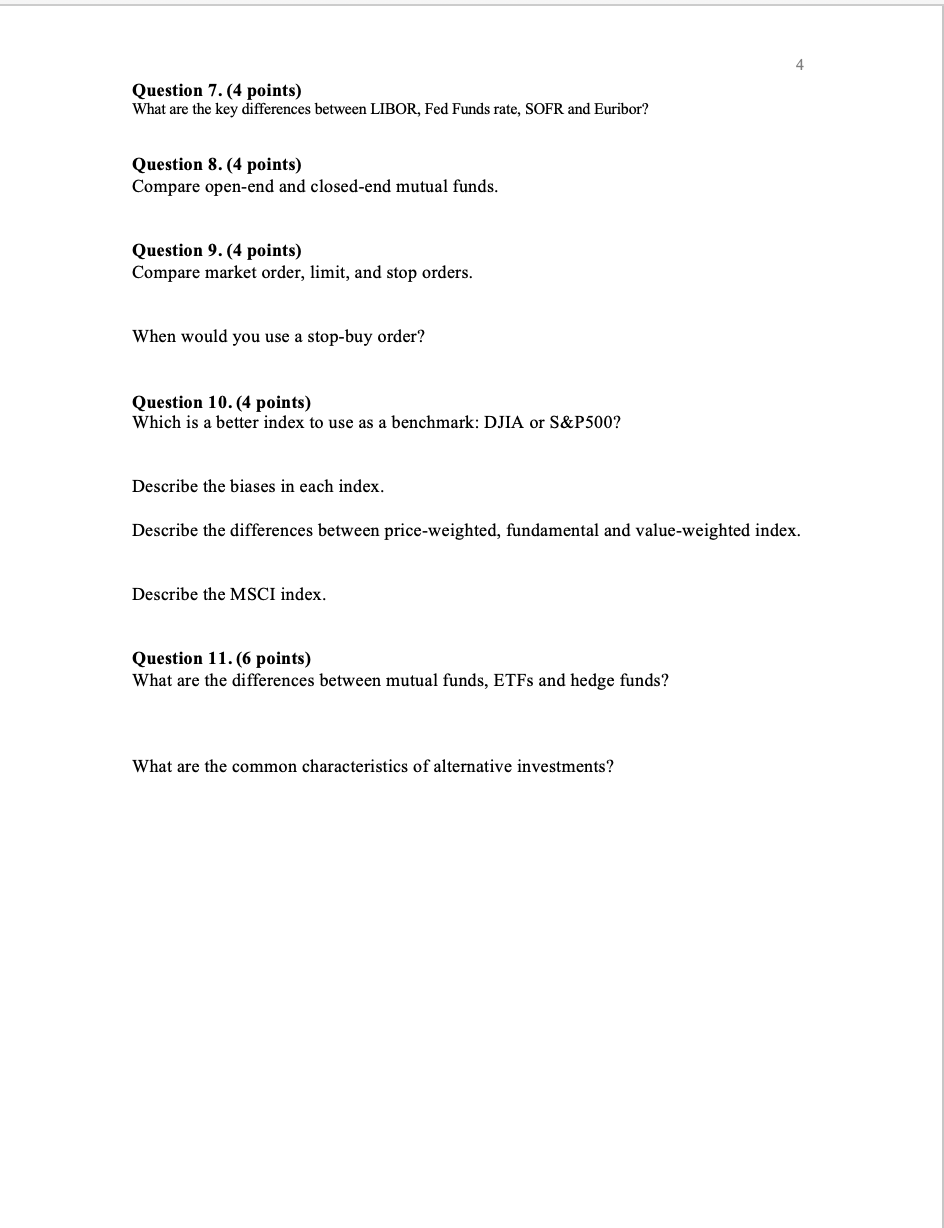
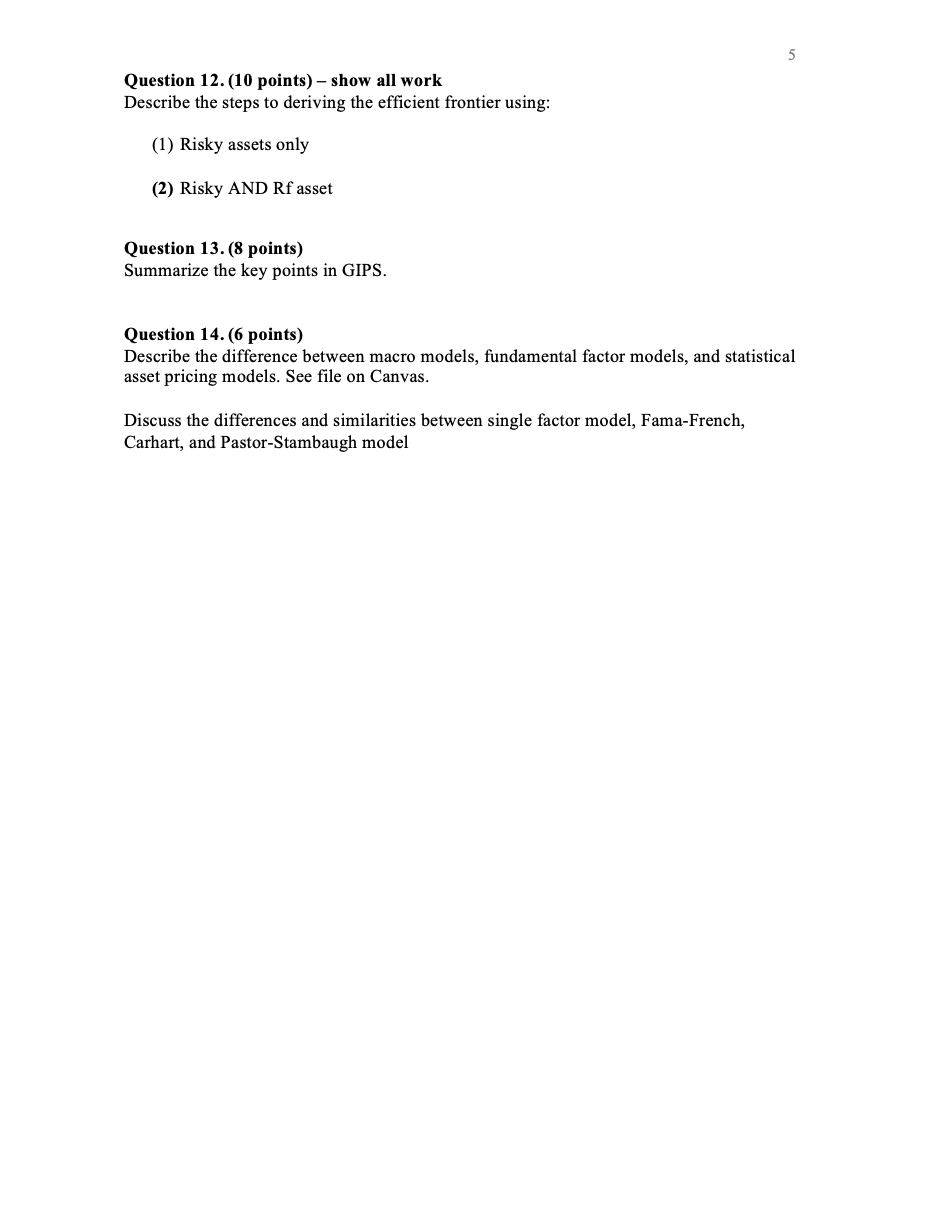
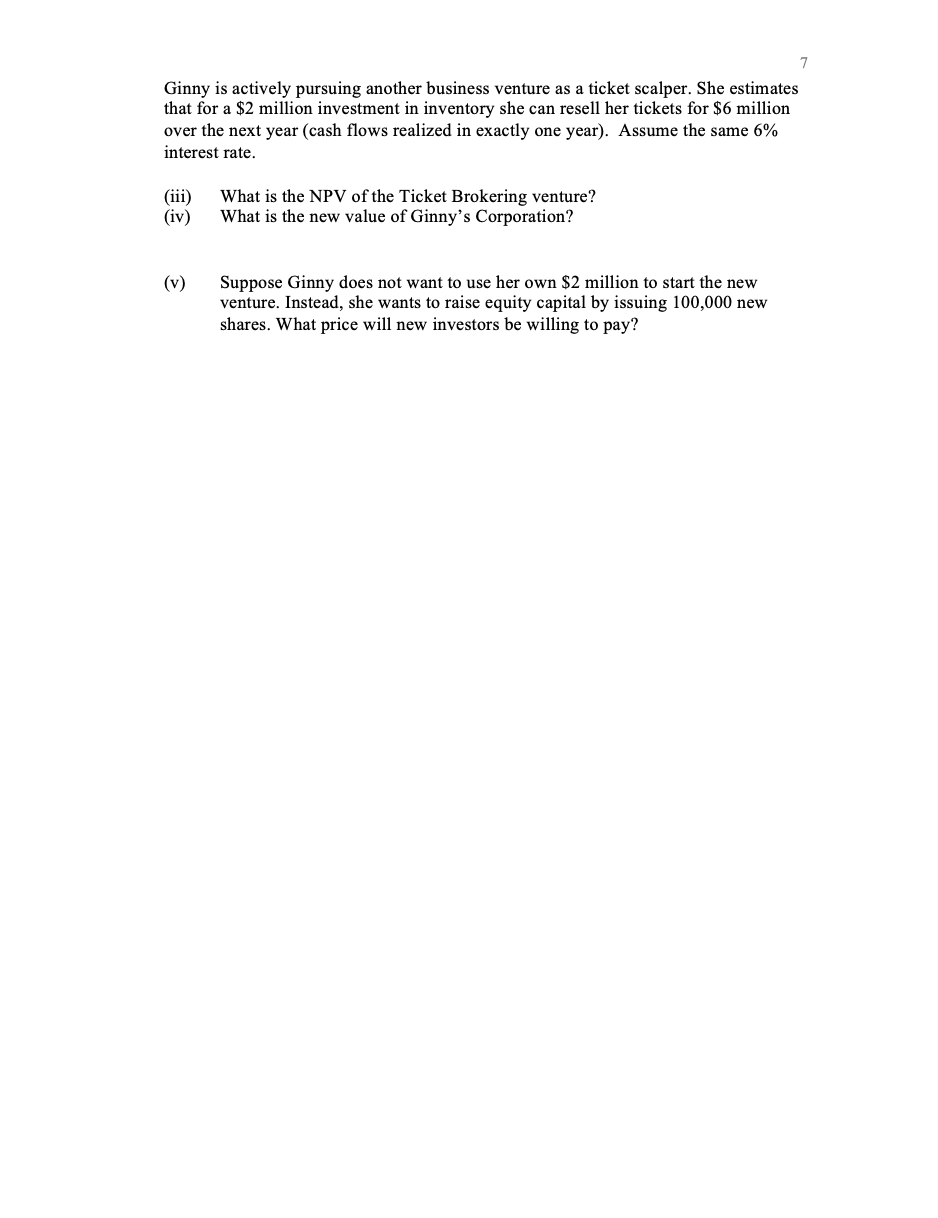
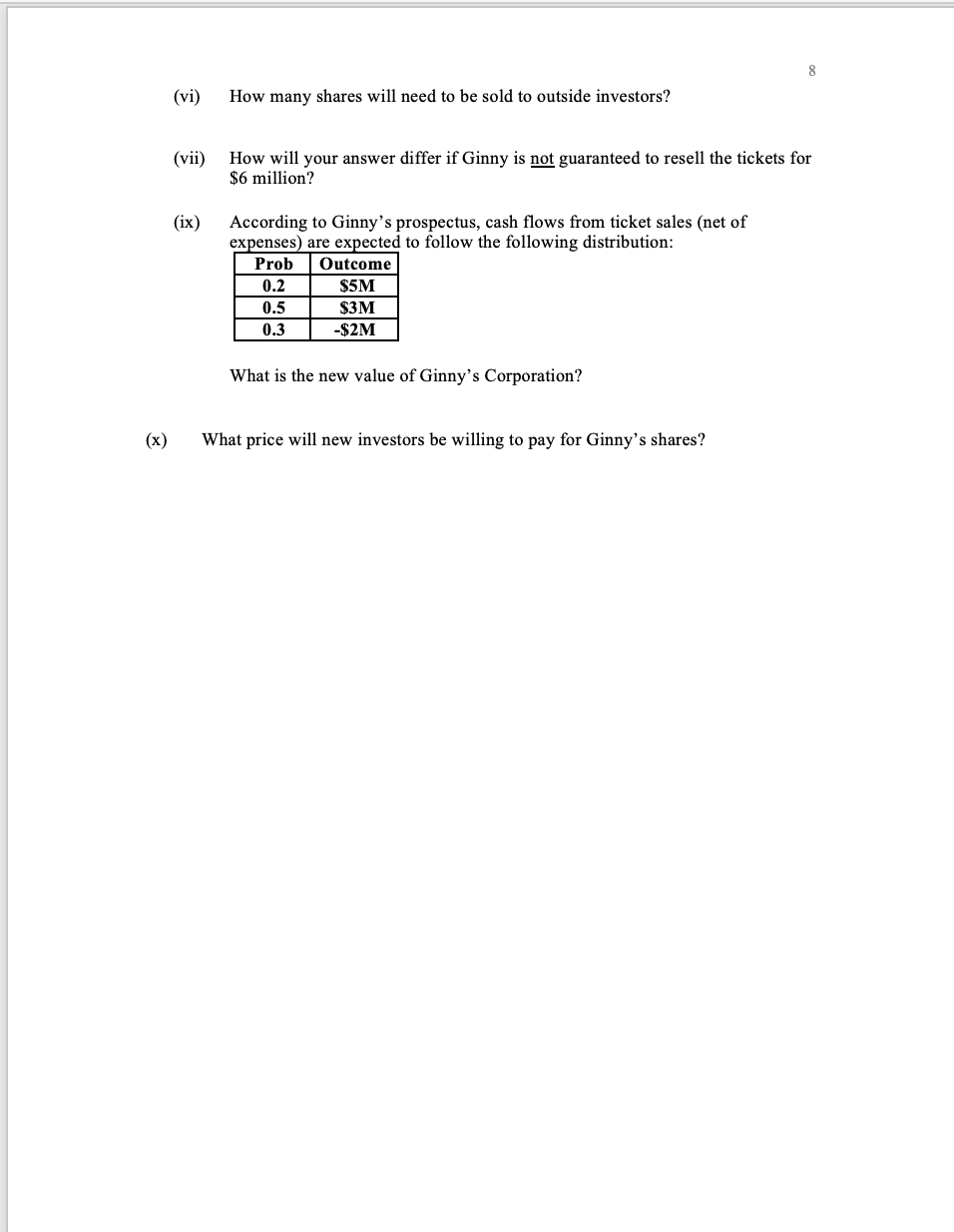
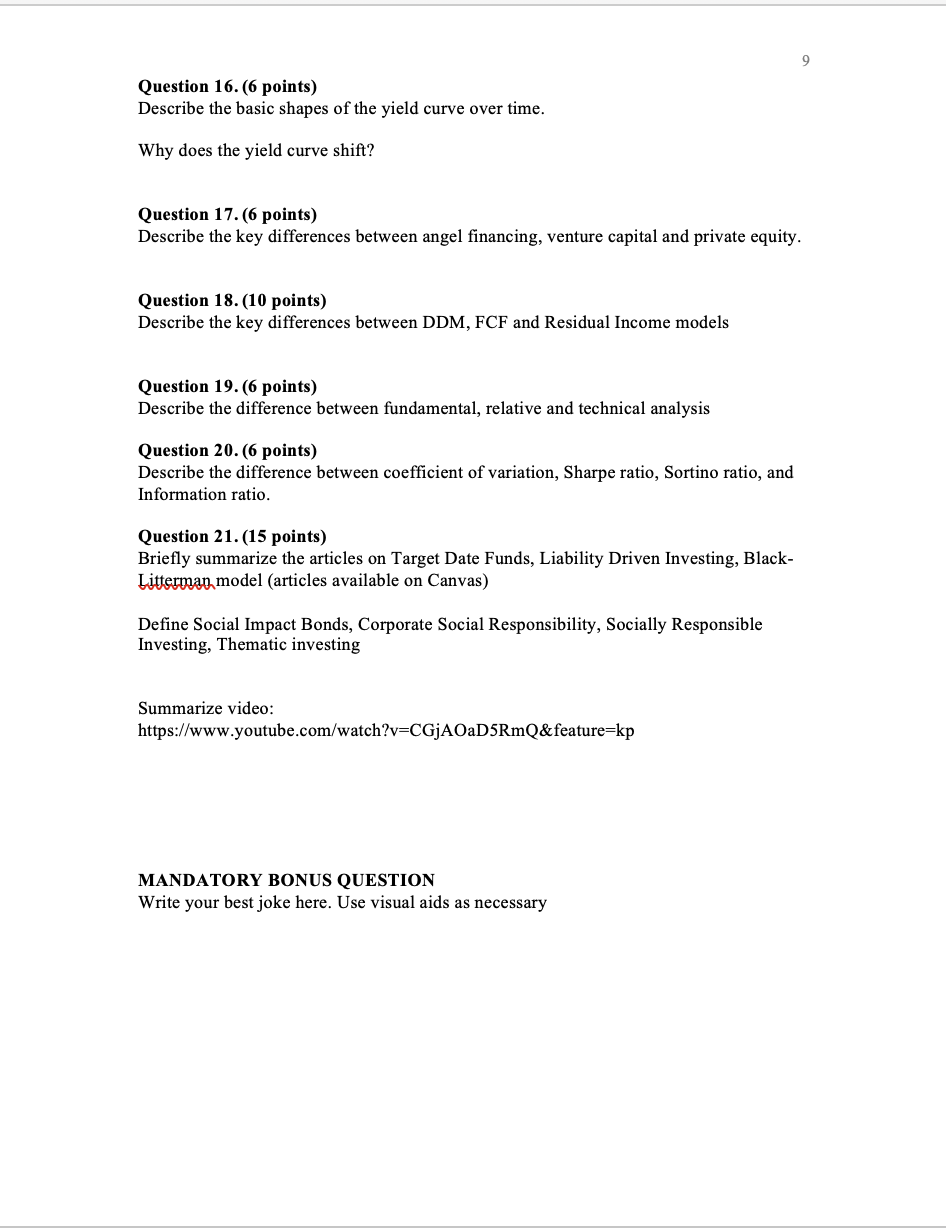
Question 1. (4 points) Describe the difference between bullish and bearish views. Reference multiple asset classes. Describe the steps in a short sale. Question 2. (4 points) 'What are the major asset classes? Question 3. (4 points) What are the differences between quote driven and order driven markets? 'What is the difference between call and continuous markets? Question 4. (4 points) 'What are the differences between TWR and MWR? Under what circumstances is one method preferred to the other. Build ]s,to verify the Vanguard Admiral fund reported returns. Question 5. (6 points) Your child was just born and you are planning for his/her college education. Based on your wonderful experience in Advanced Finance you decide to send your child to Hofstra University as well. You anticipate the annual tuition to be $50,000 per year for the four years of college. You plan on making equal deposits on your child's birthday EVERY OTHER YEAR for the ages one through seventeen inclusive to fund his/her education. Assume the first tuition payment is due in exactly 18 years from today and the expected return is 10% over this period. Answer both analytically (handwritten formulas) and build an XLS model (1) Calculate the bi-annual deposit. (i) You only plan on making 3 deposits the first on your child's 5% birthday, second on their 11" birthday and third on 15 birthday. Each deposit will be double the previous deposit. Calculate each deposit. e Question 6. (5 points) Describe the basic principles of credit analysis. How does credit analysis differ between municipal issuers and corporate issuers? How does credit analysis differ between corporate issuers and sovereign issuers? How does credit analysis differ between municipal issuers and sovereign issuers? How does credits analysis differ for ABS issuers? This answer can be brief since we have not discussed securitization in detail. Discuss the basics of Altman's Z-score and Bgngish s.M-Score. Question 7. (4 points) What are the key differences between LIBOR, Fed Funds rate, SOFR and Euribor? Question 8. (4 points) Compare open-end and closed-end mutual funds. Question 9. (4 points) Compare market order, limit, and stop orders. When would you use a stop-buy order? Question 10. (4 points) Which is a better index to use as a benchmark: DJIA or S&P500? Describe the biases in each index. Describe the differences between price-weighted, fundamental and value-weighted index. Describe the MSCI index. Question 11. (6 points) What are the differences between mutual funds, ETFs and hedge funds? What are the common characteristics of alternative investments?L Question 12. (10 points) show all work Describe the steps to deriving the efficient frontier using: (1) Risky assets only (2) Risky AND Rf asset Question 13. (8 points) Summarize the key points in GIPS. Question 14. (6 points) Describe the difference between macro models, fundamental factor models, and statistical asset pricing models. See file on Canvas. Discuss the differences and similarities between single factor model, Fama-French, Carhart, and Pastor-Stambaugh model Ginny is actively pursuing another business venture as a ticket scalper. She estimates that for a $2 million investment in inventory she can resell her tickets for $6 million over the next year (cash flows realized in exactly one year). Assume the same 6% interest rate. (iili) ~ What is the NPV of the Ticket Brokering venture? (iv) What is the new value of Ginny's Corporation? (v) Suppose Ginny does not want to use her own $2 million to start the new venture. Instead, she wants to raise equity capital by issuing 100,000 new shares. What price will new investors be willing to pay? (vi) How many shares will need to be sold to outside investors? (vil) How will your answer differ if Ginny is not guaranteed to resell the tickets for $6 million? (ix) According to Ginny's prospectus, cash flows from ticket sales (net of expenses) are expected to follow the following distribution: What is the new value of Ginny's Corporation? (x) What price will new investors be willing to pay for Ginny's shares? Question 16. (6 points) Describe the basic shapes of the yield curve over time. Why does the yield curve shift? Question 17. (6 points) Describe the key differences between angel financing, venture capital and private equity. Question 18. (10 points) Describe the key differences between DDM, FCF and Residual Income models Question 19. (6 points) Describe the difference between fundamental, relative and technical analysis Question 20. (6 points) Describe the difference between coefficient of variation, Sharpe ratio, Sortino ratio, and Information ratio. Question 21. (15 points) Briefly summarize the articles on Target Date Funds, Liability Driven Investing, Black- Littsrman,model (articles available on Canvas) Define Social Impact Bonds, Corporate Social Responsibility, Socially Responsible Investing, Thematic investing Summarize video: https://www.youtube.com/watch?v=CGjAOaD5RmQ& feature=kp MANDATORY BONUS QUESTION Write your best joke here. Use visual aids as necessary
Step by Step Solution
There are 3 Steps involved in it
1 Expert Approved Answer
Step: 1 Unlock
Question Has Been Solved by an Expert!
Get step-by-step solutions from verified subject matter experts
Step: 2 Unlock
Step: 3 Unlock
Students Have Also Explored These Related Finance Questions!









 Study Help