







Question: Question 1 8 ( 4 points ) Saved The rice blast fungus produces spore tip mucilage ( STM ) , which serves as an adhesive
Question points
Saved
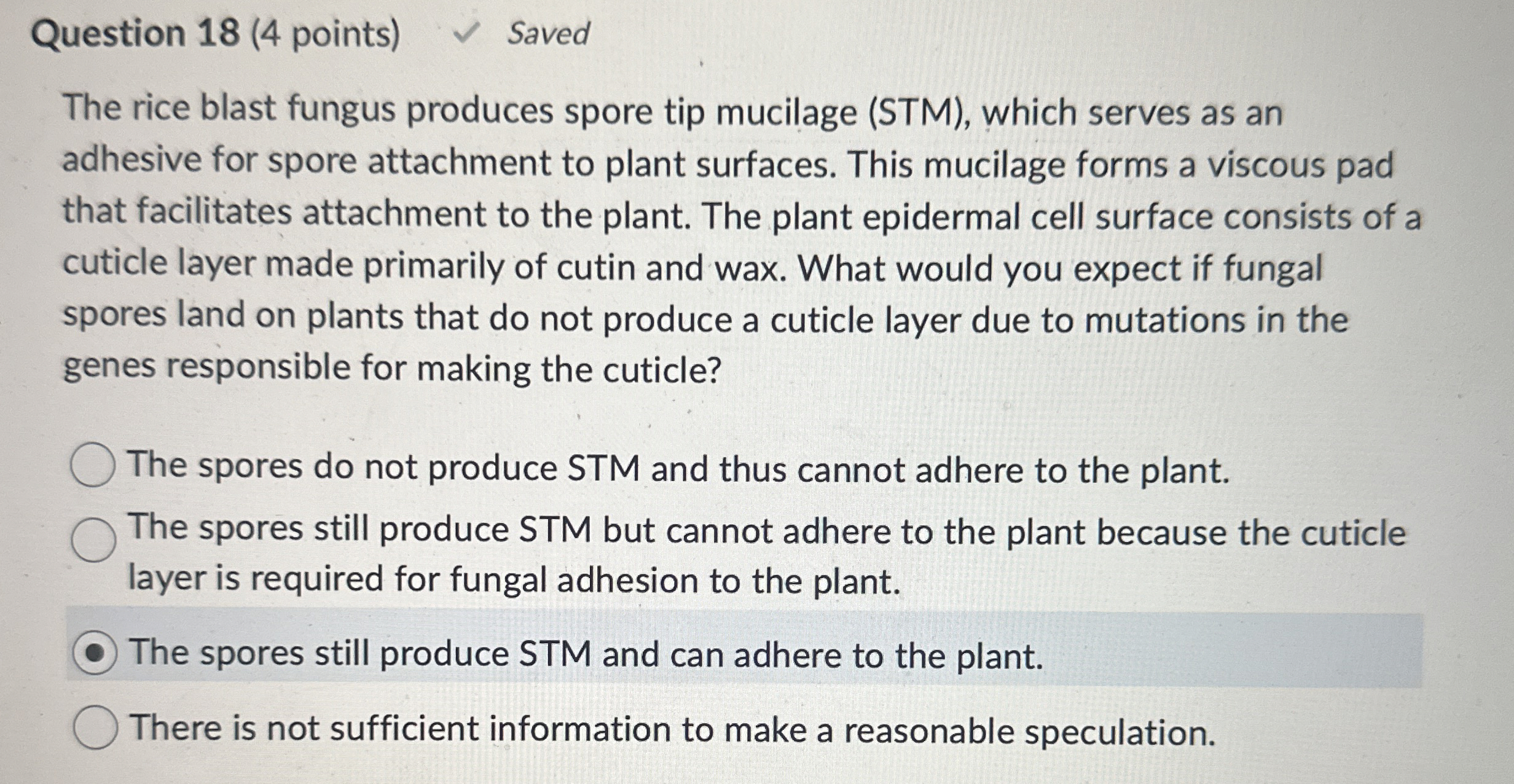
The rice blast fungus produces spore tip mucilage STM which serves as an adhesive for spore attachment to plant surfaces. This mucilage forms a viscous pad that facilitates attachment to the plant. The plant epidermal cell surface consists of a cuticle layer made primarily of cutin and wax. What would you expect if fungal spores land on plants that do not produce a cuticle layer due to mutations in the genes responsible for making the cuticle?
The spores do not produce STM and thus cannot adhere to the plant.
The spores still produce STM but cannot adhere to the plant because the cuticle layer is required for fungal adhesion to the plant.
The spores still produce STM and can adhere to the plant.
There is not sufficient information to make a reasonable speculation.
Step by Step Solution
There are 3 Steps involved in it
1 Expert Approved Answer
Step: 1 Unlock

Question Has Been Solved by an Expert!
Get step-by-step solutions from verified subject matter experts
Step: 2 Unlock
Step: 3 Unlock
 Study Help