







Question: Question 1 a) Based on the spreading activation method, explain any FOUR (4) approaches that Trivago uses in its advertisements to strengthen the consumers brand
Question 1 a) Based on the spreading activation method, explain any FOUR (4) approaches that Trivago uses in its advertisements to strengthen the consumers brand recall. Provide relevant examples to support your answer. (16 marks)
b) Sensory adaptation can reduce attention. Describe any THREE (3) factors that can lead to sensory adaptation in Trivago advertisements. Provide relevant examples to support your answer. (9 marks)
Question 2 a) Imagine you are the Advertising Manager for Trivago. Discuss any FOUR (4) strategies that you can use to increase the message involvement of Trivagos advertisements. Provide relevant examples to support your answer. (16 marks)
b) Imagine that you are searching for the best hotel deals on Trivago, TripAdvisor and Pricelines website. Explain any THREE (3) non-compensatory rules that you can use to compare these websites. Provide relevant examples to support your answer. (9 marks)
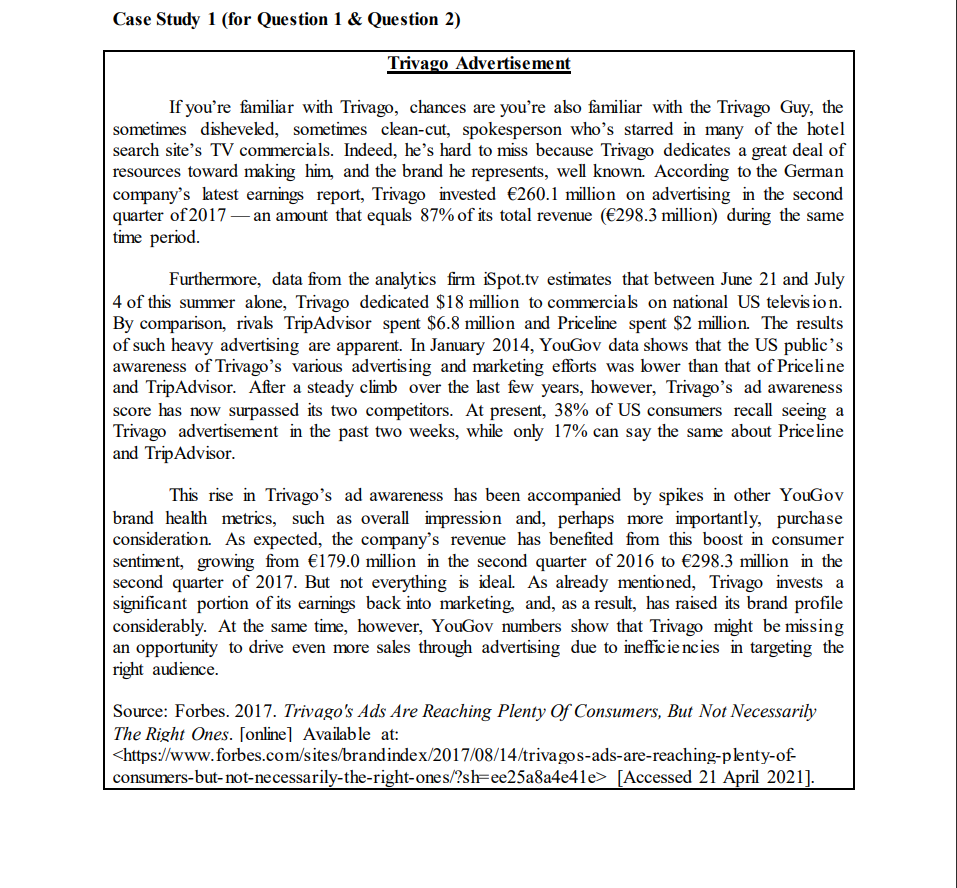
Case Study 1 (for Question 1 & Question 2) Trivago Advertisement If you're familiar with Trivago, chances are you're also familiar with the Trivago Guy, the sometimes disheveled, sometimes clean-cut, spokesperson who's starred in many of the hotel search site's TV commercials. Indeed, he's hard to miss because Trivago dedicates a great deal of resources toward making him, and the brand he represents, well known. According to the German company's latest earnings report, Trivago invested 260.1 million on advertising in the second quarter of 2017 an amount that equals 87% of its total revenue (298.3 million) during the same time period. Furthermore, data from the analytics firm iSpot.tv estimates that between June 21 and July 4 of this summer alone, Trivago dedicated $18 million to commercials on national US television. By comparison, rivals TripAdvisor spent $6.8 million and Priceline spent $2 million. The results of such heavy advertising are apparent. In January 2014, YouGov data shows that the US public's awareness of Trivago's various advertising and marketing efforts was lower than that of Priceline and TripAdvisor. After a steady climb over the last few years, however, Trivago's ad awareness score has now surpassed its two competitors. At present, 38% of US consumers recall seeing a Trivago advertisement in the past two weeks, while only 17% can say the same about Priceline and TripAdvisor This rise in Trivago's ad awareness has been accompanied by spikes in other YouGov brand health metrics, such as overall impression and, perhaps more importantly, purchase consideration. As expected, the company's revenue has benefited from this boost in consumer sentiment, growing from 179.0 million in the second quarter of 2016 to 298.3 million in the second quarter of 2017. But not everything is ideal. As already mentioned, Trivago invests a significant portion of its earnings back into marketing, and, as a result, has raised its brand profile considerably. At the same time, however, YouGov numbers show that Trivago might be missing an opportunity to drive even more sales through advertising due to inefficiencies in targeting the right audience. Source: Forbes. 2017. Trivago's Ads Are Reaching Plenty Of Consumers, But Not Necessarily The Right Ones. [online] Available at:Step by Step Solution
There are 3 Steps involved in it

Get step-by-step solutions from verified subject matter experts
 Study Help