



Question: Question 1 A basic premise of the path-goal approach to situational leadership is that effective leadership is all about transactions, whereby the goals of both
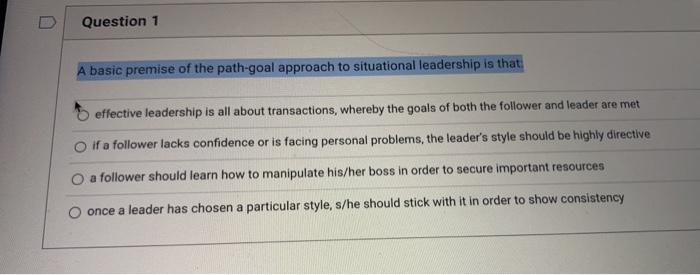
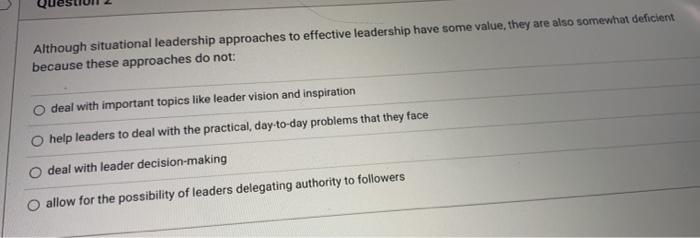
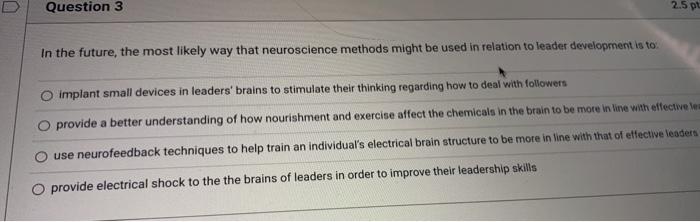
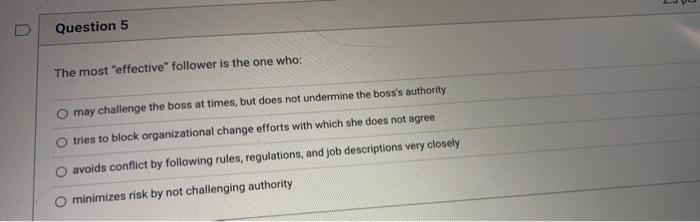
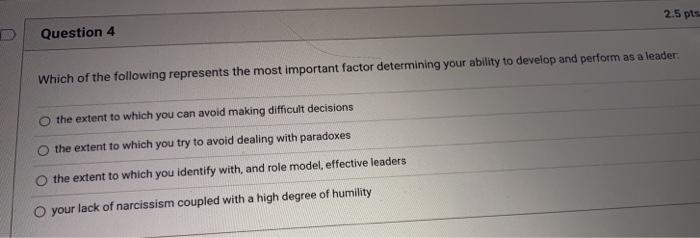
Question 1 A basic premise of the path-goal approach to situational leadership is that effective leadership is all about transactions, whereby the goals of both the follower and leader are met if a follower lacks confidence or is facing personal problems, the leader's style should be highly directive O a follower should learn how to manipulate his/her boss in order to secure important resources once a leader has chosen a particular style, s/he should stick with it in order to show consistency Although situational leadership approaches to effective leadership have some value, they are also somewhat deficient because these approaches do not: deal with important topics like leader vision and inspiration o help leaders to deal with the practical, dayto-day problems that they face deal with leader decision-making allow for the possibility of leaders delegating authority to followers Question 3 2.5 pe In the future, the most likely way that neuroscience methods might be used in relation to leader development is to implant small devices in leaders' brains to stimulate their thinking regarding how to deal with followers provide a better understanding of how nourishment and exercise affect the chemicals in the brain to be more in line with effectivele use neurofeedback techniques to help train an individual's electrical brain structure to be more in line with that of etfective leaders O provide electrical shock to the the brains of leaders in order to improve their leadership skills D Question 5 The most effective" follower is the one who O may challenge the boss at times, but does not undermine the boss's authority tries to block organizational change efforts with which she does not agree avoids conflict by following rules, regulations, and job descriptions very closely minimizes risk by not challenging authority 2.5 pts Question 4 Which of the following represents the most important factor determining your ability to develop and perform as a leader the extent to which you can avoid making difficult decisions the extent to which you try to avoid dealing with paradoxes the extent to which you identify with and role model, effective leaders your lack of narcissism coupled with a high degree of humility
Step by Step Solution
There are 3 Steps involved in it

Get step-by-step solutions from verified subject matter experts