







Question: QUESTION 1 A black market develops only when quantity demanded exceeds quantity supplied. True False QUESTION 2 A change in the price of important inputs
QUESTION 1
A black market develops only when quantity demanded exceeds quantity supplied.
True
False
QUESTION 2
A change in the price of important inputs will change the quantity supplied but will not shift the supply curve.
True
False
QUESTION 3
A common misconception about supply is that
| a. | quantity cannot be determined in advance. | |
| b. | All of these responses are correct. | |
| c. | it is a fixed amount. | |
| d. | supply depends on many other variables | |
| e. | price is a major determinant of quantity. |
QUESTION 4
A decrease in demand will have what effect on equilibrium price and quantity?
| a. | Both price and quantity will increase. | |
| b. | Price will decrease; quantity will increase. | |
| c. | Price will increase; quantity will decrease. | |
| d. | Both price and quantity will decrease. |
QUESTION 5
A key assumption made when a supply schedule is constructed is that
| a. | firms only want to sell a certain amount of a product. | |
| b. | demand has a positive slope. | |
| c. | the only factors that matter in determining supply are price and quantity. | |
| d. | only price and quantity vary, all other determinants of supply are held constant. | |
| e. | supply is too important to be left to the marketplace. |
QUESTION 6
A report on the dangers of cholesterol would likely shift the demand curve for beef downward and to the left.
True
False
QUESTION 7
A supply schedule shows
| a. | possible combinations of output under different conditions. | |
| b. | how much consumers would like to buy at different prices. | |
| c. | the "market potential" for a product. | |
| d. | All of these responses are correct. | |
| e. | how much producers are willing and able to sell at different prices. |
QUESTION 8
An increase in demand will have what effect on equilibrium price and quantity?
| a. | Both price and quantity will increase. | |
| b. | Price will decrease; quantity will increase. | |
| c. | Both price and quantity will decrease. | |
| d. | Price will increase; quantity will decrease. |
QUESTION 9
Are markets always in equilibrium?
| a. | No, but if there is no interference, they tend to move toward equilibrium. | |
| b. | Uncertain, economic theory has no answer to this question. | |
| c. | Yes, because few things tend to alter supply and demand. | |
| d. | No, they never "settle down" into a stable price and quantity. | |
| e. | Yes, they are always at the equilibrium point, or very close to it. |
QUESTION 10
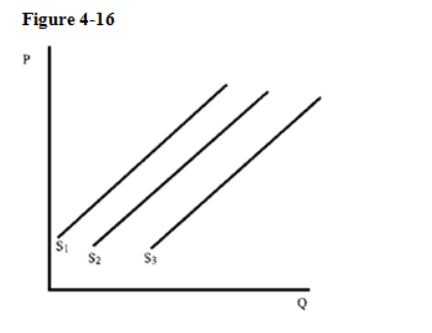
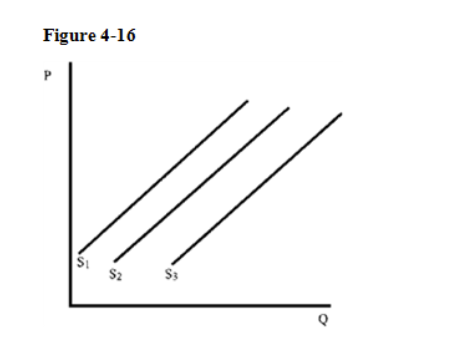
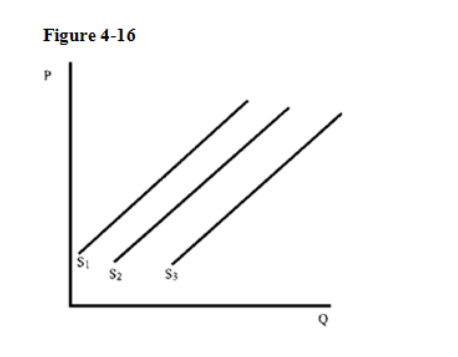
Figure 4-16 P
Step by Step Solution
There are 3 Steps involved in it

Get step-by-step solutions from verified subject matter experts
 Study Help