



Question: Question 1 a. Enfield Industries has two separate divisions. Each division is in a separate line of business. Division A is the largest division and
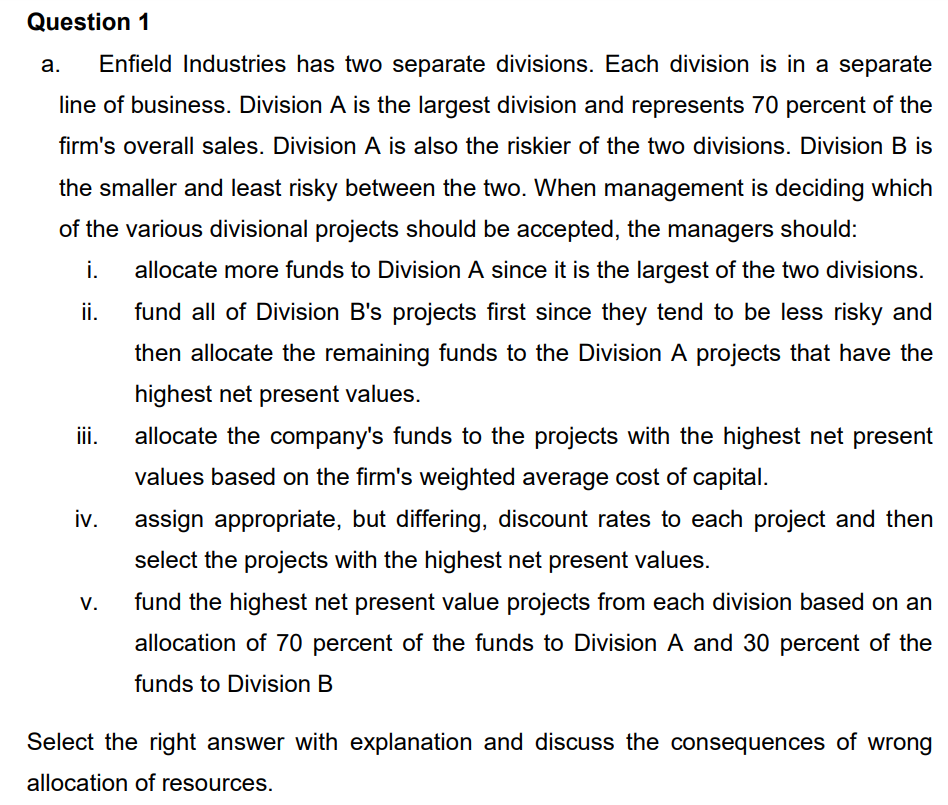 Question 1 a. Enfield Industries has two separate divisions. Each division is in a separate line of business. Division A is the largest division and represents 70 percent of the firm's overall sales. Division A is also the riskier of the two divisions. Division B is the smaller and least risky between the two. When management is deciding which of the various divisional projects should be accepted, the managers should: i. allocate more funds to Division A since it is the largest of the two divisions. ii. fund all of Division B's projects first since they tend to be less risky and then allocate the remaining funds to the Division A projects that have the highest net present values. iii. allocate the company's funds to the projects with the highest net present values based on the firm's weighted average cost of capital. iv. assign appropriate, but differing, discount rates to each project and then select the projects with the highest net present values. v. fund the highest net present value projects from each division based on an allocation of 70 percent of the funds to Division A and 30 percent of the funds to Division B Select the right answer with explanation and discuss the consequences of wrong allocation of resources.
Question 1 a. Enfield Industries has two separate divisions. Each division is in a separate line of business. Division A is the largest division and represents 70 percent of the firm's overall sales. Division A is also the riskier of the two divisions. Division B is the smaller and least risky between the two. When management is deciding which of the various divisional projects should be accepted, the managers should: i. allocate more funds to Division A since it is the largest of the two divisions. ii. fund all of Division B's projects first since they tend to be less risky and then allocate the remaining funds to the Division A projects that have the highest net present values. iii. allocate the company's funds to the projects with the highest net present values based on the firm's weighted average cost of capital. iv. assign appropriate, but differing, discount rates to each project and then select the projects with the highest net present values. v. fund the highest net present value projects from each division based on an allocation of 70 percent of the funds to Division A and 30 percent of the funds to Division B Select the right answer with explanation and discuss the consequences of wrong allocation of resources
Step by Step Solution
There are 3 Steps involved in it

Get step-by-step solutions from verified subject matter experts