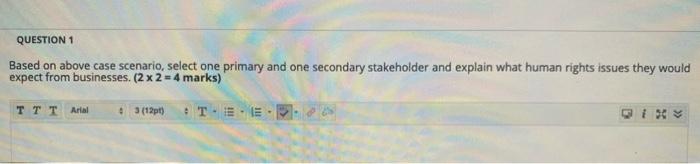
Question: QUESTION 1 Based on above case scenario, select one primary and one secondary stakeholder and explain what human rights issues they would expect from businesses.
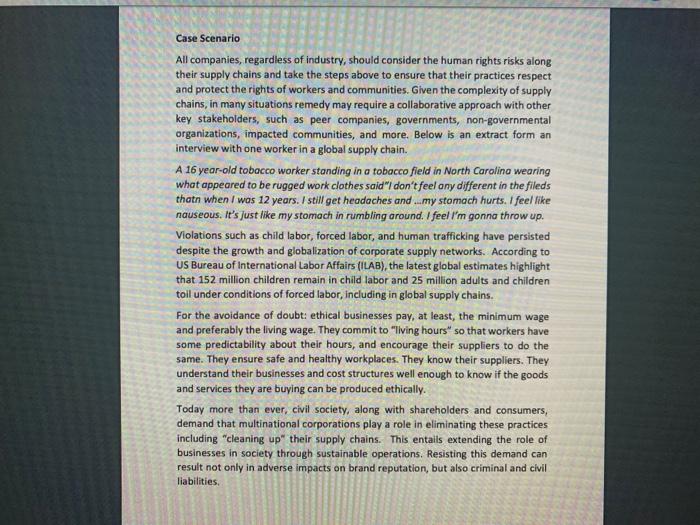
QUESTION 1 Based on above case scenario, select one primary and one secondary stakeholder and explain what human rights issues they would expect from businesses. (2 x 2 = 4 marks) TTT Arial 3 (12pt) : T Case Scenario All companies, regardless of industry, should consider the human rights risks along their supply chains and take the steps above to ensure that their practices respect and protect the rights of workers and communities. Given the complexity of supply chains, in many situations remedy may require a collaborative approach with other key stakeholders, such as peer companies, governments, non-governmental organizations, impacted communities, and more. Below is an extract form an interview with one worker in a global supply chain. A 16 year-old tobacco worker standing in a tobacco field in North Carolina wearing what appeared to be rugged work clothes said "I don't feel any different in the fileds that when I was 12 years. I still get headaches and..my stomach hurts. I feel like nauseous. It's just like my stomach in rumbling around. I feel I'm gonna throw up. Violations such as child labor, forced labor, and human trafficking have persisted despite the growth and globalization of corporate supply networks. According to US Bureau of International Labor Affairs (ILAB), the latest global estimates highlight that 152 million children remain in child labor and 25 million adults and children toil under conditions of forced labor, including in global supply chains. For the avoidance of doubt: ethical businesses pay, at least, the minimum wage and preferably the living wage. They commit to "living hours so that workers have some predictability about their hours, and encourage their suppliers to do the same. They ensure safe and healthy workplaces. They know their suppliers. They understand their businesses and cost structures well enough to know if the goods and services they are buying can be produced ethically. Today more than ever, civil society, along with shareholders and consumers, demand that multinational corporations play a role in eliminating these practices including "cleaning up their supply chains. This entails extending the role of businesses in society through sustainable operations, Resisting this demand can result not only in adverse impacts on brand reputation, but also criminal and civil liabilities









 Study Help