Question: Question 1 Case Study 1: Process Ordering Procurement The customer places an order, and he is requested to make a selection. After making a selection,
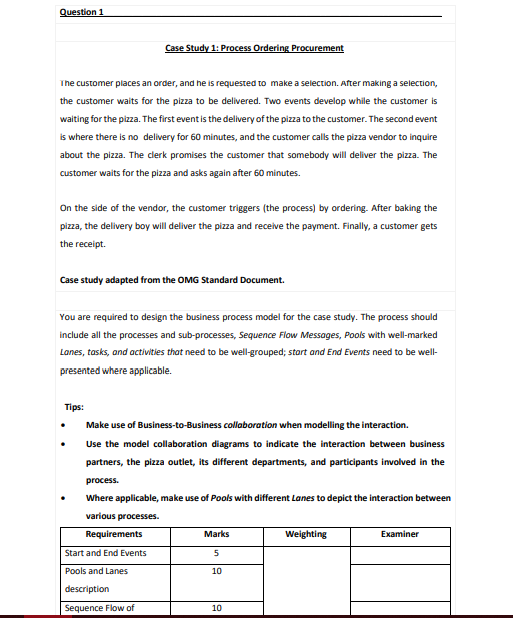
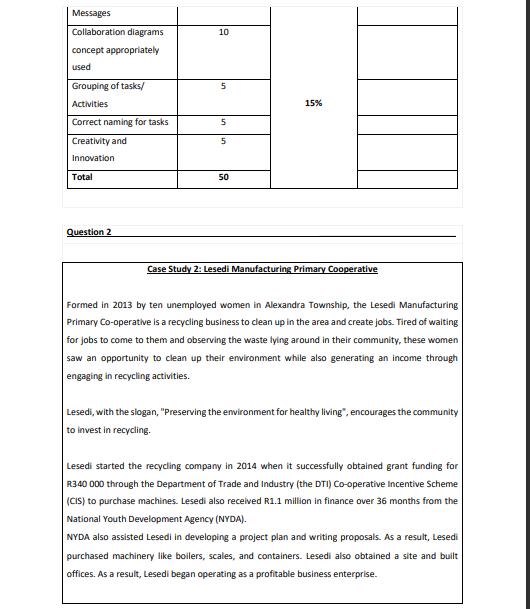
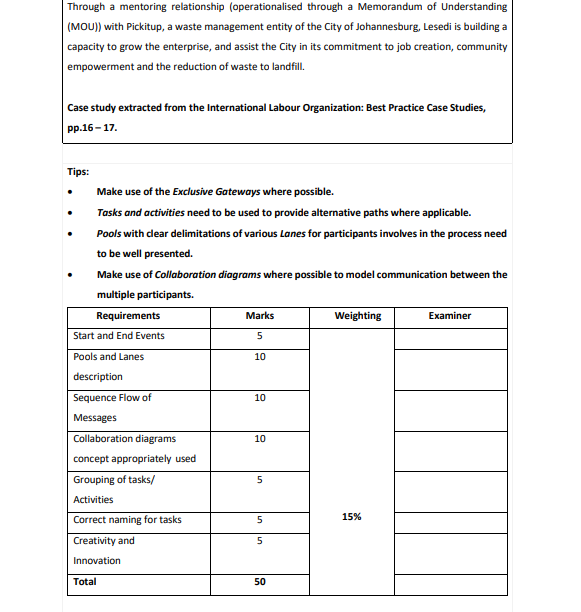
Question 1 Case Study 1: Process Ordering Procurement The customer places an order, and he is requested to make a selection. After making a selection, the customer waits for the pizza to be delivered. Two events develop while the customer is waiting for the pizza. The first event is the delivery of the pizza to the customer. The second event is where there is no delivery for 60 minutes, and the customer calls the pizza vendor to inquire about the pizza. The clerk promises the customer that somebody will deliver the pizza. The customer waits for the pizza and asks again after 60 minutes. On the side of the vendor, the customer triggers (the process) by ordering. After baking the pizza, the delivery boy will deliver the pizza and receive the payment. Finally, a customer gets the receipt. Case study adapted from the OMG Standard Document. You are required to design the business process model for the case study. The process should include all the processes and sub-processes, Sequence Flow Messages, Pools with well-marked Lanes, tasks, and activities that need to be well-grouped; stort and End Events need to be well- presented where applicable. Tips: Make use of Business-to-Business collaboration when modelling the interaction. Use the model collaboration diagrams to indicate the interaction between business partners, the pizza outlet, its different departments, and participants involved in the process. Where applicable, make use of Pools with different Lanes to depict the interaction between various processes. Requirements Marks Weighting Examiner Start and End Events Pools and Lanes 5 10 description Sequence Flow of 10 10 Messages Collaboration diagrams concept appropriately used 5 15% Grouping of tasks/ Activities Correct naming for tasks Creativity and Innovation 5 5 Total 50 Question 2 Case Study 2: Lesedi Manufacturing Primary Cooperative Formed in 2013 by ten unemployed women in Alexandra Township, the Lesedi Manufacturing Primary Co-operative is a recycling business to clean up in the area and create jobs. Tired of waiting for jobs to come to them and observing the waste lying around in their community, these women saw an opportunity to clean up their environment while also generating an income through engaging in recycling activities. Lesedi, with the slogan, "Preserving the environment for healthy living", encourages the community to invest in recycling Lesedi started the recycling company in 2014 when it successfully obtained grant funding for R340 000 through the Department of Trade and Industry (the DTI) Co-operative Incentive Scheme (CIS) to purchase machines. Lesedi also received R1.1 million in finance over 36 months from the National Youth Development Agency (NYDA). NYDA also assisted Lesedi in developing a project plan and writing proposals. As a result, Lesedi purchased machinery like boilers, scales, and containers. Lesedi also obtained a site and built offices. As a result, Lesedi began operating as a profitable business enterprise. Through a mentoring relationship (operationalised through a Memorandum of Understanding (MOU)) with Pickitup, a waste management entity of the City of Johannesburg, Lesedi is building a capacity to grow the enterprise, and assist the City in its commitment to job creation, community empowerment and the reduction of waste to landfill. Case study extracted from the International Labour Organization: Best Practice Case Studies, pp.16-17. 5 10 Tips: Make use of the Exclusive Gateways where possible. Tasks and activities need to be used to provide alternative paths where applicable. Pools with dear delimitations of various Lanes for participants involves in the process need to be well presented. Make use of Collaboration diagrams where possible to model communication between the multiple participants. Requirements Marks Weighting Examiner Start and End Events Pools and Lanes description Sequence Flow of Messages Collaboration diagrams concept appropriately used Grouping of tasks/ Activities Correct naming for tasks Creativity and Innovation 10 10 5 5 15% 5 Total 50 Question 1 Case Study 1: Process Ordering Procurement The customer places an order, and he is requested to make a selection. After making a selection, the customer waits for the pizza to be delivered. Two events develop while the customer is waiting for the pizza. The first event is the delivery of the pizza to the customer. The second event is where there is no delivery for 60 minutes, and the customer calls the pizza vendor to inquire about the pizza. The clerk promises the customer that somebody will deliver the pizza. The customer waits for the pizza and asks again after 60 minutes. On the side of the vendor, the customer triggers (the process) by ordering. After baking the pizza, the delivery boy will deliver the pizza and receive the payment. Finally, a customer gets the receipt. Case study adapted from the OMG Standard Document. You are required to design the business process model for the case study. The process should include all the processes and sub-processes, Sequence Flow Messages, Pools with well-marked Lanes, tasks, and activities that need to be well-grouped; stort and End Events need to be well- presented where applicable. Tips: Make use of Business-to-Business collaboration when modelling the interaction. Use the model collaboration diagrams to indicate the interaction between business partners, the pizza outlet, its different departments, and participants involved in the process. Where applicable, make use of Pools with different Lanes to depict the interaction between various processes. Requirements Marks Weighting Examiner Start and End Events Pools and Lanes 5 10 description Sequence Flow of 10 10 Messages Collaboration diagrams concept appropriately used 5 15% Grouping of tasks/ Activities Correct naming for tasks Creativity and Innovation 5 5 Total 50 Question 2 Case Study 2: Lesedi Manufacturing Primary Cooperative Formed in 2013 by ten unemployed women in Alexandra Township, the Lesedi Manufacturing Primary Co-operative is a recycling business to clean up in the area and create jobs. Tired of waiting for jobs to come to them and observing the waste lying around in their community, these women saw an opportunity to clean up their environment while also generating an income through engaging in recycling activities. Lesedi, with the slogan, "Preserving the environment for healthy living", encourages the community to invest in recycling Lesedi started the recycling company in 2014 when it successfully obtained grant funding for R340 000 through the Department of Trade and Industry (the DTI) Co-operative Incentive Scheme (CIS) to purchase machines. Lesedi also received R1.1 million in finance over 36 months from the National Youth Development Agency (NYDA). NYDA also assisted Lesedi in developing a project plan and writing proposals. As a result, Lesedi purchased machinery like boilers, scales, and containers. Lesedi also obtained a site and built offices. As a result, Lesedi began operating as a profitable business enterprise. Through a mentoring relationship (operationalised through a Memorandum of Understanding (MOU)) with Pickitup, a waste management entity of the City of Johannesburg, Lesedi is building a capacity to grow the enterprise, and assist the City in its commitment to job creation, community empowerment and the reduction of waste to landfill. Case study extracted from the International Labour Organization: Best Practice Case Studies, pp.16-17. 5 10 Tips: Make use of the Exclusive Gateways where possible. Tasks and activities need to be used to provide alternative paths where applicable. Pools with dear delimitations of various Lanes for participants involves in the process need to be well presented. Make use of Collaboration diagrams where possible to model communication between the multiple participants. Requirements Marks Weighting Examiner Start and End Events Pools and Lanes description Sequence Flow of Messages Collaboration diagrams concept appropriately used Grouping of tasks/ Activities Correct naming for tasks Creativity and Innovation 10 10 5 5 15% 5 Total 50









 Study Help