







Question: Question : 1. Explain Airbnb's business operations based on the system approach. 2. Describe Airbnb's business model. Airbnb is an online platform that allows people
Question :
1. Explain Airbnb's business operations based on the system approach.
2. Describe Airbnb's business model.
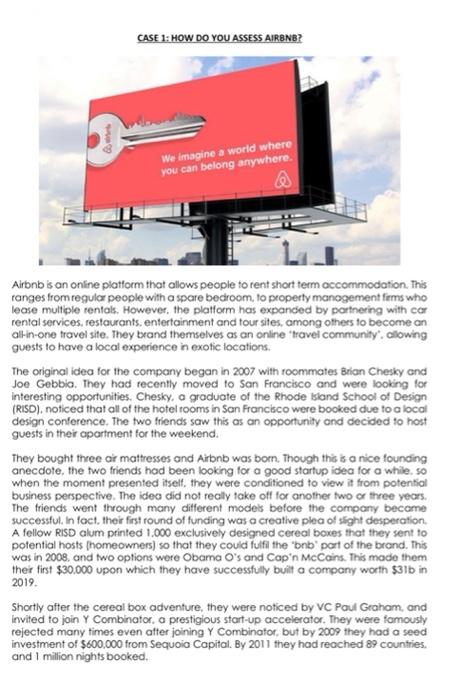
Airbnb is an online platform that allows people to rent short term accommodation. This ranges from regular people with a spare bedroom, to property management firms who lease multiple rentals. However, the platform has expanded by partnering with car rental services, restaurants, entertainment and tour sites, among others to become an all-in-one travel site. They brand themselves as an online travel community, allowing
guests to have a local experience in exotic locations.
The original idea for the company began in 2007 with roommates Brian Chesky and Joe Gebbia. They had recently moved to San Francisco and were looking for interesting opportunities. Chesky, a graduate of the Rhode Island School of Design (RISD), noticed that all of the hotel rooms in San Francisco were booked due to a local design conference. The two friends saw this as an opportunity and decided to host
guests in their apartment for the weekend.
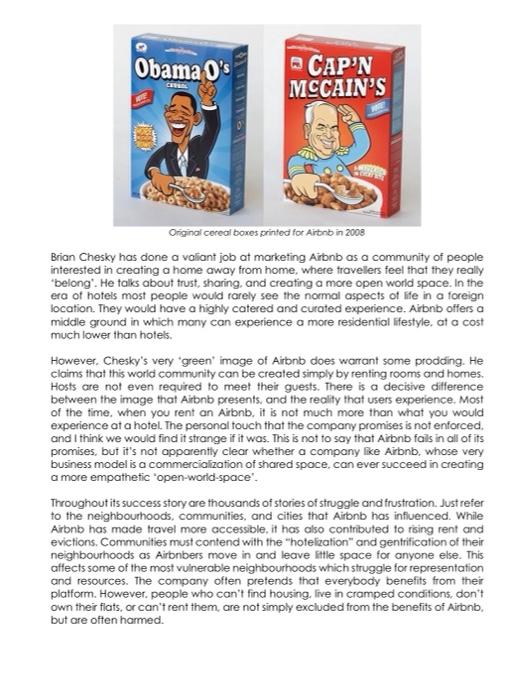
They bought three air mattresses and Airbnb was born. Though this is a nice founding anecdote, the two friends had been looking for a good startup idea for a while, so when the moment presented itself, they were conditioned to view it from potential business perspective. The idea did not really take off for another two or three years. The friends went through many different models before the company became successful. In fact, their first round of funding was a creative plea of slight desperation. A fellow RISD alum printed 1,000 exclusively designed cereal boxes that they sent to potential hosts (homeowners) so that they could fulfil the bnb part of the brand. This
was in 2008, and two options were Obama Os and Capn McCains. This made them their first $30,000 upon which they have successfully built a company worth $31b in
2019.
Shortly after the cereal box adventure, they were noticed by VC Paul Graham, and invited to join Y Combinator, a prestigious start-up accelerator. They were famously rejected many times even after joining Y Combinator, but by 2009 they had a seed investment of $600,000 from Sequoia Capital. By 2011 they had reached 89 countries,
and 1 million nights booked.
Brian Chesky has done a valiant job at marketing Airbnb as a community of people interested in creating a home away from home, where travellers feel that they really belong. He talks about trust, sharing, and creating a more open world space. In the era of hotels most people would rarely see the normal aspects of life in a foreign location. They would have a highly catered and curated experience. Airbnb offers a middle ground in which many can experience a more residential lifestyle, at a cost much lower than hotels.
However, Cheskys very green image of Airbnb does warrant some prodding. He claims that this world community can be created simply by renting rooms and homes. Hosts are not even required to meet their guests. There is a decisive difference between the image that Airbnb presents, and the reality that users experience. Most of the time, when you rent an Airbnb, it is not much more than what you would experience at a hotel. The personal touch that the company promises is not enforced, and I think we would find it strange if it was. This is not to say that Airbnb fails in all of its promises, but its not apparently clear whether a company like Airbnb, whose very business model is a commercialization of shared space, can ever succeed in creating a more empathetic open-world-space.
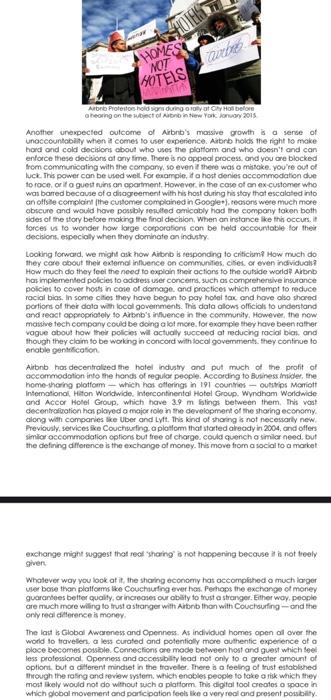
Throughout its success story are thousands of stories of struggle and frustration. Just refer to the neighbourhoods, communities, and cities that Airbnb has influenced. While Airbnb has made travel more accessible, it has also contributed to rising rent and evictions. Communities must contend with the hotelization and gentrification of their neighbourhoods as Airbnbers move in and leave little space for anyone else. This
affects some of the most vulnerable neighbourhoods which struggle for representation and resources. The company often pretends that everybody benefits from their platform. However, people who cant find housing, live in cramped conditions, dont own their flats, or cant rent them, are not simply excluded from the benefits of Airbnb,
but are often harmed.
Another unexpected outcome of Airbnbs massive growth is a sense of unaccountability when it comes to user experience. Airbnb holds the right to make hard and cold decisions about who uses the platform and who doesnt and can enforce these decisions at any time. There is no appeal process, and you are blocked from communicating with the company, so even if there was a mistake, youre out of
luck. This power can be used well. For example, if a host denies accommodation due to race, or if a guest ruins an apartment. However, in the case of an ex-customer who was barred because of a disagreement with his host during his stay that escalated into an offsite complaint (the customer complained in Google+), reasons were much more obscure and would have possibly resulted amicably had the company taken both sides of the story before making the final decision. When an instance like this occurs, it forces us to wonder how large corporations can be held accountable for their decisions, especially when they dominate an industry.
Looking forward, we might ask how Airbnb is responding to criticism? How much do they care about their external influence on communities, cities, or even individuals? How much do they feel the need to explain their actions to the outside world? Airbnb has implemented policies to address user concerns, such as comprehensive insurance policies to cover hosts in case of damage, and practices which attempt to reduce racial bias. In some cities they have begun to pay hotel tax, and have also shared portions of their data with local governments. This data allows officials to understand and react appropriately to Airbnbs influence in the community. However, the now massive tech company could be doing a lot more, for example they have been rather vague about how their policies will actually succeed at reducing racial bias, and though they claim to be working in concord with local governments, they continue to enable gentrification.
Airbnb has decentralized the hotel industry and put much of the profit of accommodation into the hands of regular people. According to Business Insider, the home-sharing platform which has offerings in 191 countries outstrips Marriott International, Hilton Worldwide, Intercontinental Hotel Group, Wyndham Worldwide and Accor Hotel Group, which have 3.9 m listings between them. This vast decentralization has played a major role in the development of the sharing economy, along with companies like Uber and Lyft. This kind of sharing is not necessarily new. Previously, services like Couchsurfing, a platform that started already in 2004, and offers similar accommodation options but free of charge, could quench a similar need, but the defining difference is the exchange of money. This move from a social to a market
exchange might suggest that real sharing is not happening because it is not freely given.
Whatever way you look at it, the sharing economy has accomplished a much larger user base than platforms like Couchsurfing ever has. Perhaps the exchange of money guarantees better quality, or increases our ability to trust a stranger. Either way, people are much more willing to trust a stranger with Airbnb than with Couchsurfing and the only real difference is money.
The last is Global Awareness and Openness. As individual homes open all over the world to travellers, a less curated and potentially more authentic experience of a place becomes possible. Connections are made between host and guest which feel less professional. Openness and accessibility lead not only to a greater amount of options, but a different mindset in the traveller. There is a feeling of trust established
through the rating and review system, which enables people to take a risk which they most likely would not do without such a platform. This digital tool creates a space in which global movement and participation feels like a very real and present possibility.
Edited!
CASE 1: HOW DO YOU ASSESS AIRBNB? We imagine a world where you can belong anywhere. Airbnb is an online platform that allows people to rent short term accommodation. This ranges from regulor people with a spare bedroom, to property management firms who lease multiple rentals. However, the platform has expanded by partnering with cor rental services, restaurants, entertainment and tour sites, among others to become an al-in-one travel site. They brand themselves as an online travel community'. clowing guests to have a local experience in exotic locations The original idea for the company began in 2007 with roommates Brian Chesky and Joe Gebbia. They had recently moved to San Francisco and were looking for interesting opportunities. Chesky, a graduate of the Rhode Island School of Design (RISD), noticed that all of the hotel rooms in San Francisco were booked due to a local design conference. The two friends saw this as an opportunity and decided to host guests in their apartment for the weekend. They bought three ar mattresses and Airbnb was bom. Though this is a nice founding anecdote, the two friends had been looking for a good startup idea for a while. 50 when the moment presented itself, they were conditioned to view it from potential business perspective. The idea did not really take off for another two or three years. The friends went through many different models before the company became successful. In fact, their first round of funding was a creative plea of sight desperation A fellow RISD Clum printed 1,000 exclusively designed cereal boxes that they sent to potential hosts homeowners) so that they could fulfil the bnb port of the brand. This was in 2008, and two options were Obama O's and Cap'n McCains. This made them their first $30.000 upon which they have successfully built a company worth $31b in 2019. Shortly after the cereal box adventure, they were noticed by VC Paul Graham, and invited to join Y Combinator, a prestigious start-up accelerator. They were famously rejected many times even after joining y Combinator, but by 2009 they had a seed investment of $600.000 from Sequoia Capital. By 2011 they had reached 89 countries. and 1 million nights booked. Obama O's CAP'N CH MCCAIN'S Original cereal boxes printed for Airbnb in 2008 Brian Chesky has done a volont job at marketing Airbnb as a community of people interested in creating a home away from home, where travelers feel that they really belong'. He talks about trust, sharing and creating a more open world space. In the era of hotels most people would rarely see the normal aspects of life in a foreign location. They would have a highly catered and curated experience. Airbnb offers a middle ground in which mony can experience a more residential lifestyle. at a cost much lower than hotels However. Chesky's very "green" image of Airbnb does warrant some prodding. He claims that this world community can be created simply by renting rooms and homes. Hosts are not even required to meet their guests. There is a decisive difference between the image that Airbnb presents, and the reality that users experience. Most of the time, when you rent on Airbnb, it is not much more than what you would experience at a hotel. The personal touch that the company promises is not enforced. and I think we would find it strange if it was. This is not to say that Airbnb fails in all of its promises, but it's not apparently clear whether a company like Airbnb, whose very business model is a commercialization of shared space can ever succeed in creating a more empathetic open-world-space'. Throughout its success story are thousands of stories of struggle and frustration. Just refer to the neighbourhoods, communities, and cities that Airbnb has influenced. While Airbnb has made travel more accessible, it has also contributed to rising rent and evictions. Communities must contend with the "hotelization and gentrification of their neighbourhoods as Airbnbers move in and leave ittle space for anyone else. This affects some of the most vulnerable neighbourhoods which struggle for representation and resources. The company often pretends that everybody benefits from their platform. However, people who can't find housing, live in cramped conditions, don't own their flats, or can't rent them are not simply excluded from the benefits of Airbnb, but are often hammed. HOTELES HOMESI NOT amb SOTELS Arbre Protectos hold or during root Oy o bere hearing on the wbiect of brow York January 2015 Another unexpected outcome of Airbnb's massive growth a sense of Unaccountability when a comes to user experience. Abirb holds the right to make hord and cold decisions about who uses the platfom and who doesn't and can enforce these decisions of any time. There is no appeal process, and you are blocked from communicating with the company, so event there was a mistake you're out of luck. This power can be used well. For example, a host denies accommodation de to roce.orito guest runs on apartment. However, in the case of an ex customer who was barred because of a disagreement with his host during his stay that escalated into on otste complaint the customer complained in Google").reasons were much more obscure and would have possibly resulted amicably had the company token both sides of the story before making the final decision. When on instance like this occurs.it forces us to wonder how large corporations con be held accountable for their decisions especially when they dominate an industry Looking forward, we might ask how Aibb is responding to criticism How much do they core about the external influence on communities, cities or even individuals How much do they feel the need to explain their actions to the outside world Airbnb has implemented policies to address user concerns, such as comprehensive insurance policies to cover hosts in case of domage and practices which attempt to reduce racial bias. In some cities they have begun to pay hotel tax and have also shared portions of their data with local governments. This data alows officials to understand and react appropriately to Arbnb's influence in the community. However, the now massive tech company could be doing a lot more for example they have been rather vague about how the policies will actually succeed at reducing racial bio and though they claim to be working in concord with local governments. They continue to enable gentlication Airbnb hos decentralized the hotel industry and put much of the profit of accommodation into the honds of regulor people. According to Business Insider, the home-sharing platform -- which has offerings in 191 countries - outstrips Momiott Intemotional Hiton Worldwide. Intercontinental Hotel Group. Wyndham Worldwide and Accor Hotel Group, which have 3.9 m flings between them. This vost decentration has played a major role in the development of the shoring economy along with companies like Uber and Lyft. This kind of sharing is not necessarily new Previously, servicesse Couchsurfing a platform that started already in 2004. and offers similor accommodation options but free of charge. could quench asimilor need, but the defining difference is the exchange of money. This move from a social to a market exchange might suggest that real sharing is not happening because it is not freely given Whatever way you look at it, the shoring economy has accomplished a much larger wser borse than platforms like Couchsurfing ever hos. Perhaps the exchange of money guarantees better quality, or increases our ability to trust a stranger. Either way, people are much more willing to trust a stranger with Aitob than with Couchsurfing-and the only real difference is money. The last Global Awareness and Openness. As individual homes open all over the world to travelers a less curated and potentially more authentic experience of a place becomes possible. Connections are made between host and guest which teet less professional Openness and accessibility lead not only to a greater amount of option but a different mindset in the traveler. There is a feeling of trust established Through the rating and review system, which enables people to take a risk which they most likely would not do without such a platform. This digital tool creates a space in which global movement and participation feels like a very real and present possibility Step by Step Solution
There are 3 Steps involved in it
1 Expert Approved Answer
Step: 1 Unlock

Question Has Been Solved by an Expert!
Get step-by-step solutions from verified subject matter experts
Step: 2 Unlock
Step: 3 Unlock
 Study Help