







Question: Question 1. Part I. A pizzeria uses a specific type of cheese for their pizzas at a rate of 50 pounds per week. The restaurant
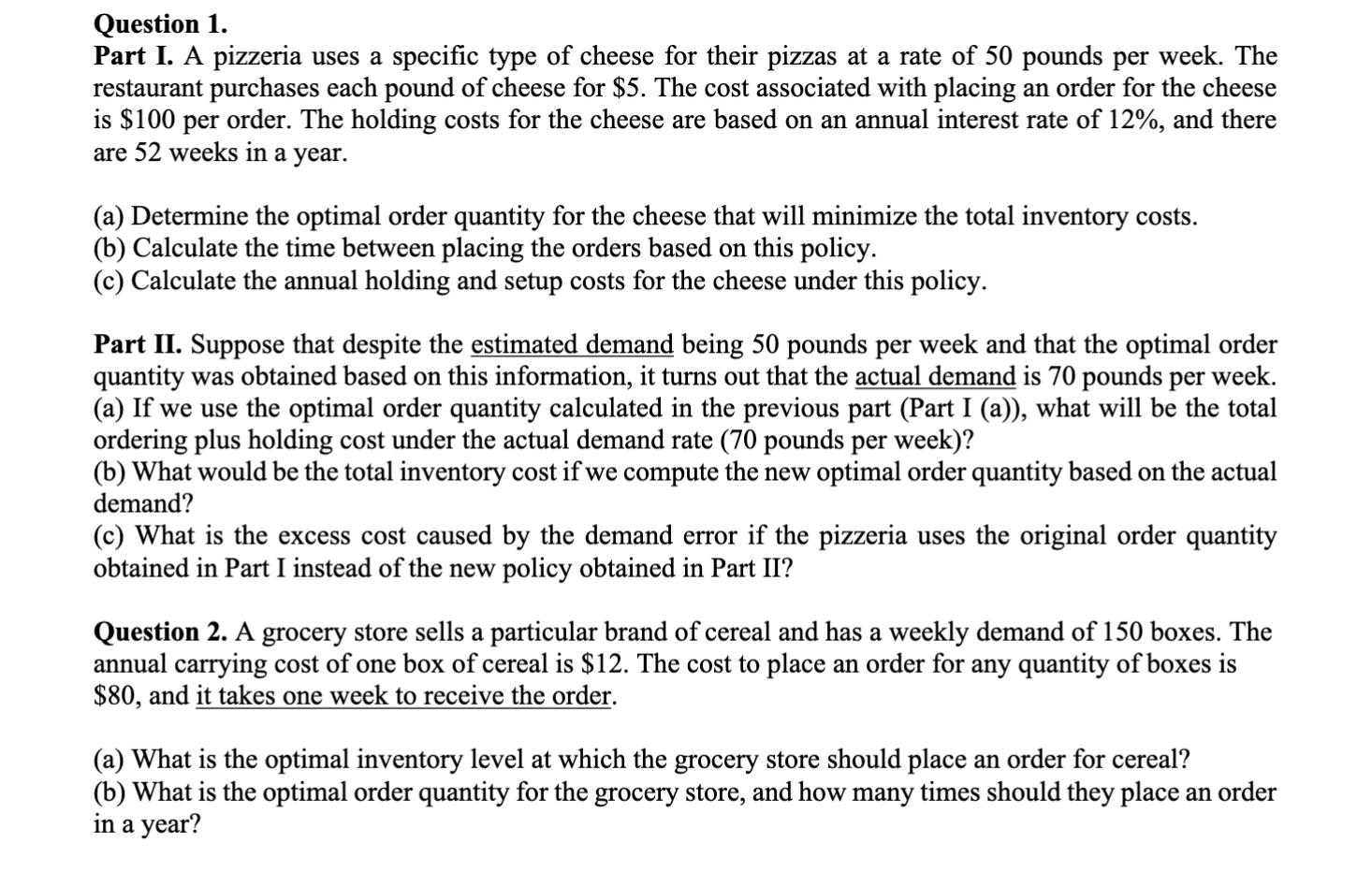
Question 1. Part I. A pizzeria uses a specific type of cheese for their pizzas at a rate of 50 pounds per week. The restaurant purchases each pound of cheese for $5. The cost associated with placing an order for the cheese is $100 per order. The holding costs for the cheese are based on an annual interest rate of 12%, and there are 52 weeks in a year. (a) Determine the optimal order quantity for the cheese that will minimize the total inventory costs. (b) Calculate the time between placing the orders based on this policy. (c) Calculate the annual holding and setup costs for the cheese under this policy. Part II. Suppose that despite the estimated demand being 50 pounds per week and that the optimal order quantity was obtained based on this information, it turns out that the actual demand is 70 pounds per week. (a) If we use the optimal order quantity calculated in the previous part (Part I (a)), what will be the total ordering plus holding cost under the actual demand rate (70 pounds per week)? (b) What would be the total inventory cost if we compute the new optimal order quantity based on the actual demand? (c) What is the excess cost caused by the demand error if the pizzeria uses the original order quantity obtained in Part I instead of the new policy obtained in Part II? Question 2. A grocery store sells a particular brand of cereal and has a weekly demand of 150 boxes. The annual carrying cost of one box of cereal is $12. The cost to place an order for any quantity of boxes is $80, and it takes one week to receive the order. (a) What is the optimal inventory level at which the grocery store should place an order for cereal? (b) What is the optimal order quantity for the grocery store, and how many times should they place an order in a year? Question 1. Part I. A pizzeria uses a specific type of cheese for their pizzas at a rate of 50 pounds per week. The restaurant purchases each pound of cheese for $5. The cost associated with placing an order for the cheese is $100 per order. The holding costs for the cheese are based on an annual interest rate of 12%, and there are 52 weeks in a year. (a) Determine the optimal order quantity for the cheese that will minimize the total inventory costs. (b) Calculate the time between placing the orders based on this policy. (c) Calculate the annual holding and setup costs for the cheese under this policy. Part II. Suppose that despite the estimated demand being 50 pounds per week and that the optimal order quantity was obtained based on this information, it turns out that the actual demand is 70 pounds per week. (a) If we use the optimal order quantity calculated in the previous part (Part I (a)), what will be the total ordering plus holding cost under the actual demand rate (70 pounds per week)? (b) What would be the total inventory cost if we compute the new optimal order quantity based on the actual demand? (c) What is the excess cost caused by the demand error if the pizzeria uses the original order quantity obtained in Part I instead of the new policy obtained in Part II? Question 2. A grocery store sells a particular brand of cereal and has a weekly demand of 150 boxes. The annual carrying cost of one box of cereal is $12. The cost to place an order for any quantity of boxes is $80, and it takes one week to receive the order. (a) What is the optimal inventory level at which the grocery store should place an order for cereal? (b) What is the optimal order quantity for the grocery store, and how many times should they place an order in a year
Step by Step Solution
There are 3 Steps involved in it

Get step-by-step solutions from verified subject matter experts
 Study Help