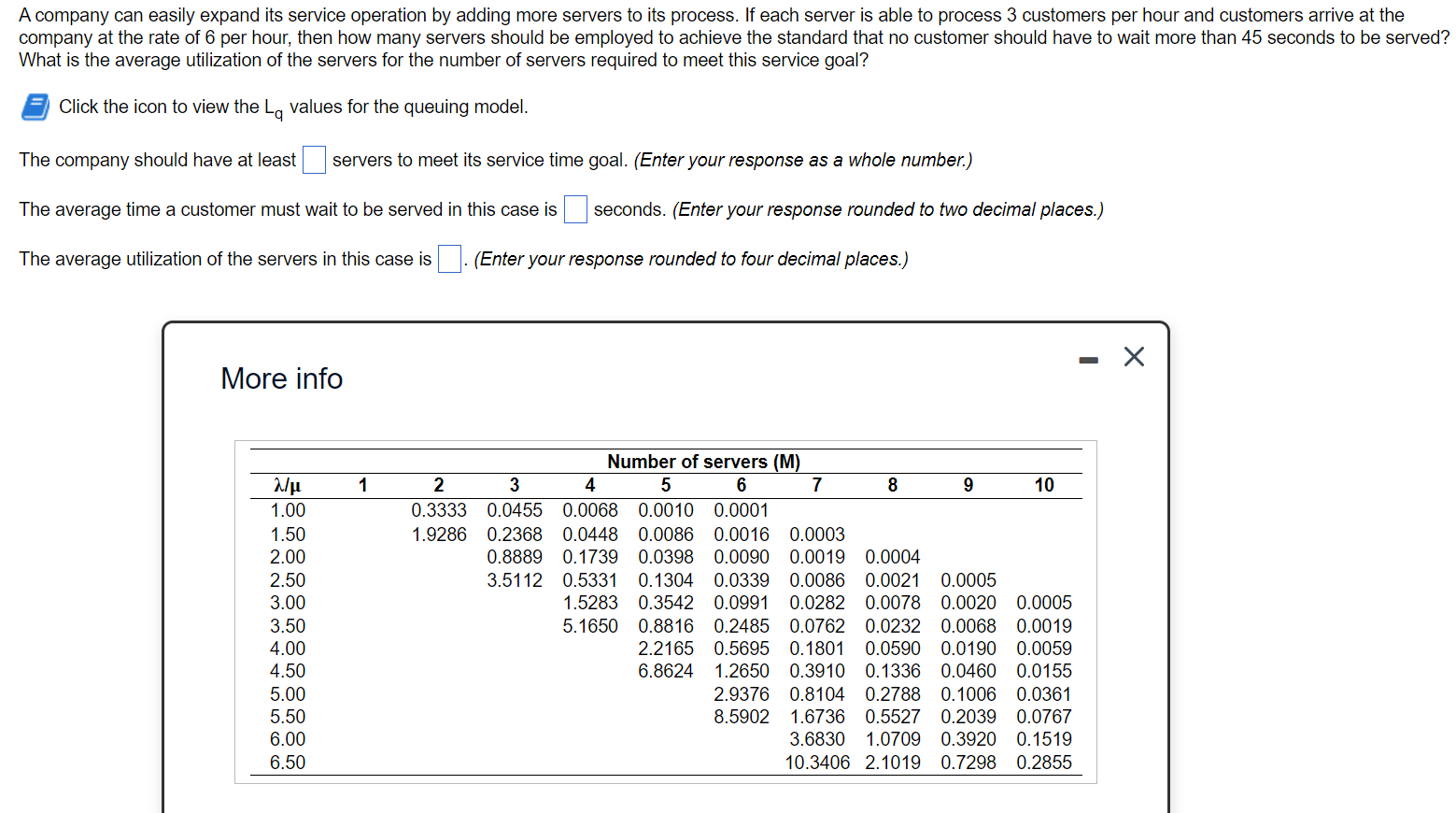
Question: Question #1 Question #2 A retail store must decide how many Mother's Day cards to have in stock for this year's Mother's Day. Cards must

Question #1
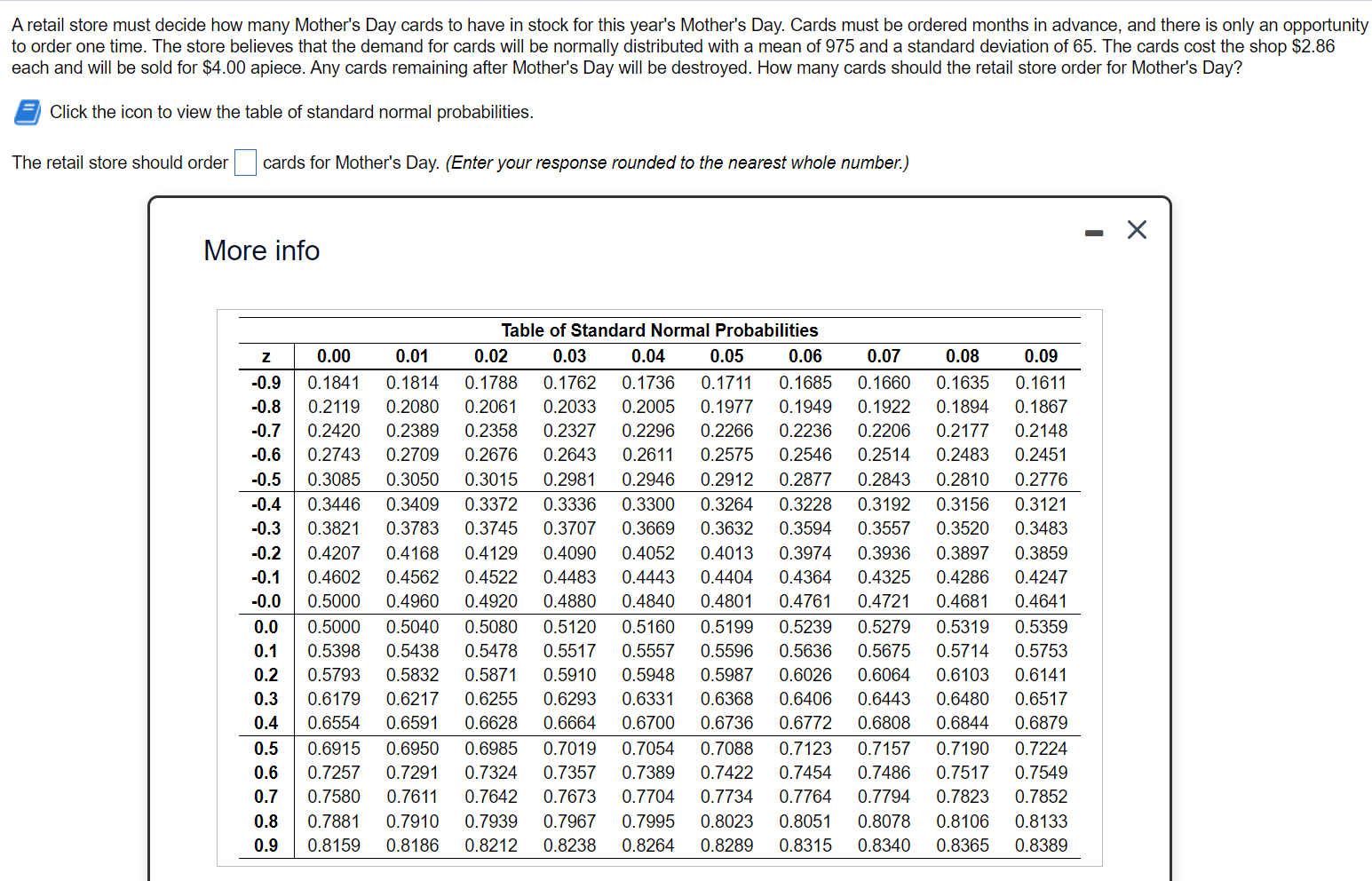
Question #1 Question #2 A retail store must

Question #2

Question #1 Question #2 A retail store must

A retail store must decide how many Mother's Day cards to have in stock for this year's Mother's Day. Cards must be ordered months in advance, and there is only an opportunity to order one time. The store believes that the demand for cards will be normally distributed with a mean of 975 and a standard deviation of 65. The cards cost the shop $2.86 each and will be sold for $4.00 apiece. Any cards remaining after Mother's Day will be destroyed. How many cards should the retail store order for Mother's Day? Click the icon to view the table of standard normal probabilities. The retail store should order cards for Mother's Day. (Enter your response rounded to the nearest whole number.) -X More info Z 0.08 -0.9 -0.8 -0.7 -0.6 -0.5 -0.4 -0.3 -0.2 -0.1 -0.0 0.0 0.1 0.2 0.3 0.4 0.5 0.6 0.00 0.1841 0.2119 0.2420 0.2743 0.3085 0.3446 0.3821 0.4207 0.4602 0.5000 0.5000 0.5398 0.5793 0.6179 0.6554 0.6915 0.7257 0.7580 0.7881 0.8159 0.01 0.1814 0.2080 0.2389 0.2709 0.3050 0.3409 0.3783 0.4168 0.4562 0.4960 0.5040 0.5438 0.5832 0.6217 0.6591 0.6950 0.7291 0.7611 0.7910 0.8186 Table of Standard Normal Probabilities 0.02 0.03 0.04 0.05 0.06 0.1788 0.1762 0.1736 0.1711 0.1685 0.2061 0.2033 0.2005 0.1977 0.1949 0.2358 0.2327 0.2296 0.2266 0.2236 0.2676 0.2643 0.2611 0.2575 0.2546 0.3015 0.2981 0.2946 0.2912 0.2877 0.3372 0.3336 0.3300 0.3264 0.3228 0.3745 0.3707 0.3669 0.3632 0.3594 0.4129 0.4090 0.4052 0.4013 0.3974 0.4522 0.4483 0.4443 0.4404 0.4364 0.4920 0.4880 0.4840 0.4801 0.4761 0.5080 0.5120 0.5160 0.5199 0.5239 0.5478 0.5517 0.5557 0.5596 0.5636 0.5871 0.5910 0.5948 0.5987 0.6026 0.6255 0.6293 0.6331 0.6368 0.6406 0.6628 0.6664 0.6700 0.6736 0.6772 0.6985 0.7019 0.7054 0.7088 0.7123 0.7324 0.7357 0.7389 0.7422 0.7454 0.7642 0.7673 0.7704 0.7734 0.7764 0.7939 0.7967 0.7995 0.8023 0.8051 0.8212 0.8238 0.8264 0.8289 0.8315 0.07 0.1660 0.1922 0.2206 0.2514 0.2843 0.3192 0.3557 0.3936 0.4325 0.4721 0.5279 0.5675 0.6064 0.6443 0.6808 0.7157 0.7486 0.7794 0.8078 0.8340 0.1635 0.1894 0.2177 0.2483 0.2810 0.3156 0.3520 0.3897 0.4286 0.4681 0.5319 0.5714 0.6103 0.6480 0.6844 0.7190 0.7517 0.7823 0.8106 0.8365 0.09 0.1611 0.1867 0.2148 0.2451 0.2776 0.3121 0.3483 0.3859 0.4247 0.4641 0.5359 0.5753 0.6141 0.6517 0.6879 0.7224 0.7549 0.7852 0.8133 0.8389 0.7 0.8 0.9 A company can easily expand its service operation by adding more servers to its process. If each server is able to process 3 customers per hour and customers arrive at the company at the rate of 6 per hour, then how many servers should be employed to achieve the standard that no customer should have to wait more than 45 seconds to be served? What is the average utilization of the servers for the number of servers required to meet this service goal? Click the icon to view the Lq values for the queuing model. The company should have at least servers to meet its service time goal. (Enter your response as a whole number.) The average time a customer must wait to be served in this case is seconds. (Enter your response rounded to two decimal places.) The average utilization of the servers in this case is (Enter your response rounded to four decimal places.) - More info 1 MM 1.00 1.50 2.00 2.50 3.00 3.50 4.00 4.50 5.00 5.50 6.00 6.50 Number of servers (M) 2 3 4 5 6 7 8 9 10 0.3333 0.0455 0.0068 0.0010 0.0001 1.9286 0.2368 0.0448 0.0086 0.0016 0.0003 0.8889 0.1739 0.0398 0.0090 0.0019 0.0004 3.5112 0.5331 0.1304 0.0339 0.0086 0.0021 0.0005 1.5283 0.3542 0.0991 0.0282 0.0078 0.0020 0.0005 5.1650 0.8816 0.2485 0.0762 0.0232 0.0068 0.0019 2.2165 0.5695 0.1801 0.0590 0.0190 0.0059 6.8624 1.2650 0.3910 0.1336 0.0460 0.0155 2.9376 0.8104 0.2788 0.1006 0.0361 8.5902 1.6736 0.5527 0.2039 0.0767 3.6830 1.0709 0.3920 0.1519 10.3406 2.1019 0.7298 0.2855 A retail store must decide how many Mother's Day cards to have in stock for this year's Mother's Day. Cards must be ordered months in advance, and there is only an opportunity to order one time. The store believes that the demand for cards will be normally distributed with a mean of 975 and a standard deviation of 65. The cards cost the shop $2.86 each and will be sold for $4.00 apiece. Any cards remaining after Mother's Day will be destroyed. How many cards should the retail store order for Mother's Day? Click the icon to view the table of standard normal probabilities. The retail store should order cards for Mother's Day. (Enter your response rounded to the nearest whole number.) -X More info Z 0.08 -0.9 -0.8 -0.7 -0.6 -0.5 -0.4 -0.3 -0.2 -0.1 -0.0 0.0 0.1 0.2 0.3 0.4 0.5 0.6 0.00 0.1841 0.2119 0.2420 0.2743 0.3085 0.3446 0.3821 0.4207 0.4602 0.5000 0.5000 0.5398 0.5793 0.6179 0.6554 0.6915 0.7257 0.7580 0.7881 0.8159 0.01 0.1814 0.2080 0.2389 0.2709 0.3050 0.3409 0.3783 0.4168 0.4562 0.4960 0.5040 0.5438 0.5832 0.6217 0.6591 0.6950 0.7291 0.7611 0.7910 0.8186 Table of Standard Normal Probabilities 0.02 0.03 0.04 0.05 0.06 0.1788 0.1762 0.1736 0.1711 0.1685 0.2061 0.2033 0.2005 0.1977 0.1949 0.2358 0.2327 0.2296 0.2266 0.2236 0.2676 0.2643 0.2611 0.2575 0.2546 0.3015 0.2981 0.2946 0.2912 0.2877 0.3372 0.3336 0.3300 0.3264 0.3228 0.3745 0.3707 0.3669 0.3632 0.3594 0.4129 0.4090 0.4052 0.4013 0.3974 0.4522 0.4483 0.4443 0.4404 0.4364 0.4920 0.4880 0.4840 0.4801 0.4761 0.5080 0.5120 0.5160 0.5199 0.5239 0.5478 0.5517 0.5557 0.5596 0.5636 0.5871 0.5910 0.5948 0.5987 0.6026 0.6255 0.6293 0.6331 0.6368 0.6406 0.6628 0.6664 0.6700 0.6736 0.6772 0.6985 0.7019 0.7054 0.7088 0.7123 0.7324 0.7357 0.7389 0.7422 0.7454 0.7642 0.7673 0.7704 0.7734 0.7764 0.7939 0.7967 0.7995 0.8023 0.8051 0.8212 0.8238 0.8264 0.8289 0.8315 0.07 0.1660 0.1922 0.2206 0.2514 0.2843 0.3192 0.3557 0.3936 0.4325 0.4721 0.5279 0.5675 0.6064 0.6443 0.6808 0.7157 0.7486 0.7794 0.8078 0.8340 0.1635 0.1894 0.2177 0.2483 0.2810 0.3156 0.3520 0.3897 0.4286 0.4681 0.5319 0.5714 0.6103 0.6480 0.6844 0.7190 0.7517 0.7823 0.8106 0.8365 0.09 0.1611 0.1867 0.2148 0.2451 0.2776 0.3121 0.3483 0.3859 0.4247 0.4641 0.5359 0.5753 0.6141 0.6517 0.6879 0.7224 0.7549 0.7852 0.8133 0.8389 0.7 0.8 0.9 A company can easily expand its service operation by adding more servers to its process. If each server is able to process 3 customers per hour and customers arrive at the company at the rate of 6 per hour, then how many servers should be employed to achieve the standard that no customer should have to wait more than 45 seconds to be served? What is the average utilization of the servers for the number of servers required to meet this service goal? Click the icon to view the Lq values for the queuing model. The company should have at least servers to meet its service time goal. (Enter your response as a whole number.) The average time a customer must wait to be served in this case is seconds. (Enter your response rounded to two decimal places.) The average utilization of the servers in this case is (Enter your response rounded to four decimal places.) - More info 1 MM 1.00 1.50 2.00 2.50 3.00 3.50 4.00 4.50 5.00 5.50 6.00 6.50 Number of servers (M) 2 3 4 5 6 7 8 9 10 0.3333 0.0455 0.0068 0.0010 0.0001 1.9286 0.2368 0.0448 0.0086 0.0016 0.0003 0.8889 0.1739 0.0398 0.0090 0.0019 0.0004 3.5112 0.5331 0.1304 0.0339 0.0086 0.0021 0.0005 1.5283 0.3542 0.0991 0.0282 0.0078 0.0020 0.0005 5.1650 0.8816 0.2485 0.0762 0.0232 0.0068 0.0019 2.2165 0.5695 0.1801 0.0590 0.0190 0.0059 6.8624 1.2650 0.3910 0.1336 0.0460 0.0155 2.9376 0.8104 0.2788 0.1006 0.0361 8.5902 1.6736 0.5527 0.2039 0.0767 3.6830 1.0709 0.3920 0.1519 10.3406 2.1019 0.7298 0.2855

Step by Step Solution

There are 3 Steps involved in it

1 Expert Approved Answer
Step: 1 Unlock blur-text-image

Question Has Been Solved by an Expert!

Get step-by-step solutions from verified subject matter experts

Step: 2 Unlock
Step: 3 Unlock

Students Have Also Explored These Related General Management Questions!