







Question: Question 1: The four correlation coefficients for the scatterplots shown are -0.75, 0.09, 0.88, and 0.99. Which one of these correlation coefficient values is the
Question 1:
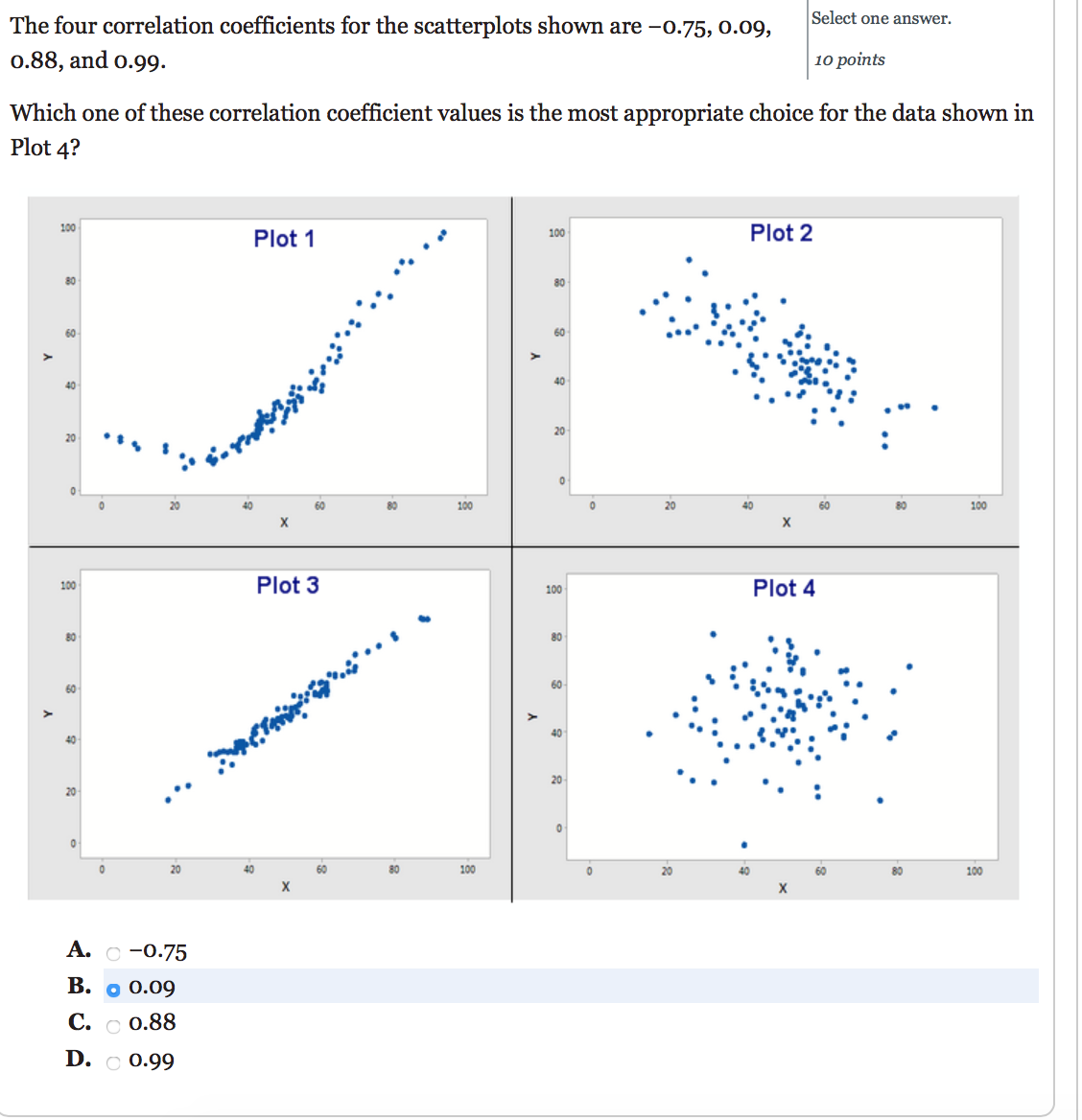
The four correlation coefficients for the scatterplots shown are -0.75, 0.09, 0.88, and 0.99.
Which one of these correlation coefficient values is the most appropriate choice for the data shown in Plot 4?
Question 2:
This scatterplot shows U.S. divorce rates (per 1,000) and prison rates for drug offenses (percentage admitted to state prison for drug offenses) for 7 years during 1960-1986. The correlation is 0.67.
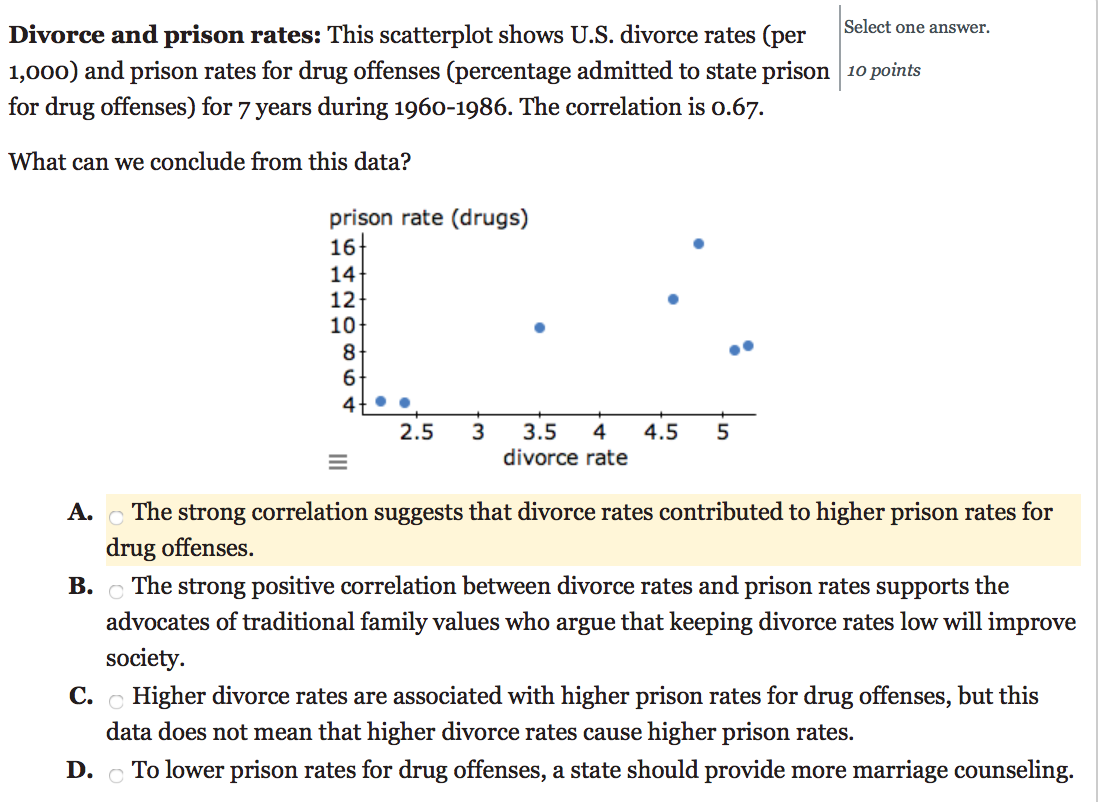
Divorce and prison rates: This scatterplot shows U.S. divorce rates (per 5616\" 'm" 3115\"\" 1,000) and prison rates for drug offenses (percentage admitted to state prison 10 points for drug offenses) for 7years during 1960-1986. The correlation is 0.67. What can we conclude from this data? prison rate (drugs) 2.5 3 3.5 4 4.5 S divorce rate A. The strong correlation suggests that divorce rates contributed to higher prison rates for drug offenses. B. The strong positive correlation between divorce rates and prison rates supports the advocates of traditional family values who argue that keeping divorce rates low will improve society. C. Higher divorce rates are associated with higher prison rates for drug offenses, but this data does not mean that higher divorce rates cause higher prison rates. D. To lower prison rates for drug offenses, a state should provide more marriage counseling. The four correlation coefcients for the scatterplots shown are 0.75, 0.09, 561\" 0'13 m\" 0.88, and 0.99. mpoints Which one of these correlation coefcient values is the most appropriate choice for the data shown in Plot 4
Step by Step Solution
There are 3 Steps involved in it

Get step-by-step solutions from verified subject matter experts
 Study Help