







Question: QUESTION 1 The practice of using only one base to allocate both fixed and variable costs is called a. Dual rate allocation b. Single rate
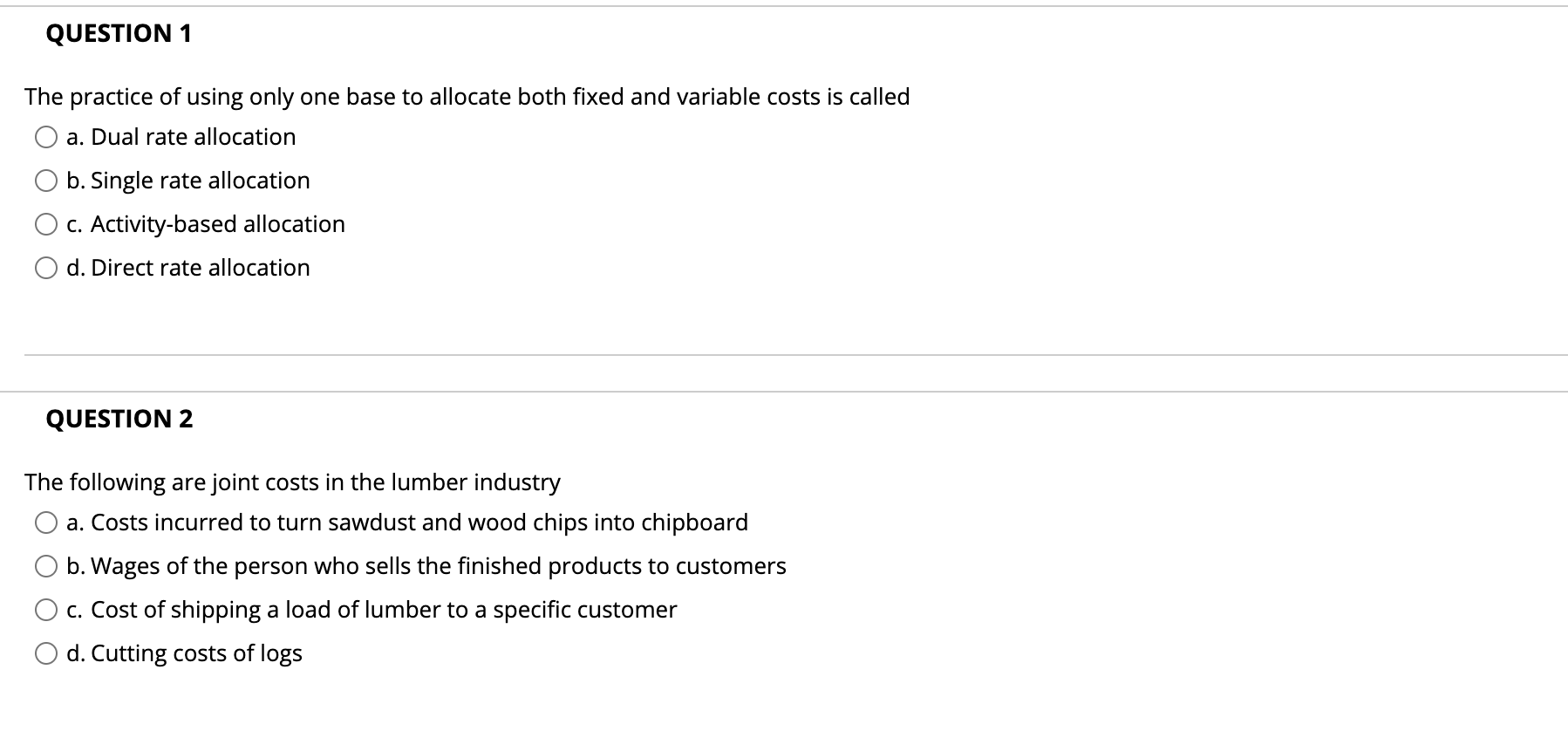
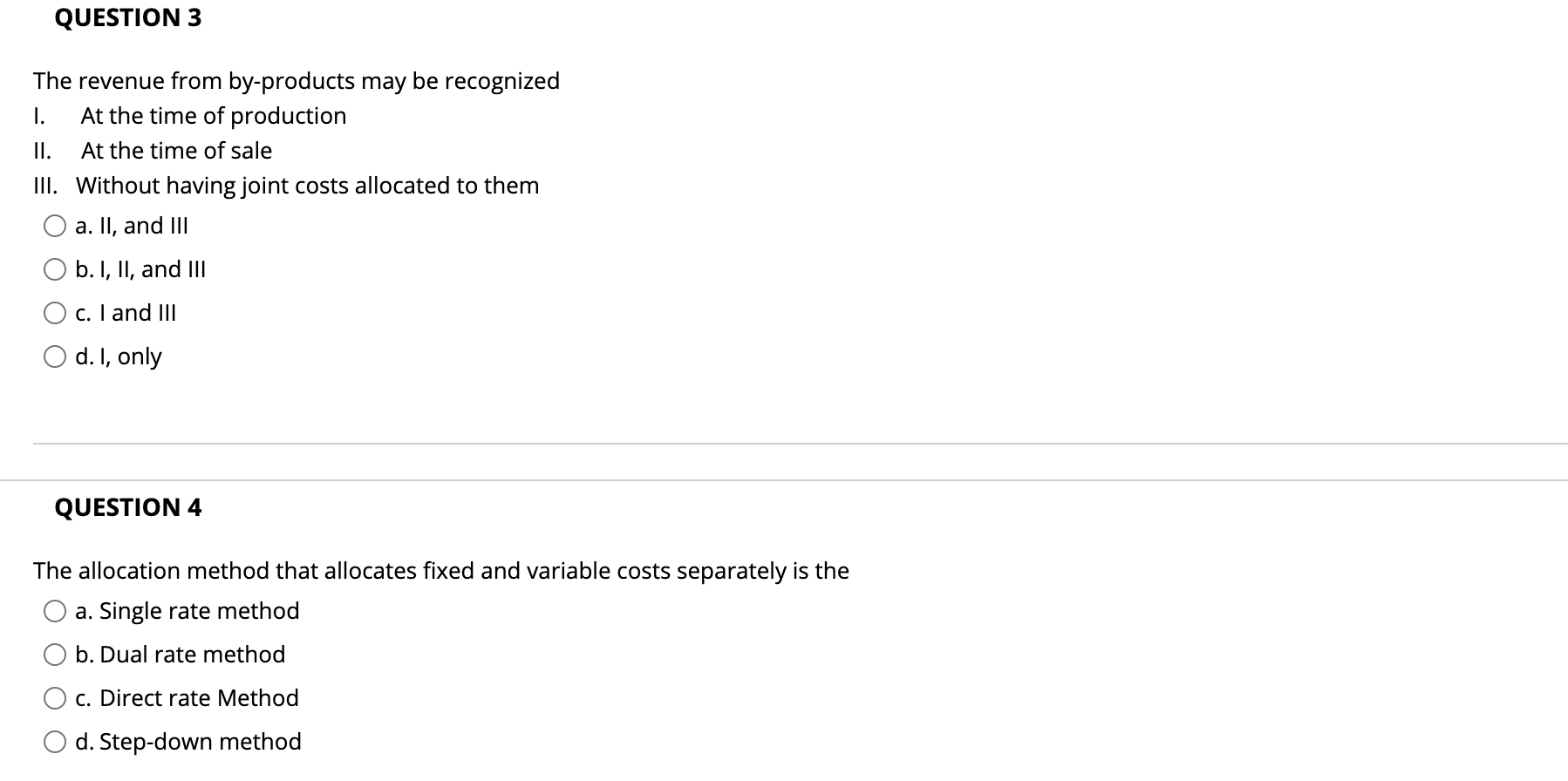
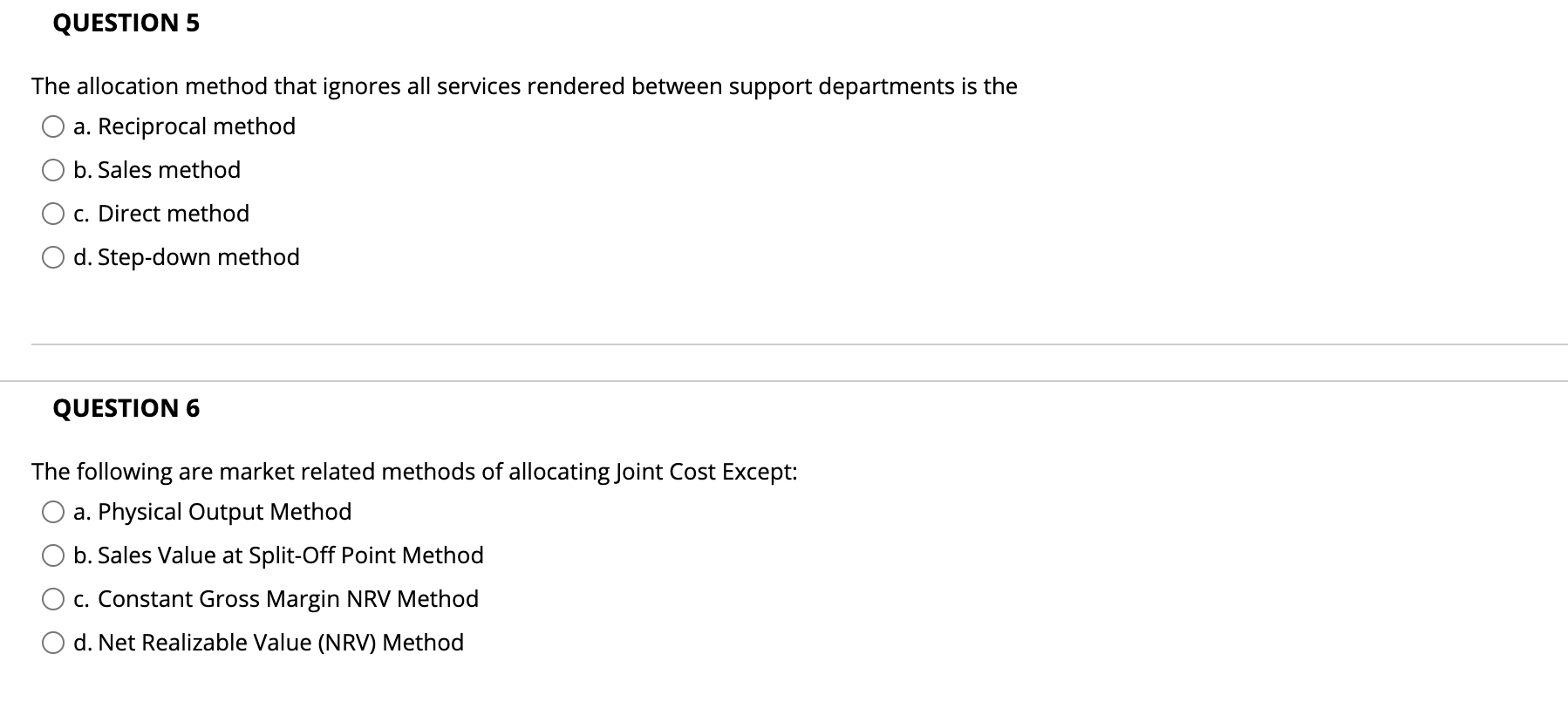
QUESTION 1 The practice of using only one base to allocate both fixed and variable costs is called a. Dual rate allocation b. Single rate allocation C. Activity-based allocation O d. Direct rate allocation QUESTION 2 The following are joint costs in the lumber industry a. Costs incurred to turn sawdust and wood chips into chipboard b. Wages of the person who sells the finished products to customers c. Cost of shipping a load of lumber to a specific customer d. Cutting costs of logs QUESTION 3 The revenue from by-products may be recognized 1. At the time of production II. At the time of sale III. Without having joint costs allocated to them O a. II, and III O b. I, II, and III O c. I and III d. I, only QUESTION 4 The allocation method that allocates fixed and variable costs separately is the a. Single rate method b. Dual rate method c. Direct rate Method O d. Step-down method QUESTION 5 The allocation method that ignores all services rendered between support departments is the a. Reciprocal method b. Sales method c. Direct method O d. Step-down method QUESTION 6 The following are market related methods of allocating Joint Cost Except: a. Physical Output Method b. Sales Value at Split-Off Point Method C. Constant Gross Margin NRV Method d. Net Realizable Value (NRV) Method
Step by Step Solution
There are 3 Steps involved in it

Get step-by-step solutions from verified subject matter experts
 Study Help