







Question: QUESTION 11 In your answer from Question 10 above, what you have actually solved for is total variable costs, because the fixed component of costs
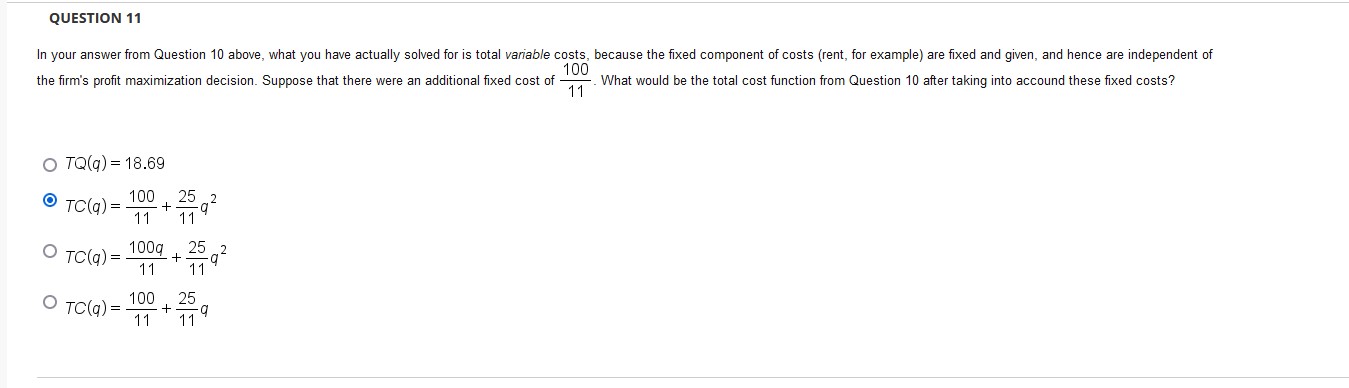
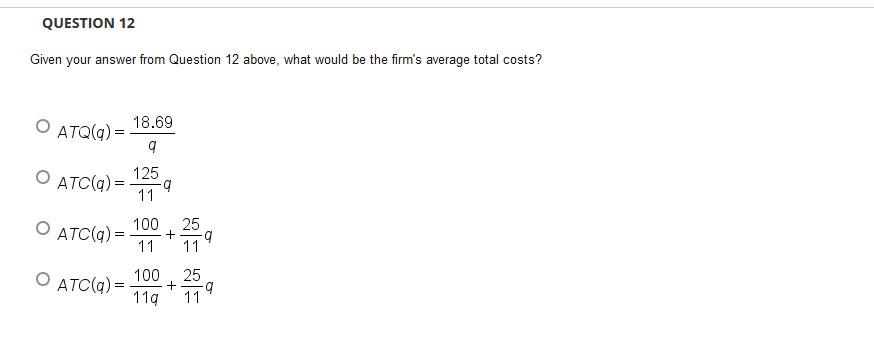
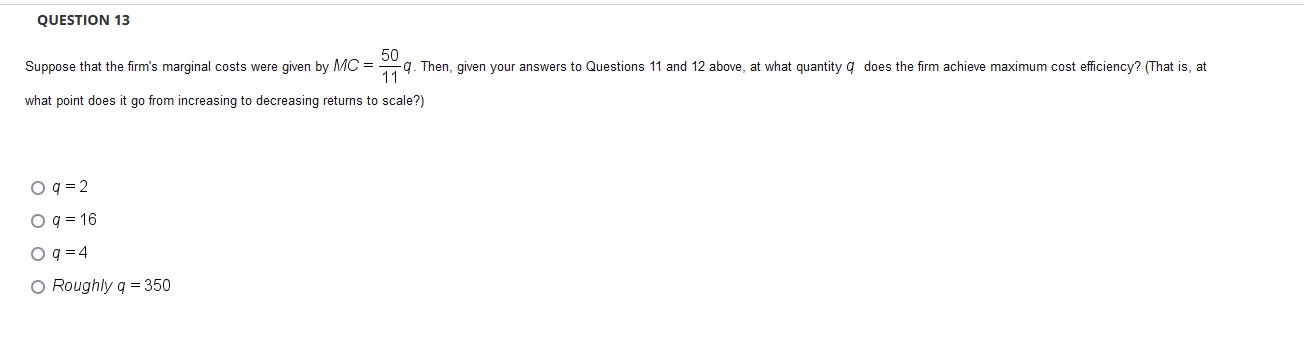
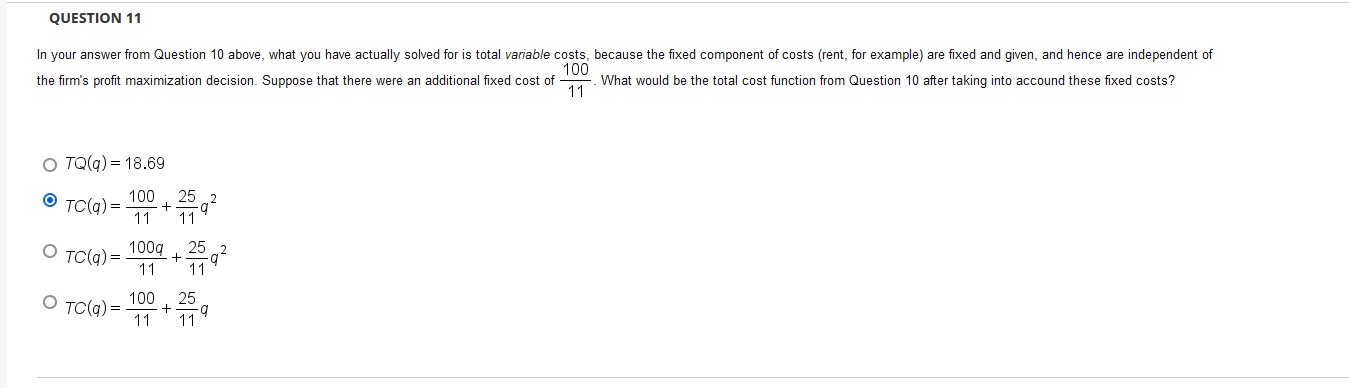
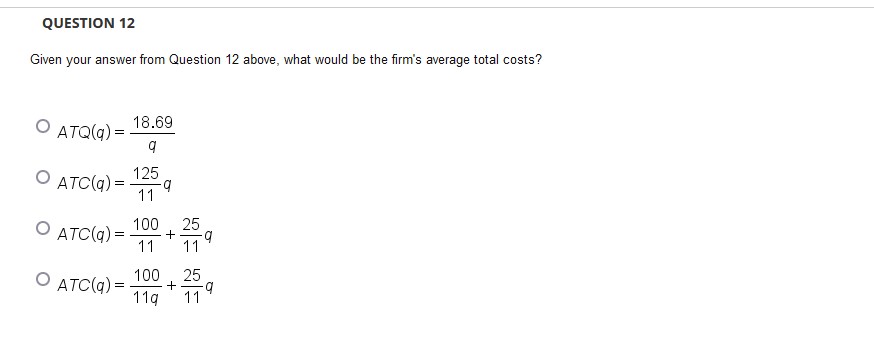
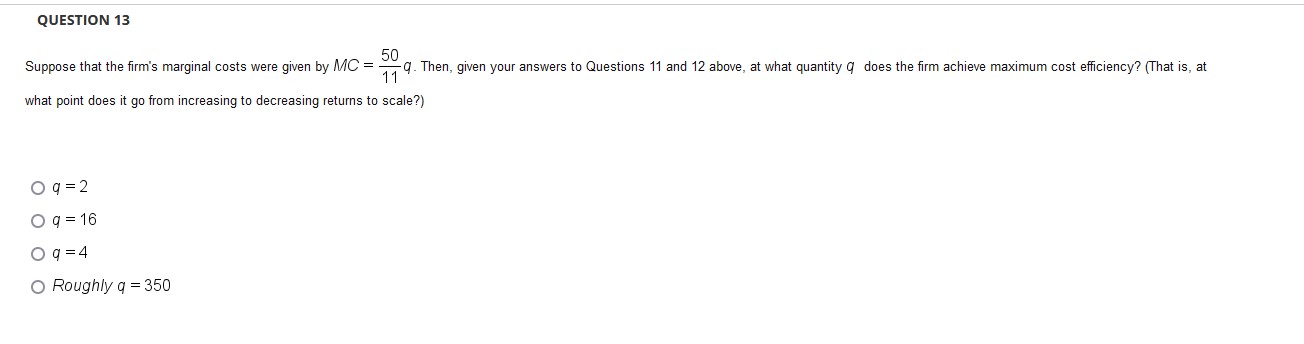
QUESTION 11 In your answer from Question 10 above, what you have actually solved for is total variable costs, because the fixed component of costs (rent, for example) are fixed and given, and hence are independent of the firm's profit maximization decision. Suppose that there were an additional fixed cost of 100 11 What would be the total cost function from Question 10 after taking into account these fixed costs? O TQ(q) = 18.69 O TC(q) = 100 25 2 11 179 O TC(q) = 100q 25 2 11 719 O TC(g) = - 100 + 25 11 719QUESTION 12 Given your answer from Question 12 above, what would be the firm's average total costs? O ATQ(q) = 18.69 q O ATC(g) = 125 11 9 O ATC(q) = 100 25 + 11 179 O ATC(q) = 100 25 + 11qQUESTION 13 Suppose that the firm's marginal costs were given by MC = - 50 19. Then, given your answers to Questions 11 and 12 above, at what quantity q does the firm achieve maximum cost efficiency? (That is, at what point does it go from increasing to decreasing returns to scale?) O q=2 O q = 16 O q =4 O Roughly q = 350
Step by Step Solution
There are 3 Steps involved in it

Get step-by-step solutions from verified subject matter experts
 Study Help