



Question: Question 14, Bus Econ 12.2.45 Part1 0th > 95 2, bicycles per day after d days of enthe-jdb training. 3d +11 A company that makes

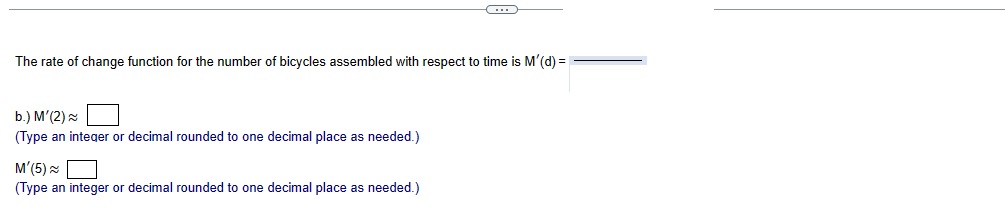
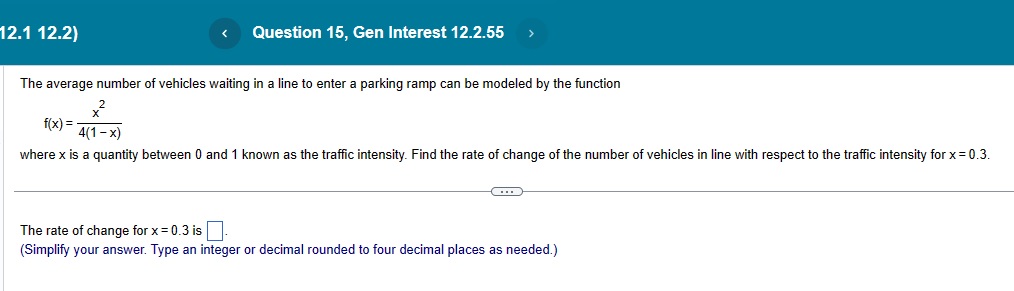
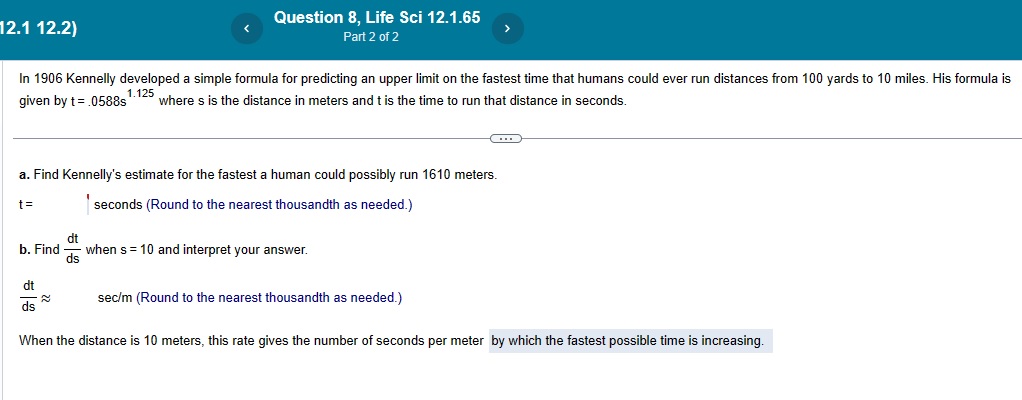
Question 14, Bus Econ 12.2.45 Part1 0th > 95 2, bicycles per day after d days of enthe-jdb training. 3d +11 A company that makes bicycles has determined that a new employee can assemble M(d}, where M(d} = a. Find the rate of change function for the number of bicycles assembled with respect to time. E). Find and interpret N112} and M'(5]. The rate of change function for the number of bicycles assembled with respect to time is M'(d) = i1} M'{2}m I: (Type an inteuer er decimal rounded to one decimal place as needed.) M'i5} x (Type an integer er decimal rounded to one decimal place as needed.) 12.1 12.2) a. Find Kennelly's estimate for the fastest a human could possiny run 1610 meters. t= l seconds (Round to the nearest thousandth as needed.) b. Find E when s =10 and interpret your answer. dt E m sedm (Round to the nearest thousandth as needed.) When the distance is 10 meters, this rate gives the number of seconds per meter by which the fastest possible time is increasing
Step by Step Solution
There are 3 Steps involved in it

Get step-by-step solutions from verified subject matter experts