







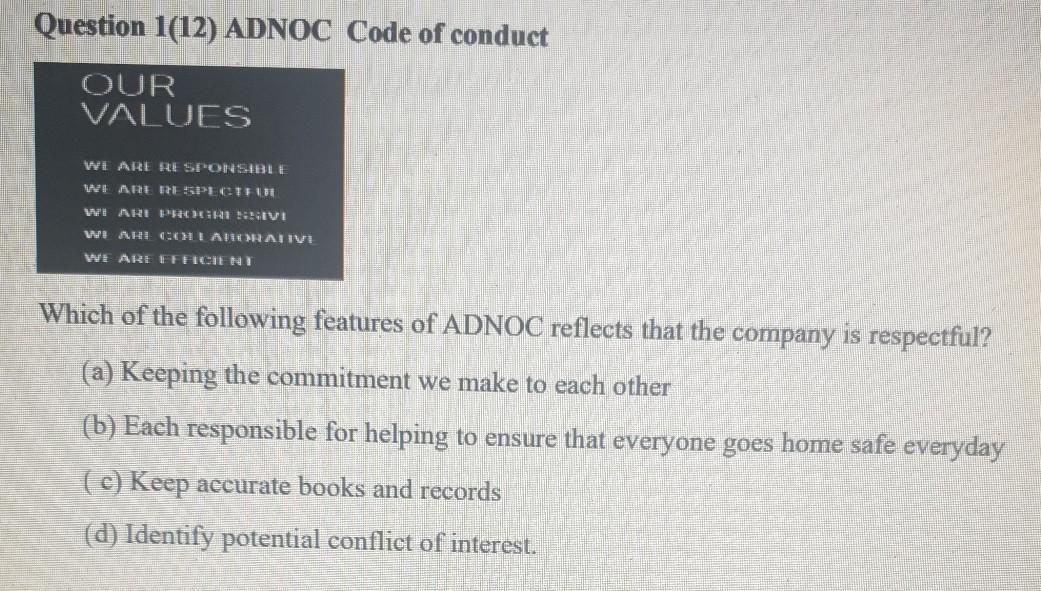
Question: . Question 1(4) Question 1(12) ADNOC Code of conduct OUR VALUES WE ARE RESPONSIBLE WE ARE RESPECTFUL WE ARE PHIRI SIVI WE ARE CILATORATIVI WE
. Question 1(4)
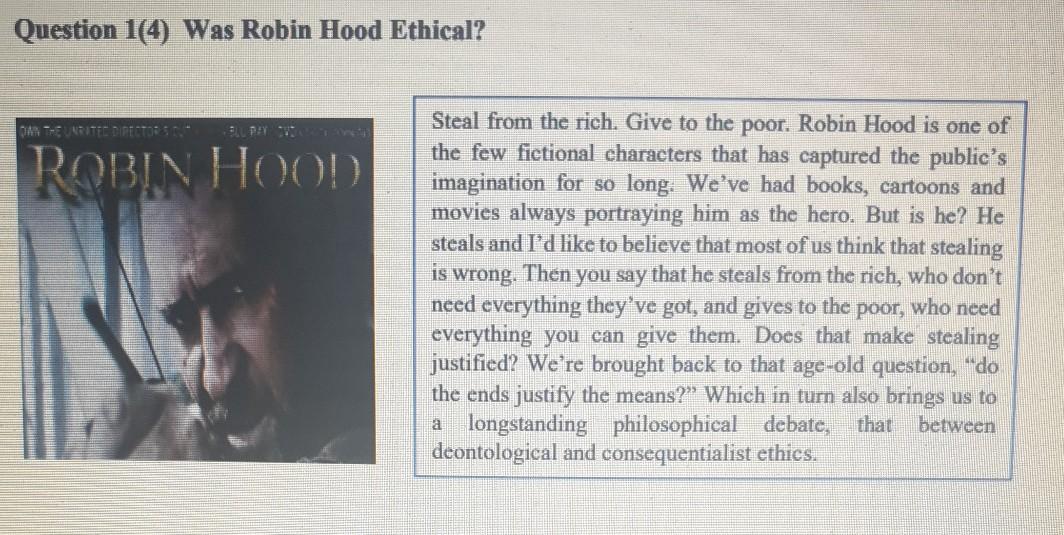
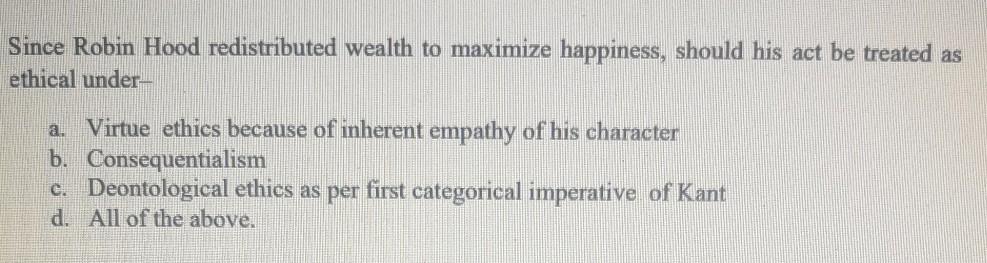
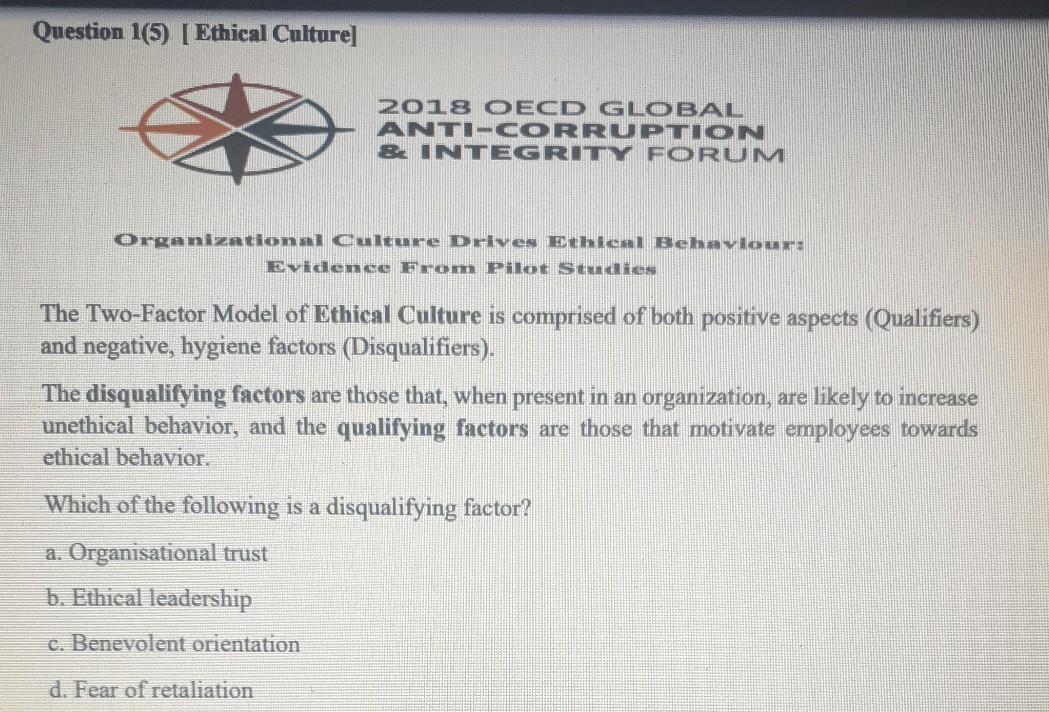
Question 1(12) ADNOC Code of conduct OUR VALUES WE ARE RESPONSIBLE WE ARE RESPECTFUL WE ARE PHIRI SIVI WE ARE CILATORATIVI WE ARE EFFICIENT Which of the following features of ADNOC reflects that the company is respectful? (a) Keeping the commitment we make to each other (b) Each responsible for helping to ensure that everyone goes home safe everyday ( c) Keep accurate books and records (d) Identify potential conflict of interest. Question 1(5) [Ethical Culture] 2018 OECD GLOBAL ANTI-CORRUPTION & INTEGRITY FORUM Organizational Culture Drives Ethical Behaviour Evidence from Pilot SC The Two-Factor Model of Ethical Culture is comprised of both positive aspects (Qualifiers) and negative, hygiene factors (Disqualifiers). The disqualifying factors are those that, when present in an organization, are likely to increase unethical behavior, and the qualifying factors are those that motivate employees towards ethical behavior. Which of the following is a disqualifying factor? a. Organisational trust b. Ethical leadership c. Benevolent orientation d. Fear of retaliation Question 1(4) Was Robin Hood Ethical? PHY ROBIN HOOD Steal from the rich. Give to the poor. Robin Hood is one of the few fictional characters that has captured the public's imagination for so long. We've had books, cartoons and movies always portraying him as the hero. But is he? He steals and I'd like to believe that most of us think that stealing is wrong. Then you say that he steals from the rich, who don't need everything they've got, and gives to the poor, who need everything you can give them. Does that make stealing justified? We're brought back to that age-old question, do the ends justify the means? Which in turn also brings us to a longstanding philosophical debate, that between deontological and consequentialist ethics. Since Robin Hood redistributed wealth to maximize happiness, should his act be treated as ethical under a. Virtue ethics because of inherent empathy of his character b. Consequentialism c. Deontological ethics as per first categorical imperative of Kant d. All of the above
Step by Step Solution
There are 3 Steps involved in it
1 Expert Approved Answer
Step: 1 Unlock

Question Has Been Solved by an Expert!
Get step-by-step solutions from verified subject matter experts
Step: 2 Unlock
Step: 3 Unlock
 Study Help